PCOS and HRV: How Polycystic Ovary Syndrome Affects Heart Rate Variability
Trying to decode today's HRV number? Use the free interpreter first, then build a practical recovery plan. Interpret your HRV
Polycystic ovary syndrome, or PCOS, is usually discussed in terms of periods, fertility, acne, and insulin resistance. That makes sense, but it leaves out a useful piece of the picture: the autonomic nervous system.
Heart rate variability, or HRV, gives you a window into that system. If you have PCOS and your wearable keeps showing lower than expected readiness or recovery, that does not prove something is wrong on its own. It can, however, reflect the same metabolic, sleep, and stress patterns that often come with PCOS.
That matters because PCOS is common and often underdiagnosed. The World Health Organization says it affects an estimated 10 to 13% of reproductive-aged women, and up to 70% may be undiagnosed.
This guide breaks down how PCOS and HRV are connected, what the research actually shows, and how to use HRV as a helpful signal instead of a source of panic.
Does PCOS Affect HRV?
Yes, PCOS is often associated with lower or less favorable HRV, especially when insulin resistance, higher body fat, poor sleep, or chronic stress are part of the picture. The pattern is not universal, and HRV is not a diagnostic test for PCOS. But the research suggests that many women with PCOS show signs of altered autonomic balance, often with relatively higher sympathetic activity and lower parasympathetic activity.
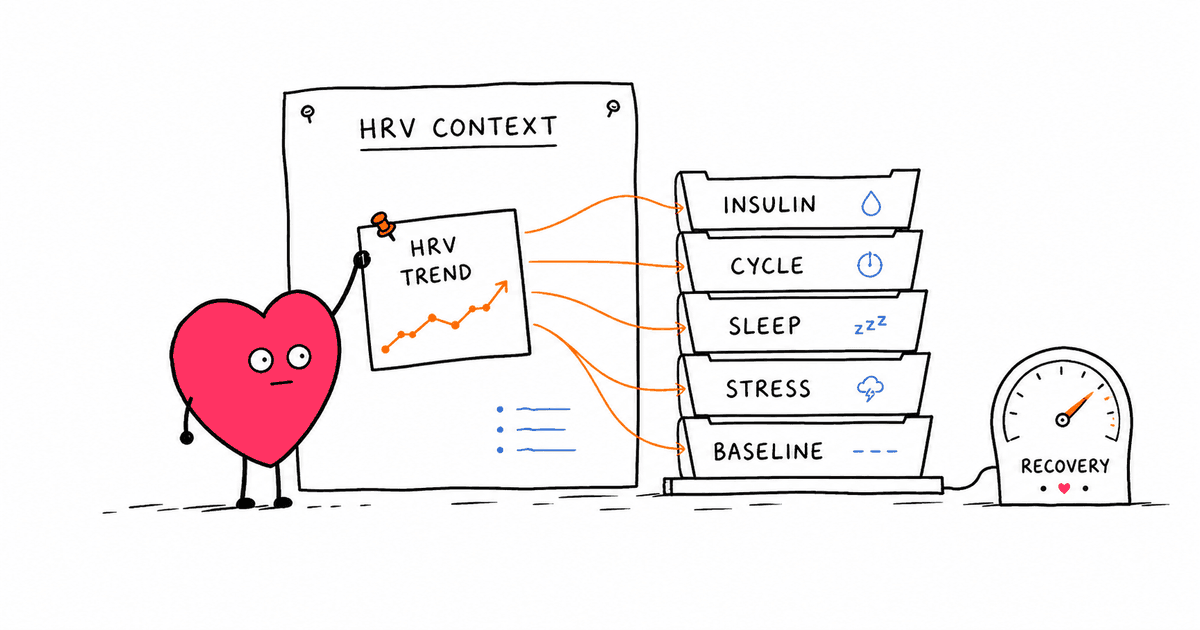
That is one reason HRV can be a useful context marker. It may help you spot how sleep, training, stress, blood sugar control, and recovery are interacting with a condition that already has metabolic and cardiovascular implications.
What HRV Measures, and What It Does Not
HRV measures the variation in time between heartbeats. In most consumer wearables, higher HRV generally reflects better recovery and stronger parasympathetic activity. Lower HRV often shows up when your system is under more strain.
If you want the full primer first, read what HRV is and understanding HRV numbers.
What HRV does not do is diagnose endocrine disorders. A low HRV reading cannot tell you whether you have PCOS, hypothyroidism, sleep apnea, or just a rough week. It is a supporting signal, not a standalone answer.
Why PCOS Can Push HRV in the Wrong Direction
PCOS is not only a reproductive hormone issue. It is also tied to insulin resistance, inflammation, sleep problems, mood symptoms, higher blood pressure risk, and long-term cardiovascular risk. Those are all things that can affect HRV.
Insulin Resistance and Blood Sugar Stress
Insulin resistance is one of the biggest links between PCOS and HRV.
When glucose control worsens, your body often shows more sympathetic activation and less flexible autonomic regulation. That tends to pull HRV down. This is part of why PCOS often overlaps with the same physiology discussed in blood sugar and HRV.
If your HRV is consistently low and you also deal with energy crashes, carb-heavy cravings, abdominal weight gain, or elevated fasting insulin, the shared driver may be metabolic stress rather than the wearable being dramatic.
Higher Sympathetic Tone
A 2018 retrospective cross-sectional study in Medicine compared 35 women with PCOS with 32 controls and found higher low-frequency measures, a higher LF/HF ratio, and lower normalized high-frequency power in the PCOS group. The authors concluded that PCOS was associated with increased sympathetic modulation.
That does not mean every woman with PCOS is stuck in permanent fight-or-flight mode. It does suggest that autonomic imbalance is common enough to take seriously.
Inflammation and Cardiometabolic Risk
PCOS is associated with higher rates of insulin resistance, type 2 diabetes, hypertension, dyslipidemia, and obesity. Those same patterns tend to travel with lower HRV.
A 2024 meta-analysis in the Journal of the American Heart Association pooled data from 20 studies involving 1.06 million women and found that PCOS was associated with higher odds of composite cardiovascular disease, ischemic heart disease, myocardial infarction, and stroke. HRV is not the same thing as cardiovascular risk, but it lives in the same neighborhood.
If you have already read HRV and blood pressure or HRV and heart disease, the overlap will look familiar.
Sleep Problems, Including Sleep Apnea
Sleep issues can make the HRV pattern worse.
PCOS is linked with a higher risk of sleep apnea, especially when insulin resistance and central adiposity are in the mix. Fragmented sleep, short sleep, and untreated sleep apnea can all suppress overnight HRV and raise resting heart rate.
This matters because many people blame low HRV on hormones alone when the real hit is coming from poor sleep quality.
Anxiety, Depression, and Chronic Stress Load
PCOS can also come with higher rates of anxiety, depression, body image distress, and chronic stress. Those are not side notes. They can directly affect autonomic function and HRV trends.
If mental strain is part of the picture, HRV and anxiety and HRV and depression are worth reading next.
What the Research Says About PCOS and HRV
The evidence is strong enough to be useful, but not clean enough to justify overconfident claims.
Systematic Reviews Support an HRV Link
A 2024 systematic review and meta-analysis in Systematic Reviews examined HRV in women with PCOS and concluded that the overall body of evidence points toward cardiac autonomic dysfunction in PCOS. That is the big picture.
An earlier 2017 meta-analysis also found evidence of cardiovascular autonomic dysfunction in women with PCOS. Across reviews, the repeated theme is that HRV often looks less favorable in PCOS than in matched controls.
Not Every Study Finds the Same Pattern
This is where nuance matters.
A 2017 study in Anatolian Journal of Cardiology looked at 60 normal-weight women with PCOS and 60 matched controls with similar metabolic profiles. In that study, HRV measures were similar between groups, and the authors suggested that autonomic differences may not show up the same way in normal-weight women with normal insulin resistance markers.
That is useful because it tells you the signal may depend a lot on the rest of the metabolic picture. PCOS itself matters, but obesity, insulin resistance, sleep disruption, and fitness level may explain a meaningful part of the HRV drop.
Can HRV Help Diagnose PCOS?
No.
HRV can support pattern recognition, but it cannot diagnose PCOS. Diagnosis still depends on proper clinical evaluation, usually based on criteria such as irregular or absent ovulation, signs of androgen excess, and polycystic ovaries on ultrasound after other causes have been ruled out.
The 2023 international evidence-based PCOS guideline, which includes 254 recommendations and practice points, emphasizes evidence-based assessment and management, a healthy lifestyle plan, and cardiovascular risk awareness, not wearable-based self-diagnosis.
If your cycle is irregular, acne is worsening, facial hair is increasing, or you suspect insulin resistance, the next move is clinical evaluation, not trying to decode one low recovery score.
How to Use HRV if You Have PCOS
The best way to use HRV with PCOS is as a trendline.
Look for patterns over weeks, not daily noise. Compare HRV alongside resting heart rate, sleep quality, training load, symptoms, and cycle changes. If your cycle is irregular, HRV can still be useful, but you may have fewer predictable month-to-month patterns than someone with highly regular cycles. For more on cycle-related interpretation, see HRV and the menstrual cycle and hormones and HRV.
Good questions to ask:
- Is HRV dropping during periods of poor sleep or higher stress?
- Does regular exercise improve baseline HRV over time?
- Do blood sugar crashes line up with worse recovery metrics?
- Is alcohol, illness, or late-night eating making the signal obviously worse?
- Does treatment of sleep apnea, insulin resistance, or training overload improve the trend?
That is a much smarter use of HRV than asking whether one bad score means your hormones are broken.
How to Improve HRV When You Have PCOS
There is no special PCOS-only HRV trick. The useful work is still the useful work.
1. Improve Insulin Sensitivity
For many women with PCOS, this is the highest-return lever.
That usually means regular movement, enough protein, higher-fiber meals, fewer blood sugar whiplash foods, and a routine you can maintain. If you need a broader starting point, nutrition and HRV and improve HRV cover the basics.
If a clinician has prescribed medication such as metformin or another treatment, HRV can be a helpful context metric while you work on the bigger picture. It should not replace lab work or symptom tracking.
2. Train Consistently, Not Heroically
Regular aerobic work tends to help HRV, insulin sensitivity, blood pressure, and mood. Resistance training can help too, especially for body composition and glucose handling.
The mistake is going from undertrained to punishment mode.
If your HRV is already low and recovery is poor, adding five brutal workouts per week is not a health plan. It is a revenge arc. Start with a sustainable mix of walking, easy cardio, and strength work you can recover from.
3. Protect Sleep Aggressively
If sleep is bad, HRV will usually show it.
Aim for a regular sleep schedule, cut back on late caffeine, keep the room cool and dark, and take snoring or excessive daytime sleepiness seriously. In PCOS, screening for sleep apnea can matter more than buying another supplement.
4. Reduce Chronic Stress Without Turning Recovery Into a Full-Time Job
Stress management sounds vague until you look at your HRV after a week of poor sleep, skipped meals, and low-grade chaos.
Useful options include:
- 10 minutes of slow breathing
- gentle yoga or mobility work
- walking after meals
- therapy or structured mental health support
- journaling or mindfulness, if you will actually do it
You do not need a perfect nervous system routine. You need less accumulated strain.
5. Manage Body Composition Carefully, if Relevant
Not every woman with PCOS needs weight loss. But if excess body fat, especially around the abdomen, is part of the picture, modest fat loss can improve insulin sensitivity, sleep, blood pressure, and HRV together.
The key word is modest. Extreme dieting, overexercise, and obsession usually backfire. Weight loss and HRV covers how to think about that tradeoff more intelligently.
6. Track Labs and Symptoms With Your HRV
HRV is useful because it changes faster than long-term health markers. But the markers still matter.
Track your HRV alongside things like:
- fasting glucose or A1c, if your clinician recommends it
- blood pressure
- lipids
- resting heart rate
- cycle regularity
- sleep quality
- energy and training tolerance
This turns HRV into context rather than mythology.
What a Low HRV Does Not Mean in PCOS
Low HRV does not automatically mean:
- your PCOS is getting worse
- your hormones are "out of control"
- you should stop exercising
- you need a new supplement stack
- your wearable knows more than your labs
Low HRV can reflect poor sleep, illness, travel, stress, a hard workout block, alcohol, or late meals. In PCOS, the interpretation is often more useful when you zoom out.
Best Wearables for Tracking HRV With PCOS
If you want to follow HRV trends while working on sleep, stress, and metabolic health, these are solid options:
- Oura Ring: Strong overnight HRV tracking and a low-friction form factor.
- WHOOP: Helpful if you want HRV, sleep, and strain data in one place.
- Apple Watch Ultra: A good option if you already live in the Apple ecosystem.
- Garmin: Useful for people who want HRV trends alongside training metrics and battery life that does not annoy them.
For a deeper comparison, see the best HRV monitors for 2026.
Key Takeaways
- PCOS is often associated with lower or less favorable HRV, especially when insulin resistance, poor sleep, or higher cardiometabolic stress are involved.
- Research supports a real link, but the effect is not identical in every woman with PCOS.
- HRV cannot diagnose PCOS, and a low score should not replace proper evaluation.
- Metabolic health, sleep quality, and stress load are often the strongest day-to-day drivers of HRV in PCOS.
- Use HRV as a trendline, paired with symptoms, labs, and recovery habits.
- The best interventions are boring and effective: better sleep, consistent exercise, improved insulin sensitivity, and less chronic strain.
If your HRV improves while your energy, sleep, training tolerance, and metabolic markers improve too, that is the signal worth caring about.
Need a quick read on your HRV number first?
Enter your HRV value, age range, device, and recovery context for a plain-English interpretation before you decide what to do next.
Interpret Your HRV NumberBuild the 30-day plan