Rock Climbing and HRV: How Climbing Affects Your Autonomic Nervous System
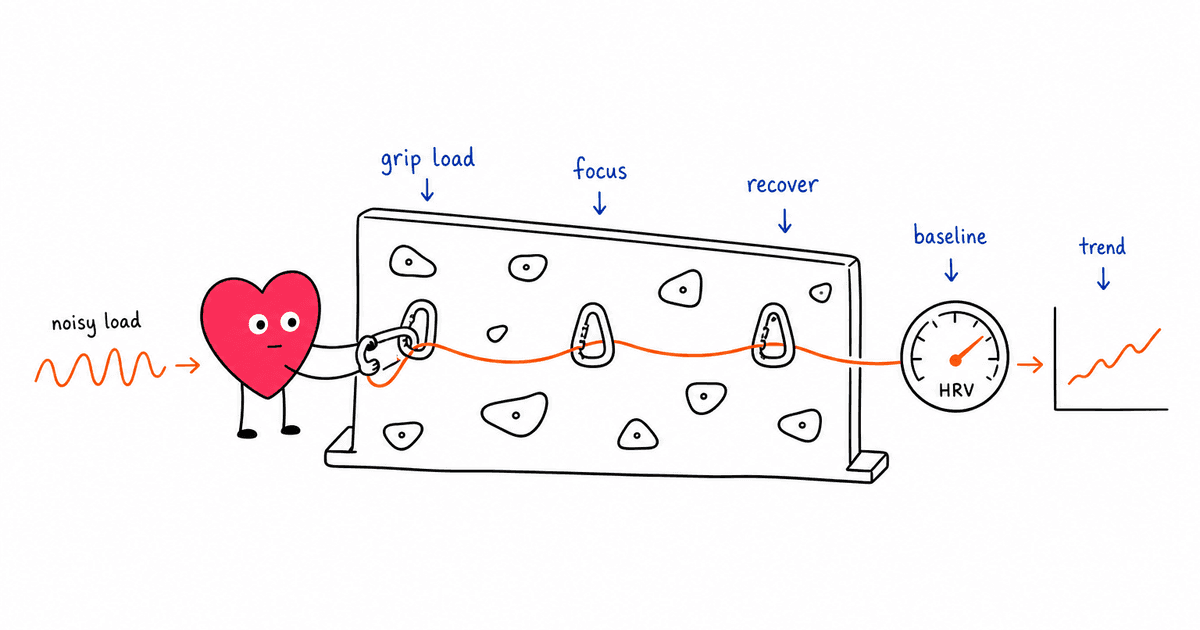
Rock climbing has exploded in popularity over the past decade, with indoor climbing gyms popping up in cities worldwide and the sport making its Olympic debut. But beyond the obvious fitness benefits, climbing offers something unique: a workout that simultaneously challenges your body and mind in ways that can profoundly affect your heart rate variability.
Unlike most forms of exercise, rock climbing demands complete presence. You cannot scroll through your phone or let your mind wander while hanging from a wall. This combination of physical exertion and forced mindfulness creates interesting effects on the autonomic nervous system that HRV trackers can capture.
How Rock Climbing Affects the Autonomic Nervous System
Rock climbing creates a unique physiological response that engages both branches of the autonomic nervous system in ways that differ from traditional exercise.
The Sympathetic Activation Phase
During a climb, your sympathetic nervous system activates strongly. Research published in the Journal of Functional Morphology and Kinesiology (2025) found that climbers experience significant increases in heart rate, cortisol levels, and other stress markers during climbing. This sympathetic "fight or flight" response makes sense: your body perceives the challenge of ascending a wall (and the potential for falling) as a stressor requiring heightened alertness.
Advanced climbers show interesting adaptations here. The same 2025 study found that experienced climbers exhibited better sympathetic modulation and lower anxiety levels compared to novices. Their nervous systems had learned to manage the stress response more efficiently, activating when needed but not overreacting.
The Parasympathetic Recovery Window
After completing a climb, your body shifts toward parasympathetic dominance as it recovers. This rest-and-digest response is where climbing offers potential HRV benefits. The intense effort followed by rest periods (especially in bouldering, where routes are short but intense) creates natural intervals that train your nervous system to transition smoothly between activation and recovery states.
This sympathetic-parasympathetic cycling is similar to what occurs during high-intensity interval training (HIIT), which has been shown to improve HRV over time. However, climbing adds a cognitive component that pure physical training lacks.
The Mind-Body Connection in Climbing
What sets rock climbing apart from other exercises, much like martial arts, is its demand for mental engagement. Every move requires problem-solving: Where do I put my foot? Can I reach that hold? How do I shift my weight? This cognitive challenge affects your nervous system differently than mindless cardio.
Flow State and HRV
Experienced climbers often describe entering a "flow state" where they become completely absorbed in the present moment. This state of focused attention has been associated with increased HRV and improved autonomic function. When you are fully engaged in solving a climbing problem, your mind cannot wander to work stress or life worries. The wall demands your complete attention.
Research on climbers has found correlations between climbing experience and improved emotional regulation. Advanced climbers demonstrate better psychological resilience and lower anxiety, both of which are associated with healthier HRV patterns.
Fear, Stress, and Adaptation
The fear element in climbing is worth discussing. The first time you climb above your comfort zone, your body responds with a significant stress reaction: elevated heart rate, cortisol release, and sympathetic activation. However, repeated exposure to controlled fear teaches your nervous system that these situations are manageable.
This process, similar to what occurs in exposure therapy, can improve your overall stress resilience. Your body learns that elevated heart rate and stress hormones do not always signal true danger. Over time, this can translate to improved stress responses in daily life and healthier baseline HRV.
Physical Benefits That Support HRV
Rock climbing delivers physical benefits that indirectly support cardiovascular health and HRV.
Full-Body Strength and Cardiovascular Fitness
Climbing engages nearly every muscle group, similar to other compound movement activities like strength training. Your legs provide power, your core maintains stability, and your arms and back handle pulling movements. This full-body engagement elevates heart rate to between 120-180 beats per minute during active climbing.
According to WebMD, rock climbing builds cardiovascular fitness while also improving strength and flexibility in a single activity. This combination makes it an efficient workout for improving the overall fitness markers that support healthy HRV.
Grip Strength: A Longevity Marker
One often-overlooked aspect of climbing is its effect on grip strength. Climbers develop exceptional forearm and hand strength out of necessity. Interestingly, grip strength has emerged as a significant predictor of longevity and cardiovascular health.
Research consistently shows that weaker grip strength correlates with higher all-cause mortality and poorer cardiovascular outcomes. By naturally building grip strength, climbing may support the overall cardiovascular health that underlies good HRV. This connection between grip strength and longevity is one of climbing's hidden benefits.
Low-Impact Nature
Unlike running or jumping exercises, climbing is relatively low-impact when performed correctly. Your feet should barely touch the ground (or rather, they should move smoothly from hold to hold). This makes climbing accessible for people who need to avoid high-impact activities while still getting an intense workout.
Using HRV to Guide Your Climbing Training
If you are an HRV tracker user who has taken up climbing (or vice versa), here is how to use the data effectively.
Morning Readiness Scores
Check your morning HRV before heading to the climbing gym. Like any demanding activity, climbing is best performed when your body shows signs of recovery. A significantly suppressed HRV might suggest scaling back the difficulty or duration of your session.
This is especially important for climbing because the sport involves grip-intensive, isometric work. Forearm fatigue is a major limiting factor, and research shows that force sensors can detect meaningful declines in grip strength after climbing sessions. If your HRV indicates incomplete recovery, your grip endurance will likely suffer as well.
Tracking Training Adaptation
Over weeks and months of consistent climbing, look for improvements in your baseline HRV and faster recovery patterns. These changes would indicate positive adaptation: your cardiovascular system is becoming more efficient and your autonomic nervous system more balanced.
If your HRV trends downward despite adequate rest, you may be overtraining. Climbing can be addictive, and it is tempting to push for harder grades before your body is ready. Let HRV data serve as an objective check on your training load.
Session Timing
Some climbers find that evening climbing sessions interfere with sleep more than morning sessions, likely due to the sympathetic activation that occurs during intense effort. If you notice lower HRV or poorer sleep quality on climbing days, experiment with earlier session times.
Getting Started with Climbing
If you are new to rock climbing and want to explore its HRV benefits, here is how to begin safely.
Start at an Indoor Gym
Indoor climbing gyms provide a controlled environment with padded floors, rated routes, and available instruction. Most gyms offer introductory classes covering basic techniques, safety protocols, and equipment use.
Two main styles dominate indoor climbing:
Bouldering: Short routes (called "problems") climbed without ropes over crash pads. Problems are typically 10-15 feet high and emphasize power and problem-solving. Sessions involve intense effort followed by rest as you figure out the next move.
Roped Climbing: Taller routes climbed with harnesses and belaying partners. This style builds more endurance and involves sustained effort over longer distances.
Both styles offer HRV benefits, though bouldering's interval-like nature may be particularly effective for autonomic training.
Build Gradually
Climbing uses muscles and movement patterns that are unfamiliar to most people. Your forearms, in particular, will fatigue quickly in the beginning. Start with 2-3 sessions per week with at least one rest day between sessions.
Pay attention to your HRV data during this building phase. Some initial suppression is normal as your body adapts to new demands, but it should recover within 48-72 hours. Persistent suppression suggests you are climbing too frequently or too intensely for your current fitness level.
Complement with Recovery Practices
Given climbing's demanding nature, recovery practices become especially important. Consider incorporating:
- Stretching and mobility work for forearms, shoulders, and hips
- Quality sleep to support nervous system recovery
- Stress management techniques like meditation or breathwork
These practices support parasympathetic function and faster HRV recovery between sessions.
Who Should Be Cautious
While climbing offers significant benefits, it is not appropriate for everyone without medical clearance.
Heart conditions: The intense sympathetic activation during climbing can stress the cardiovascular system. If you have heart disease or arrhythmias, consult your cardiologist before starting.
Joint problems: Climbing stresses multiple joints, especially fingers, elbows, and shoulders. Those with arthritis or previous injuries should proceed carefully and potentially work with a physical therapist.
Fear of heights: While some people benefit from the controlled exposure, severe acrophobia may make climbing unpleasant rather than beneficial. There is no shame in acknowledging that climbing is not for you.
Recommended Gear for HRV Tracking While Climbing
Most wrist-based HRV monitors work well for tracking recovery and readiness around your climbing sessions. For during-climb data, a chest strap provides more accurate readings given the arm movements involved in climbing.
For general HRV tracking and recovery monitoring:
- Oura Ring - Unobtrusive form factor that will not interfere with grip (full review)
- Whoop - Continuous monitoring with strain and recovery scores (full review)
- Garmin watches - Robust fitness tracking with HRV features
For more accurate during-activity data:
- Garmin HRM-600 - Chest strap for precise heart rate during climbs
- Polar Vantage V3 - Advanced sports watch with comprehensive HRV analysis
The Bottom Line
Rock climbing offers a unique combination of physical challenge, mental engagement, and controlled stress exposure that can positively influence your autonomic nervous system. The sport builds strength, cardiovascular fitness, and grip power while simultaneously training your nervous system to handle and recover from stress.
For HRV enthusiasts looking to add variety to their fitness routine, climbing provides an activity that is inherently interesting enough to maintain long-term. The problem-solving nature of the sport means you are never just "getting through a workout." Every session presents new challenges that demand presence and adaptation.
Start slowly, track your data, and give your body time to adapt. With consistent practice, you may find that both your climbing ability and your HRV trends upward together.
Need a quick read on your HRV number first?
Enter your HRV value, age range, device, and recovery context for a plain-English interpretation before you decide what to do next.
Interpret Your HRV NumberBuild the 30-day plan