Polyphenols and HRV: How Plant Compounds Affect Heart Rate Variability
Trying to decode today's HRV number? Use the free interpreter first, then build a practical recovery plan. Interpret your HRV
You track your heart rate variability to measure recovery, manage stress, and optimize training. But one of the most powerful levers for improving your numbers might already be sitting in your kitchen.
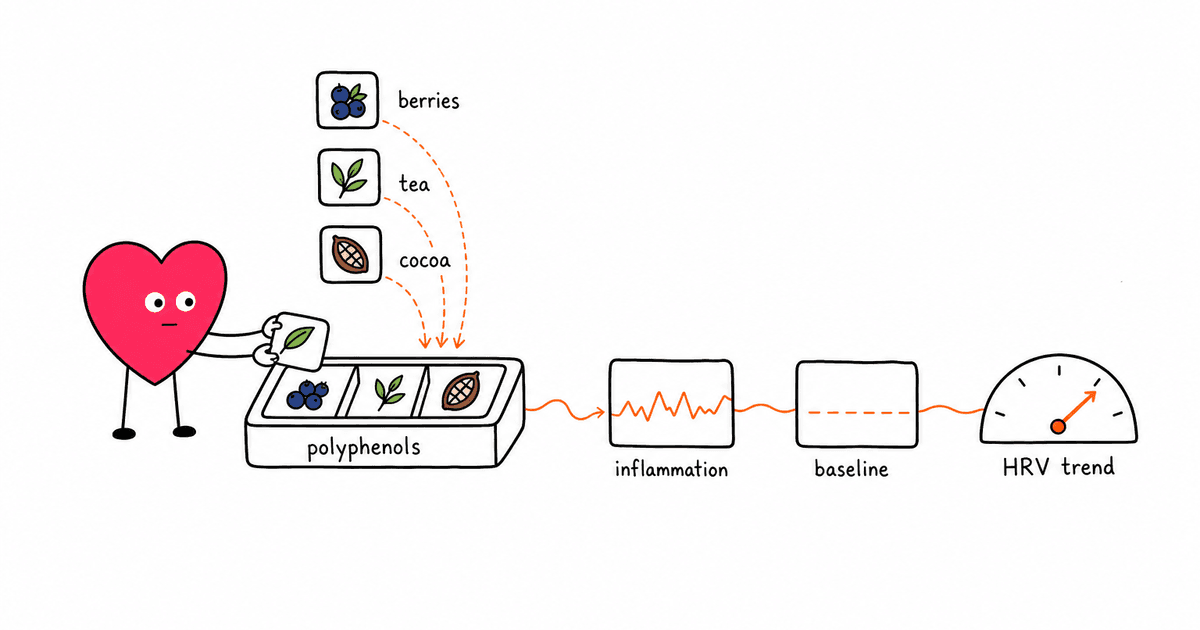
Polyphenols, a diverse group of plant compounds found in berries, tea, chocolate, olive oil, and red wine, are gaining attention in cardiovascular research for their ability to influence the autonomic nervous system. A 2025 narrative review in Frontiers in Neuroscience highlighted polyphenol-rich diets as a promising strategy for supporting HRV and slowing cardiovascular aging.
Here is what the science says about polyphenols and your HRV, and how to put it into practice.
What Are Polyphenols?
Polyphenols are naturally occurring compounds found in plants that act as antioxidants and anti-inflammatory agents in the human body. There are over 8,000 identified polyphenols, grouped into four main classes: flavonoids, phenolic acids, stilbenes, and lignans. They protect plants from UV radiation and pathogens, and when consumed, they offer similar protective benefits to human cells.
Unlike isolated supplements, polyphenols in whole foods work synergistically. A single cup of blueberries contains dozens of different polyphenol compounds that interact with each other and with your gut bacteria to produce health effects that no single molecule can replicate.
How Polyphenols Affect Your Autonomic Nervous System
The connection between polyphenols and HRV runs through several overlapping pathways that directly influence your parasympathetic and sympathetic nervous system balance.
Reducing Chronic Inflammation
Chronic low-grade inflammation is one of the primary drivers of reduced HRV. Inflammatory cytokines like IL-6 and TNF-alpha suppress vagal nerve activity, shifting your autonomic balance toward sympathetic dominance. Polyphenols combat this by inhibiting NF-kB, a key inflammatory signaling pathway, and by scavenging reactive oxygen species that damage nerve tissue.
A 2018 review in Behavioural Pharmacology found that polyphenol-rich dietary patterns were associated with reduced inflammatory markers and improved HRV parameters, particularly in the high-frequency (HF) domain, which reflects parasympathetic activity.
Supporting Vagus Nerve Function
Your vagus nerve is the primary conduit for parasympathetic signaling to the heart. Polyphenols support vagal function by protecting nerve cell membranes from oxidative damage, improving endothelial function in the blood vessels that supply the vagus nerve, and modulating neurotransmitter activity.
Research on catechins (the polyphenols in green tea) has demonstrated their ability to enhance parasympathetic stimulation, particularly when combined with regular physical activity. A study published in the Brazilian Journal of Sports Medicine found that green tea catechins prolonged and intensified parasympathetic nervous system activation during exercise recovery.
Improving Endothelial Function
Endothelial cells line your blood vessels and play a direct role in cardiovascular regulation. When endothelial function declines, baroreceptor sensitivity drops, reducing the heart's ability to respond to moment-by-moment changes in blood pressure. This directly lowers HRV. Polyphenols, particularly flavonoids, improve endothelial function by increasing nitric oxide bioavailability and reducing vascular stiffness.
A 2024 systematic review and meta-analysis in Frontiers in Physiology confirmed that blueberry polyphenols significantly improved endothelial function markers, with benefits appearing after as little as two weeks of regular consumption.
Modulating the Gut-Brain Axis
Your gut microbiome communicates with your brain and heart through the vagus nerve. Polyphenols act as prebiotics, selectively feeding beneficial gut bacteria that produce short-chain fatty acids (SCFAs). These SCFAs stimulate vagal afferent fibers, enhancing parasympathetic tone and raising HRV. About 90-95% of dietary polyphenols reach the colon unabsorbed, where they are metabolized by gut bacteria into bioactive compounds that exert systemic effects.
The Best Polyphenol Sources for HRV
Not all polyphenol sources are created equal. Here are the foods with the strongest evidence for cardiovascular and autonomic benefits.
Dark Chocolate and Cocoa
Cocoa is one of the richest sources of flavanols, a subclass of flavonoids with potent cardiovascular effects. A 2025 study in the European Journal of Cardiovascular Medicine found that a single dose of dark chocolate (70% cocoa or higher) produced measurable stress-reducing effects as assessed by HRV in healthy individuals. The participants showed increased parasympathetic activity within hours of consumption.
For HRV benefits, aim for 20-40 grams of dark chocolate daily with at least 70% cocoa content. The higher the cocoa percentage, the greater the polyphenol density. Milk chocolate contains significantly fewer flavanols and is not a meaningful source.
Green Tea
Green tea contains catechins, particularly epigallocatechin gallate (EGCG), which has been shown to enhance HRV parameters. Research published in PubMed found that EGCG supplementation enhanced sympathetic heart rate variability and decreased blood pressure in obese subjects in a randomized controlled trial.
The polyphenol content varies by preparation: matcha contains roughly three times the catechins of standard brewed green tea, since you consume the whole leaf. Two to three cups daily provides a meaningful polyphenol dose.
Berries
Blueberries, strawberries, raspberries, and blackberries are loaded with anthocyanins, a flavonoid subclass that gives them their deep color. Blueberries have been particularly well-studied. A 2024 review in Frontiers in Nutrition described the cardiovascular benefits of blueberry consumption, including improved vascular function and reduced inflammatory markers.
The anthocyanins in berries cross the blood-brain barrier, which means they can directly influence neural signaling. One cup of mixed berries daily is a practical and effective target for supporting autonomic health.
Extra Virgin Olive Oil
Extra virgin olive oil is rich in oleuropein and hydroxytyrosol, polyphenols unique to olives with strong anti-inflammatory and neuroprotective properties. A 2021 review in PubMed found that olive polyphenols and resveratrol protect nerve tissues and support healthy neural signaling, including along the vagus nerve.
Look for "high polyphenol" or "early harvest" olive oils, which contain higher concentrations of these compounds. Two tablespoons daily, used raw (drizzled, not cooked at high heat), preserves the polyphenol content.
Red Wine (in Moderation)
Red wine contains resveratrol and other stilbenes that have documented effects on HRV. A study in the American Journal of Physiology examined the dose-related effects of red wine with verified high-polyphenol content and found that the polyphenol component of wine had distinct autonomic effects compared to ethanol alone.
However, the negative effects of alcohol on HRV are well established. Even moderate alcohol intake suppresses parasympathetic activity for 24-72 hours. If you enjoy red wine, limit consumption to one glass and prioritize high-polyphenol varieties like Pinot Noir or Malbec. For the polyphenol benefits without the alcohol, consider red grape juice or resveratrol supplements.
Other Notable Sources
Several additional foods provide meaningful polyphenol doses:
- Coffee: Contains chlorogenic acid, a phenolic acid with antioxidant properties. The relationship with HRV depends on dose, as caffeine in excess can shift autonomic balance toward sympathetic dominance.
- Turmeric: Curcumin is a polyphenol with powerful anti-inflammatory effects. Pair with black pepper (piperine) to increase absorption by up to 2,000%.
- Walnuts and pecans: Among the highest polyphenol nuts. A pistachio-rich diet was associated with higher HF-HRV and greater total beat-to-beat variation in a study by Sauder et al. (2014).
- Red onions and apples: Rich in quercetin, a flavonoid with anti-inflammatory and antihistamine properties.
How Much Do You Need?
There is no official recommended daily intake for polyphenols, but the research points to a range. Most studies showing cardiovascular and autonomic benefits use diets providing 500 to 1,500 mg of total polyphenols per day. For reference:
| Food | Serving | Approximate Polyphenol Content |
|---|---|---|
| Blueberries | 1 cup (150g) | 500-700 mg |
| Dark chocolate (85%) | 30g | 200-500 mg |
| Green tea | 1 cup (240ml) | 150-300 mg |
| Extra virgin olive oil | 2 tbsp | 50-200 mg |
| Walnuts | 1 oz (28g) | 100-150 mg |
| Red wine | 5 oz (150ml) | 100-250 mg |
| Coffee | 1 cup (240ml) | 200-400 mg |
| Strawberries | 1 cup (150g) | 200-300 mg |
A diet that includes two to three servings of polyphenol-rich foods daily can easily reach the 500-1,000 mg range without supplements.
Polyphenols vs. Isolated Supplements
Polyphenol supplements (resveratrol capsules, grape seed extract, green tea extract) are widely available, but the evidence for supplements is less consistent than for whole foods. There are several reasons:
- Bioavailability: Polyphenols in whole foods are packaged with fiber, fats, and other compounds that enhance absorption. Isolated supplements may not be absorbed as effectively.
- Gut microbiome interaction: Much of polyphenols' benefit comes from how gut bacteria metabolize them. Whole foods provide the prebiotic fiber that feeds those bacteria simultaneously.
- Synergistic effects: The hundreds of polyphenol compounds in a single food work together. Isolating one compound may miss the combined effect.
That said, certain supplements have shown promise. EGCG from green tea extract has demonstrated HRV benefits in clinical trials. Resveratrol supplements at doses of 150-500 mg daily have shown cardiovascular benefits in some studies. If you supplement, combine with whole food sources rather than relying on pills alone.
Timing Matters: When to Eat Polyphenols for HRV
The timing of polyphenol consumption can influence its effects on your autonomic nervous system:
- Morning: Green tea or coffee provides polyphenols alongside a gentle caffeine boost. The catechins may enhance morning recovery metrics when consumed consistently.
- Pre-workout: A small piece of dark chocolate 30-60 minutes before exercise provides flavanols that support vascular function during training.
- Evening: Polyphenol-rich foods at dinner (olive oil-based dressing, berries as dessert) may support overnight parasympathetic recovery. Avoid caffeine-containing sources in the evening.
- Post-exercise: Berries after training provide antioxidants that may reduce exercise-induced oxidative stress without blunting the adaptive training response.
Tracking the Effects on Your HRV
If you want to test polyphenol-rich eating on your HRV, follow a structured approach:
- Establish a baseline: Track your resting HRV for 7-14 days with your current diet using a wearable like Oura Ring or Whoop.
- Introduce changes gradually: Add two to three servings of polyphenol-rich foods daily for at least four weeks.
- Control other variables: Keep sleep, exercise, and alcohol intake consistent during the trial.
- Look at trends: Day-to-day HRV fluctuates naturally. Focus on your 7-day rolling average and monthly trends rather than single readings.
- Use HRV tracking tools: Most wearables provide trend analysis that makes it easy to spot sustained shifts.
Research suggests that dietary changes typically take two to six weeks to produce measurable HRV shifts, so patience is important. Short-term effects (like those from dark chocolate) may appear within hours, but sustained autonomic improvements require consistent dietary habits.
Key Polyphenol Types and Their Mechanisms
| Polyphenol Class | Key Compounds | Best Food Sources | Primary HRV Mechanism |
|---|---|---|---|
| Flavanols | Catechins, EGCG | Green tea, dark chocolate | Enhance parasympathetic tone |
| Anthocyanins | Cyanidin, delphinidin | Berries, red cabbage | Reduce vascular inflammation |
| Stilbenes | Resveratrol | Red grapes, peanuts | Protect nerve tissue, modulate NO |
| Phenolic acids | Chlorogenic acid | Coffee, whole grains | Antioxidant protection |
| Flavonols | Quercetin, kaempferol | Onions, apples, kale | Anti-inflammatory, antihistamine |
| Secoiridoids | Oleuropein | Extra virgin olive oil | Neuroprotective, anti-inflammatory |
Common Mistakes to Avoid
Over-relying on supplements: Whole foods provide a broader spectrum of polyphenols with better bioavailability. Supplements should complement, not replace, a polyphenol-rich diet.
Cooking at high heat: Many polyphenols degrade at temperatures above 180C (356F). Use olive oil for low-heat cooking or as a finishing oil. Lightly cook or eat vegetables raw when possible.
Ignoring the gut connection: Polyphenols need a healthy gut microbiome to be metabolized effectively. Pairing polyphenol-rich foods with fermented foods and dietary fiber supports this process.
Expecting instant results: Autonomic adaptations from dietary changes are gradual. Commit to at least four weeks of consistent polyphenol-rich eating before evaluating HRV trends.
Neglecting other fundamentals: Polyphenols are a powerful tool, but they work best alongside quality sleep, regular exercise, stress management, and adequate hydration.
Frequently Asked Questions
Do polyphenols directly increase HRV?
Polyphenols influence HRV through indirect mechanisms: reducing inflammation, improving endothelial function, supporting vagal nerve health, and modulating gut-brain communication. The combined effect of these pathways can lead to measurable improvements in HRV over weeks to months of consistent consumption.
Can you get enough polyphenols from diet alone?
Yes. A diet that includes daily servings of berries, green tea, dark chocolate, olive oil, and colorful vegetables can easily provide 500-1,500 mg of polyphenols per day, which is within the range associated with cardiovascular benefits in clinical research.
Which polyphenol food has the biggest impact on HRV?
Dark chocolate (high-cocoa, 70%+) and green tea have the most direct evidence for HRV effects. Blueberries have the strongest evidence for endothelial function improvements. A combination of all three likely produces the greatest benefit.
Are polyphenol supplements safe?
Most polyphenol supplements are generally well tolerated. However, high-dose green tea extract has been associated with liver concerns in rare cases, and concentrated resveratrol may interact with blood thinners. Consult your healthcare provider before starting high-dose polyphenol supplementation, especially if you take medications.
How long before polyphenols improve HRV?
Acute effects from dark chocolate may appear within hours. Sustained HRV improvements from dietary changes typically require two to six weeks of consistent polyphenol-rich eating. Gut microbiome adaptations that enhance polyphenol metabolism can take even longer, up to 8-12 weeks.
Need a quick read on your HRV number first?
Enter your HRV value, age range, device, and recovery context for a plain-English interpretation before you decide what to do next.
Interpret Your HRV NumberBuild the 30-day plan