Laughter and HRV: How Humor Affects Your Autonomic Nervous System
Trying to decode today's HRV number? Use the free interpreter first, then build a practical recovery plan. Interpret your HRV
Everyone has experienced the way a good laugh makes the whole body feel lighter. But behind that feeling is a measurable physiological shift. Laughter engages the autonomic nervous system in ways that directly affect heart rate variability, and the research behind it is surprisingly robust.
What Happens to Your Body When You Laugh
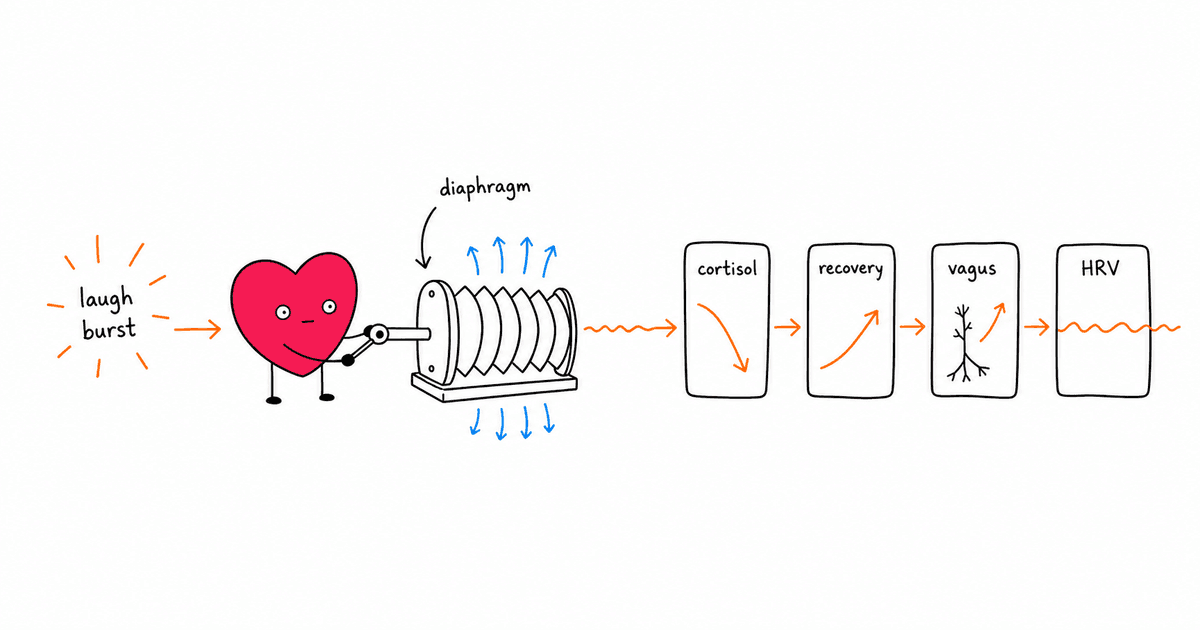
Laughter is a complex physiological event that involves the respiratory, cardiovascular, musculoskeletal, and autonomic nervous systems simultaneously. It triggers rapid diaphragmatic contractions, increases heart rate temporarily, and produces a cascade of neurochemical changes that shift autonomic balance.
When you laugh, your body goes through two distinct phases:
- The arousal phase. Heart rate spikes, blood pressure rises briefly, and sympathetic activity increases. Your diaphragm contracts in rapid bursts, and respiratory patterns become irregular.
- The recovery phase. After the laughter subsides, heart rate drops below baseline, blood pressure decreases, muscles relax, and parasympathetic activity dominates. This recovery phase is where the HRV benefits emerge.
This two-phase pattern mirrors what happens during moderate physical exercise (similar to the autonomic effects of yoga or walking), which is why some researchers describe laughter as "internal jogging."
How Laughter Affects HRV
The relationship between laughter and HRV involves several interconnected mechanisms.
Vagus Nerve Stimulation
The vagus nerve, the primary driver of parasympathetic activity and HRV, responds to laughter through multiple pathways. The deep diaphragmatic movements involved in a genuine belly laugh physically stimulate the vagus nerve as it passes through the diaphragm. The vocalization component of laughter creates vibrations in the larynx that further activate vagal afferent fibers, similar to the mechanism behind humming or chanting.
A 2012 study on laughter yoga found that participants showed increased HRV after sessions, indicating improved balance between the parasympathetic and sympathetic nervous systems (Dolgoff-Kaspar et al., 2012). The researchers noted that the deep breathing patterns inherent to sustained laughter likely contributed to vagal tone improvements.
Cortisol Reduction
Cortisol suppresses parasympathetic activity and lowers HRV. A 2023 systematic review and meta-analysis published in PLOS ONE found that spontaneous laughter reduced cortisol levels by approximately 37% after a single session. This effect was consistent whether laughter was induced by watching comedy or through structured laughter therapy.
Lower cortisol means less sympathetic dominance, which creates space for parasympathetic activity to increase, and that typically shows up as higher HRV readings on your wearable. For more on how stress hormones affect your autonomic nervous system, see our guide on HRV and stress.
Endorphin and Neurochemical Release
Laughter triggers the release of endorphins, dopamine, and serotonin. These neurochemicals don't directly raise HRV, but they reduce the perceived stress load on the nervous system. A 2011 study published in Proceedings of the Royal Society B found that genuine social laughter significantly increased endorphin release, as measured by pain threshold elevation.
The downstream effect matters: when your neurochemical environment shifts away from stress and toward relaxation, your autonomic nervous system follows.
The Research on Laughter and Cardiovascular Health
A 2022 systematic review examining 32 studies on laughter-inducing interventions found consistent evidence that laughter is associated with decreases in blood pressure and improvements in cardiovascular markers. While HRV was not the primary outcome in all studies, the autonomic shift toward parasympathetic dominance was a common finding.
Research on laughter therapy in clinical settings has shown particularly interesting results:
- Organ transplant patients who participated in laughter yoga sessions over four weeks showed improvements in both mood and HRV metrics compared to control interventions (Dolgoff-Kaspar et al., 2012).
- Cancer patients receiving laughter therapy showed reduced stress hormones and improved natural killer cell activity, a marker of immune function closely tied to autonomic balance (Bennett et al., 2003).
- Middle-aged adults in a 2025 randomized controlled trial showed significant improvements in mood and stress markers after laughter interventions compared to neutral video viewing.
What HRV Trackers Show
If you wear an Oura Ring or WHOOP band, you may notice interesting patterns on days with more social laughter. Many users report higher nighttime HRV following evenings spent laughing with friends or watching comedy. While individual sessions may not produce dramatic RMSSD changes, the cumulative effect of regular laughter as part of a socially engaged lifestyle is reflected in long-term HRV trends.
The key distinction is between acute effects (what happens during and immediately after laughter) and chronic effects (how regular laughter habits influence baseline HRV over weeks and months).
Laughter Yoga: A Structured Approach
Laughter yoga, developed by Dr. Madan Kataria in 1995, combines voluntary laughter exercises with yogic breathing techniques. The premise is that the body cannot distinguish between genuine and simulated laughter, so both produce similar physiological benefits.
How It Works
A typical laughter yoga session includes:
- Warm-up exercises. Clapping, chanting, and light stretching to break tension.
- Laughter exercises. Structured activities that begin with forced laughter and often transition into genuine laughter through group dynamics.
- Laughter meditation. Free-flowing laughter without specific exercises.
- Guided relaxation. Deep breathing and body scanning to consolidate the parasympathetic shift.
The Evidence for Laughter Yoga and HRV
Research on laughter yoga specifically shows promising effects on autonomic balance. Studies have found that regular laughter yoga practice over several weeks leads to measurable increases in HRV, alongside reductions in cortisol and self-reported stress. The deep breathing component adds to the vagal tone benefits, combining the effects of breathwork (covered in our guide to breathing exercises and HRV) with the unique autonomic stimulation of laughter itself.
Spontaneous vs. Simulated Laughter
A 2018 study published in Complementary Therapies in Medicine compared the cardiovascular effects of simulated and spontaneous laughter. Both types increased heart rate during the laughing episode, but the patterns differed:
- Simulated laughter produced more intense cardiovascular responses, likely because participants were instructed to laugh as vigorously as possible.
- Spontaneous laughter produced more natural autonomic shifts and was followed by a more pronounced parasympathetic recovery phase.
For HRV purposes, both types appear beneficial. Spontaneous laughter may have a slight edge in terms of the quality of the parasympathetic recovery, but simulated laughter (like laughter yoga) still activates the vagus nerve through diaphragmatic movement and vocalization.
How Laughter Connects to Other HRV-Boosting Activities
Laughter doesn't operate in isolation. It intersects with several other factors known to improve HRV:
Social Connection
Laughter is fundamentally social. Research consistently shows that people laugh 30 times more frequently in social settings than when alone. The combination of social bonding and laughter creates a compounding effect on HRV, as social connection independently improves autonomic balance through oxytocin release and nervous system co-regulation.
Stress Reduction
The cortisol-lowering effects of laughter complement other stress management strategies. If you already practice meditation or use HRV biofeedback training, adding regular laughter to your routine provides an additional pathway to parasympathetic activation.
Breathing Patterns
Sustained laughter forces deep, rhythmic diaphragmatic breathing. The extended exhalations that follow bursts of laughter are functionally similar to the slow breathing techniques known to improve HRV. This is one reason why laughter yoga specifically pairs laughter with breathwork.
Practical Ways to Increase Daily Laughter
Most adults laugh an average of 15 to 20 times per day, compared to 300 to 400 times for children. Deliberately increasing your "laughter dose" is a simple, free intervention that supports HRV. Here are evidence-backed approaches:
Build Social Laughter Into Your Routine
- Schedule regular time with people who make you laugh.
- Join group activities with a humor component (improv classes, comedy open mics, game nights).
- Watch comedy with others rather than alone, as social laughter is more sustained and intense.
Try Laughter Yoga
- Find a local laughter yoga group or start with guided sessions online.
- Even 10 to 15 minutes of laughter exercises can produce measurable autonomic effects.
- Pair it with your existing breathwork or meditation routine.
Create a Humor-Friendly Environment
- Keep comedy content in your rotation (podcasts, shows, books).
- Cultivate a habit of finding humor in everyday situations.
- Spend less time consuming content that triggers stress and more time with content that generates genuine amusement.
Track the Effect on Your HRV
Use your Apple Watch, Garmin, or other HRV tracker to observe patterns. After an evening of genuine laughter, check your overnight HRV the next morning. Over several weeks, you may notice that days with more social laughter correlate with higher recovery scores.
Who Benefits Most
While laughter improves autonomic function across all populations, certain groups may see particular benefits:
- People with high baseline stress. If cortisol is chronically elevated, the stress-buffering effects of laughter can provide meaningful HRV improvement. This includes people experiencing burnout or anxiety.
- Older adults. Research on laughter therapy in aging populations shows improvements in mood, immune function, and cardiovascular markers. This complements other approaches for HRV in seniors.
- People recovering from illness. Clinical studies on laughter therapy in hospital and rehabilitation settings show consistent autonomic benefits.
- Anyone experiencing social isolation. Since laughter is most powerful in social contexts, prioritizing social humor can address both the isolation and HRV simultaneously. Social connection and laughter create compounding autonomic benefits.
Limitations of the Research
It is worth noting some caveats in the current literature:
- Small sample sizes. Many laughter-HRV studies involve fewer than 30 participants.
- Short intervention periods. Most studies examine acute effects (single sessions) rather than long-term HRV changes from sustained laughter habits.
- Difficulty isolating variables. Laughter often occurs alongside social interaction, physical activity, and positive emotions, making it challenging to attribute HRV changes to laughter alone.
- Measurement timing. HRV during laughter is unreliable due to the respiratory irregularity. The meaningful measurements come from the recovery period and overnight readings.
Despite these limitations, the overall direction of the evidence is consistent: laughter shifts autonomic balance toward parasympathetic activity and supports the physiological conditions associated with higher HRV.
The Bottom Line
Laughter is one of the most accessible and enjoyable ways to support your autonomic nervous system. Through vagus nerve stimulation, cortisol reduction, endorphin release, and the deepening of social bonds, regular laughter creates conditions favorable to higher HRV. You do not need a prescription, a supplement, or specialized equipment. You just need to prioritize humor, connection, and the willingness to laugh more often. For a comprehensive list of strategies, see our guide on how to improve HRV.
If you track HRV with a wearable like the Oura Ring or WHOOP, start logging your laughter-heavy days and compare them to your baseline. The data may surprise you.
Need a quick read on your HRV number first?
Enter your HRV value, age range, device, and recovery context for a plain-English interpretation before you decide what to do next.
Interpret Your HRV NumberBuild the 30-day plan