Pesticides and HRV: What Exposure May Mean for Heart Health
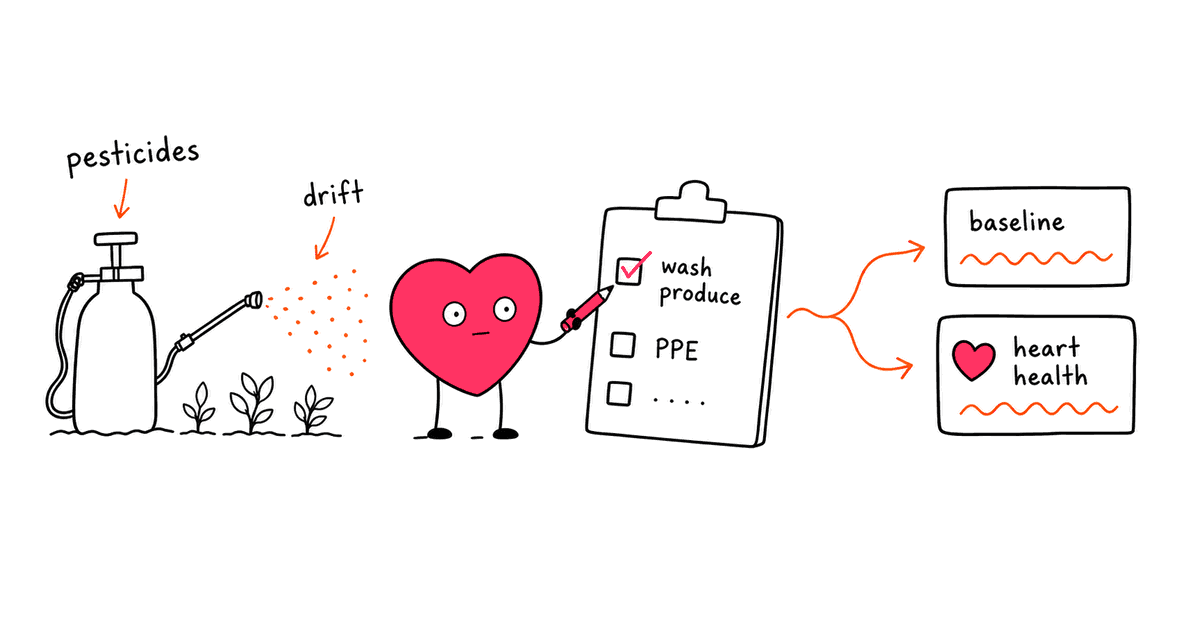
Pesticides are not a normal recovery variable like sleep debt, alcohol, illness, training load, or dehydration. Your HRV app will not tell you that a lawn treatment, bug spray, farm drift, or garden chemical caused last night's low score.
Still, pesticide exposure belongs in the broader heart health conversation. Some pesticides can affect the nervous system, blood pressure, inflammation, oxidative stress, and cardiovascular risk. Those systems overlap with heart rate variability, which reflects how flexibly your autonomic nervous system regulates heart rhythm.
The honest framing is simple: pesticides are not a quick HRV hack or a daily score explanation for most people. They are a possible background stressor, especially for farmworkers, applicators, landscapers, gardeners, people living near treated fields, and households that use chemical pest control frequently.
Does Pesticide Exposure Affect HRV?
Pesticide exposure may affect HRV by disrupting autonomic nervous system regulation, but direct evidence is limited, mixed, and strongest for higher or repeated exposure. HRV cannot diagnose pesticide exposure, and a low HRV reading should not be used to identify a specific chemical cause.
For everyday users, the useful question is not "did pesticides lower my HRV last night?" It is "am I regularly exposed to something that could add avoidable strain to my nervous and cardiovascular systems?"
That is a better question because it leads to practical steps: reduce unnecessary exposure, use safer pest-control methods, protect children and pets, follow labels, improve ventilation, and treat occupational exposure seriously.
What Counts as Pesticide Exposure?
Pesticide exposure happens when a chemical used to control insects, weeds, fungi, rodents, or other pests enters the body through breathing, skin contact, eye contact, or ingestion. Exposure can happen at work, at home, outdoors, through treated surfaces, or through residues on food and soil.
Pesticides are a broad category, not one substance. Common groups include:
- insecticides for ants, mosquitoes, fleas, ticks, termites, or crop insects
- herbicides for weeds, lawns, gardens, fields, and rights of way
- fungicides used on crops, ornamentals, and damp-prone settings
- rodenticides used for rats and mice
- disinfectants and antimicrobial products used to control microbes
- repellents used on skin, clothing, gear, and outdoor spaces
The route and dose matter. A licensed applicator mixing concentrates has a different risk profile than someone eating conventionally grown apples. A child crawling on a freshly treated floor has a different exposure pattern than an adult walking past a treated lawn.
Why Pesticides Matter for Heart Health
Pesticides are usually discussed as toxicology, agriculture, or environmental health. For HRV readers, the key connection is the autonomic nervous system.
Some pesticides, especially organophosphates, can interfere with cholinergic signaling by affecting acetylcholinesterase. That is one reason acute poisoning can cause neurological and cardiovascular symptoms. HRV depends on the balance and responsiveness of the sympathetic and parasympathetic branches, so chemicals that affect autonomic signaling are biologically relevant.
That does not mean every pesticide exposure lowers HRV. It means the pathway is plausible enough to take seriously without turning it into fear-based wellness content.
A 2019 study in the Journal of the American Heart Association analyzed 7,557 Japanese-American men in the Kuakini Honolulu Heart Program. In the first 10 years of follow-up, high occupational pesticide exposure was associated with higher cardiovascular disease incidence after adjustment for risk factors. The adjusted hazard ratio was 1.42, with a 95 percent confidence interval of 1.05 to 1.92.
That study was about cardiovascular disease, not wearable HRV. But it supports a broader point: meaningful pesticide exposure may matter for the same cardiovascular systems that influence HRV trends over time.
For related context, see HRV and blood pressure, inflammation and HRV, and air pollution and HRV. If you are mapping environmental load more broadly, compare pesticide exposure with lead exposure and HRV, PFAS and HRV, phthalates and HRV, and microplastics and HRV.
What the Research Says About Pesticides and HRV
The pesticide-HRV literature is not as deep as the research on sleep, alcohol, fitness, or stress. It also varies by chemical class, exposure timing, dose, population, and measurement method.
The most useful interpretation is cautious: pesticide exposure can affect autonomic function in some settings, but HRV is not specific enough to tell you which exposure is responsible.
Organophosphates and Autonomic Function
Organophosphates are important because they are designed to affect nervous system signaling in pests, and higher human exposure can affect nervous system function.
A 2012 PLOS One cohort study examined autonomic function after acute organophosphorus poisoning. Researchers compared 66 overdose patients with 70 controls and measured heart-rate responses, blood-pressure responses, sympathetic skin response, pupil size, and other autonomic markers.
The study found some short-term differences at one week, but by six weeks most autonomic measures had recovered, with only a minor decrease in heart-rate response to deep breathing. The authors concluded that a single acute exposure did not show strong evidence of long-term autonomic dysfunction.
This is useful because it prevents overstatement. Even a serious exposure scenario did not create a simple, permanent HRV story. Timing, dose, recovery, and measurement method all matter.
Prenatal and Childhood Exposure
A 2011 Neurotoxicology study examined maternal and child organophosphate pesticide exposure and children's autonomic function. Exposure was assessed with urinary dialkylphosphate metabolites, and autonomic function was assessed with heart rate, respiratory sinus arrhythmia, and preejection period during resting and challenge conditions.
The study found some associations in infancy, including lower resting respiratory sinus arrhythmia at 6 months with some child metabolite measures. But the authors reported no consistent associations through age 5.
That is not a clean "pesticides lower HRV" result. It is a signal that early-life exposure may interact with autonomic development, while also showing why the evidence needs careful reading.
A newer 2024 study on children of agricultural workers reported that organophosphate exposure may adversely affect autonomic stress response, with effects varying by timing of exposure and autonomic branch. That direction fits the biological plausibility, but it still does not make consumer HRV a pesticide exposure test.
Cardiovascular Risk Evidence Is Broader Than HRV
Direct HRV studies are limited, so cardiovascular research matters as supporting context.
The 2019 Kuakini Honolulu Heart Program analysis found higher cardiovascular disease incidence among men with high occupational pesticide exposure during the first 10 years of follow-up. The study adjusted for age, body mass index, systolic blood pressure, cholesterol, triglycerides, glucose, physical activity, smoking, alcohol intake, and education.
A 2025 Frontiers in Nutrition study using NHANES 2007 to 2018 examined associations between pesticide biomarkers and cardiovascular health using the American Heart Association's Life's Essential 8 framework. It included biomarkers related to 2,4-D herbicides, atrazine metabolites, organophosphate metabolites, and glyphosate.
The practical takeaway is not that one pesticide biomarker predicts your HRV. It is that researchers continue to examine pesticide exposure alongside cardiovascular health markers, because the connection is plausible and public-health relevant.
How Pesticide Exposure Could Influence HRV
HRV is not a toxin detector. But pesticide exposure could plausibly influence HRV through several nonspecific pathways:
- Autonomic signaling: some chemicals can affect cholinergic signaling, sympathetic activation, parasympathetic tone, or stress reactivity.
- Blood pressure and vascular strain: higher blood pressure is often associated with lower HRV and greater cardiovascular load.
- Oxidative stress and inflammation: these pathways can affect vascular function, immune signaling, sleep quality, and recovery.
- Respiratory irritation: sprays, aerosols, residues, and solvents can irritate airways in sensitive people, which may affect sleep and autonomic tone.
- Sleep disruption: odor, irritation, worry, indoor applications, and pets reacting to treatments can disturb sleep, one of the strongest drivers of HRV.
For related context, see sleep and HRV. If pesticide exposure comes with wheezing, chest tightness, dizziness, nausea, excessive salivation, sweating, weakness, confusion, or other symptoms, treat that as a safety issue, not an HRV experiment.
What HRV Can and Cannot Tell You
HRV can show that your body is under stress. It cannot tell you why with chemical specificity.
HRV may be useful if:
- you work with pesticides and want a broad recovery trend alongside proper occupational monitoring
- your HRV repeatedly drops after certain workdays, spray days, or lawn treatments
- HRV changes appear with symptoms, poor sleep, higher resting heart rate, or blood pressure changes
- you are improving several exposure and lifestyle factors and want to track recovery over months
HRV cannot tell you:
- whether your produce has pesticide residue
- whether your house was treated safely
- whether a specific herbicide, insecticide, or fungicide caused a low score
- whether you were poisoned
- whether children, pets, or pregnant household members are safe after an application
If exposure is suspected, the right tools are label instructions, poison control guidance, occupational safety protocols, medical evaluation, and environmental testing when appropriate.
Who Should Pay Extra Attention?
Most people should not panic about occasional, low-level exposure. The higher-priority groups are people with repeated, higher, or more vulnerable exposure patterns.
Pay closer attention if you are:
- a farmworker, pesticide applicator, landscaper, groundskeeper, greenhouse worker, or pest-control worker
- mixing, loading, spraying, or cleaning pesticide equipment
- living next to treated fields, orchards, golf courses, or frequent spray zones
- using indoor pesticides repeatedly for roaches, fleas, bed bugs, ants, or mosquitoes
- pregnant, trying to conceive, or caring for infants and young children
- managing asthma, COPD, arrhythmias, high blood pressure, or cardiovascular disease
- handling contaminated clothing, shoes, tools, or vehicles from someone else's work
- gardening with chemical pest-control products without protective gear
This is not about fear. It is about matching the level of precaution to the level of exposure.
How to Reduce Pesticide Exposure Without Overreacting
The best exposure plan is boring, practical, and repeatable.
Use Integrated Pest Management First
The EPA describes Integrated Pest Management as a common-sense approach that uses monitoring, prevention, identification, and targeted controls before relying on pesticides.
At home, that means:
- seal gaps, cracks, and entry points
- remove standing water
- store food in sealed containers
- fix leaks and moisture problems
- clean crumbs, pet food, and trash areas
- remove plant debris and pest shelter around the home
- identify the actual pest before treating
- use traps, barriers, screens, and habitat changes before sprays
This often reduces pesticide use more effectively than repeatedly spraying without fixing the reason pests are there.
Follow the Label Exactly
If you use a pesticide, the label is the safety instruction, not a suggestion.
The EPA's pesticide safety tips emphasize reading the label, using only the directed amount, wearing recommended protective gear, keeping children and pets away until the product has dried or as directed, and avoiding outdoor spraying on windy or rainy days.
More is not better. More increases exposure risk and can create runoff, drift, residue, or indoor contamination.
Avoid Spray Drift and Bad Timing
Do not spray outdoors on windy days. Do not spray before rain. Avoid application when people, pets, toys, food, open windows, or garden harvest areas are nearby.
If a neighbor, farm, lawn company, or building manager is treating nearby, close windows, bring toys and pet bowls inside, avoid the treated area, and ask for product names and re-entry timing.
Protect Skin, Eyes, and Lungs
For anyone applying pesticides, basic protection matters:
- wear gloves specified by the label
- wear long sleeves, long pants, socks, and closed shoes
- avoid touching your face during application
- wash hands immediately afterward
- wash contaminated clothing separately
- shower after significant work exposure
- store chemicals away from living spaces, food, children, and pets
For occupational users, follow workplace safety rules, Safety Data Sheets, training requirements, respirator fit testing when required, and re-entry intervals.
Be Careful Indoors
Indoor applications can create concentrated exposure because residues remain in enclosed spaces.
Use non-chemical controls first. If treatment is needed, ventilate as directed, remove or cover food, keep children and pets away, and avoid treating sleeping areas unless the product is explicitly designed and labeled for that use.
Repeated indoor spraying for the same pest is a sign that the source problem has not been solved.
Wash Produce, But Keep Eating Plants
Washing fruits and vegetables under running water can reduce dirt, microbes, and some residues. Peeling can reduce residues for some foods, but it can also remove fiber and nutrients.
Do not let pesticide concern push you away from fruits and vegetables. A heart-healthy diet still supports blood pressure, vascular function, metabolic health, and HRV more reliably than avoiding produce out of fear.
If budget allows, you can prioritize organic options for foods you eat frequently or foods with higher residue concern. But the bigger win is still a plant-rich diet, good food handling, and reduced unnecessary chemical use at home.
Keep HRV in Context
If your HRV is low after pesticide work, do not jump to one explanation. Also check sleep, alcohol, hydration, heat exposure, illness symptoms, training load, work stress, resting heart rate, blood pressure, and respiratory symptoms.
If low HRV appears with symptoms after pesticide exposure, prioritize safety and medical guidance over trend interpretation.
What to Do After a Possible Pesticide Exposure
If you think you were exposed, step away from the source, get fresh air if safe, remove contaminated clothing, wash exposed skin, and follow the product label's first-aid instructions.
If symptoms are significant, call poison control or emergency services. In the United States, Poison Control is available at 1-800-222-1222.
Do not wait for HRV to confirm a problem. HRV is too slow, too indirect, and too nonspecific for acute exposure decisions.
For occupational exposure, report the incident through the proper workplace process and seek medical evaluation when indicated. Bring the product name, label, Safety Data Sheet, and exposure details if possible.
Bottom Line
Pesticides may matter for HRV because some exposures can affect autonomic regulation, cardiovascular strain, blood pressure, inflammation, respiratory function, and sleep. The direct HRV evidence is real but limited, and it does not support using HRV as a pesticide detector.
For most people, the best approach is practical: reduce unnecessary pesticide use, use Integrated Pest Management, follow labels exactly, protect children and pets, take occupational exposure seriously, and watch long-term health patterns instead of obsessing over one night's HRV.
If your exposure risk is high, the answer is not more wearable data. It is better exposure control, proper safety practices, and medical or occupational guidance when needed.
FAQ
Can pesticides lower HRV overnight?
They might in some situations, especially if exposure affects sleep, breathing, stress, or symptoms. But HRV cannot prove pesticides caused the change. Poor sleep, heat, alcohol, illness, dehydration, and training load are more common explanations.
Are organic pesticides always safe for HRV?
No. "Organic" does not automatically mean harmless. Natural-source pesticides can still irritate skin, lungs, eyes, pets, or beneficial insects. Use the same safety mindset: identify the pest, use the least risky effective method, and follow the label.
Should farmworkers track HRV?
HRV can be a useful recovery trend for workers with physical labor, heat exposure, long hours, and chemical exposure. But it should not replace occupational safety controls, protective equipment, cholinesterase monitoring when applicable, medical evaluation, or workplace reporting.
When should pesticide exposure be treated as urgent?
Seek immediate guidance if exposure is followed by trouble breathing, chest pain, fainting, confusion, severe weakness, vomiting, seizures, excessive sweating or salivation, pinpoint pupils, or worsening symptoms. Do not wait for HRV data before acting.
Need a quick read on your HRV number first?
Enter your HRV value, age range, device, and recovery context for a plain-English interpretation before you decide what to do next.
Interpret Your HRV NumberBuild the 30-day plan