Lead Exposure and HRV: What Heavy Metals May Mean for Heart Health
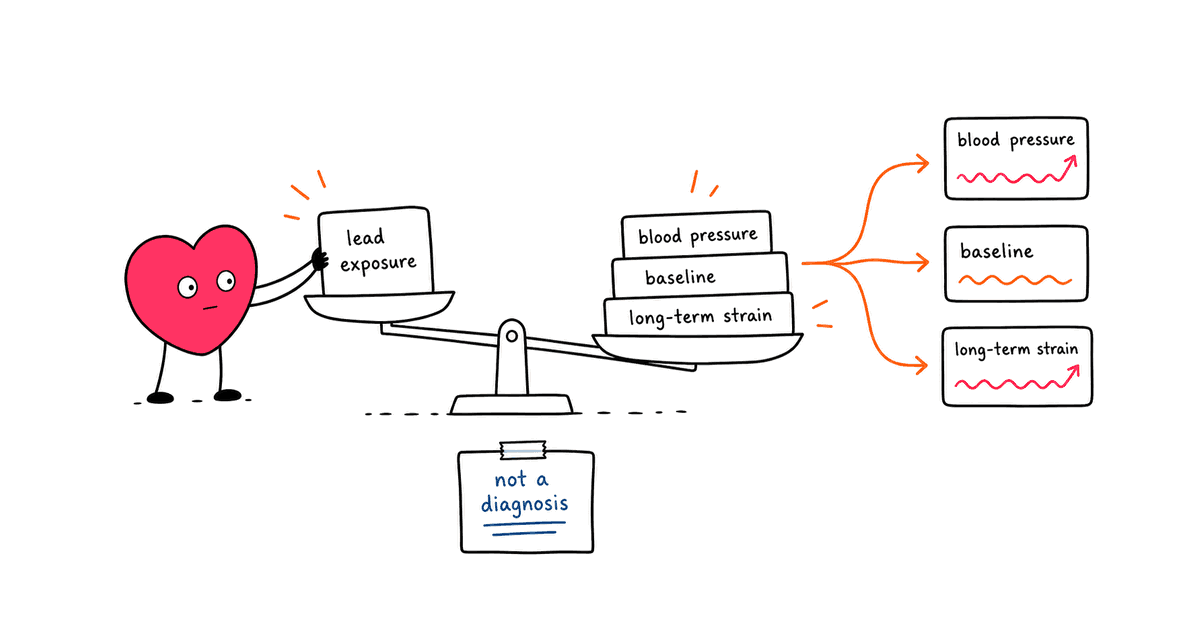
Lead is not a normal recovery variable like sleep, training load, hydration, alcohol, or illness. You will not see "lead exposure" in your HRV app after a bad night.
But lead belongs in the broader heart health conversation. It is a toxic metal linked with blood pressure, kidney function, nervous system effects, oxidative stress, and cardiovascular risk. Those systems all overlap with heart rate variability, which reflects how flexibly your autonomic nervous system regulates heart rhythm.
The honest framing matters. Lead exposure is not a quick HRV lever. You should not blame one low recovery score on old paint, tap water, or garden soil. The stronger concern is long-term exposure that adds background strain to the cardiovascular and nervous systems.
Does Lead Exposure Affect HRV?
Lead exposure may reduce or dysregulate HRV, especially in people with occupational exposure, metabolic risk, or early-life exposure, but HRV cannot diagnose lead exposure. The evidence is stronger for lead's effects on blood pressure, cardiovascular risk, and nervous system function than for consumer-wearable HRV trends.
In practical terms, lead is a possible background stressor, not a same-day recovery explanation. If your HRV suddenly drops, common causes such as poor sleep, high stress, infection, alcohol, heat, dehydration, medication changes, or overtraining are still more likely.
If your exposure risk is real, the right next step is not obsessing over HRV. It is identifying the source, reducing exposure, and getting appropriate blood lead testing through a clinician or public health program.
What Is Lead Exposure?
Lead exposure happens when lead enters the body through inhaled dust or fumes, swallowed dust, contaminated soil, water, food, or products. Lead can affect multiple organs, accumulates in bone over time, and has no known safe level of exposure according to the World Health Organization.
Lead exposure can come from old and modern sources. Common ones include:
- lead-based paint and dust in homes built before 1978
- contaminated soil near older buildings, roads, industry, or shooting ranges
- drinking water that passes through lead service lines, solder, or fixtures
- renovation, repair, painting, demolition, and construction work
- battery manufacturing, recycling, smelting, and metal work
- firing ranges, reloading ammunition, fishing sinkers, and stained glass work
- some imported spices, cosmetics, ceramics, toys, jewelry, or traditional medicines
- take-home dust from a job or hobby involving lead
The EPA notes that lead can be found in air, soil, water, food, and older buildings. The CDC/NIOSH guidance is blunt: any amount of lead in blood means a person was exposed.
Why Lead Matters for Heart Health
Lead is often discussed as a childhood neurodevelopment issue, and for good reason. Children and pregnant women are especially vulnerable.
For adults tracking HRV, the cardiovascular side deserves attention too. The World Health Organization states that lead exposure can cause long-term harm in adults, including increased risk of high blood pressure, cardiovascular problems, and kidney damage. WHO also estimates that lead exposure was attributed to more than 1.5 million deaths globally in 2021, primarily due to cardiovascular effects.
That does not mean HRV is a lead screening tool. It means chronic lead exposure can affect the same systems HRV depends on: vascular tone, autonomic regulation, inflammation, kidney function, and metabolic health.
For related background, see HRV and blood pressure, kidney disease and HRV, and inflammation and HRV. For a wider environmental-health cluster, compare lead with pesticide exposure and HRV, PFAS and HRV, and air pollution and HRV.
What the Research Says About Lead and HRV
The lead-HRV literature is smaller than the lead-blood-pressure literature, but it is not empty. The safest read is this: lead exposure is plausibly relevant to autonomic function, while HRV evidence varies by exposure level, timing, population, and measurement method.
Occupational Lead Exposure
A 2005 study of 43 battery workers exposed to inorganic lead found reduced HRV during some autonomic tests compared with unexposed subjects. The exposed workers had a mean blood lead level of 31.63 mcg/dL, and some HRV measures correlated with blood lead and zinc protoporphyrin, a marker related to lead's effect on red blood cell production.
That study does not tell you what happens at very low everyday exposure. It does support the idea that meaningful occupational lead exposure can affect autonomic nervous system function.
A 2021 study in Hypertension followed 195 newly hired lead workers for two years and tracked heart rate, HRV, and nerve conduction during first occupational exposure. The key point for readers is not that every lead worker had the same HRV response. It is that modern occupational research continues to treat HRV as one way to monitor lead's nervous system and cardiovascular effects.
Low-Level Lead, Metabolic Syndrome, and HRV
A 2006 Environmental Health Perspectives study from the VA Normative Aging Study examined 413 elderly men. Researchers measured chronic lead exposure in bone and compared it with HRV measures, including high-frequency power, low-frequency power, and the LF/HF ratio.
In the full cohort, lead-HRV associations were not uniformly strong. But among men with metabolic syndrome or more metabolic abnormalities, higher patella lead was associated with lower normalized high-frequency HRV and higher low-frequency and LF/HF measures. The authors suggested that metabolic risk may make people more vulnerable to autonomic dysfunction related to chronic lead exposure.
That matters because HRV is often worse when metabolic health is under strain. For the broader pattern, see blood sugar and HRV and HRV and blood pressure.
Early-Life Lead Exposure and Stress HRV
A 2022 longitudinal study in Environmental Research followed 408 children from the Jintan China Child Cohort. Blood lead was measured at ages 3 to 5 and again at age 12. HRV was measured at age 12 during an induced stress task using ECG-derived LF/HF measures.
The mean blood lead level was 6.63 mcg/dL at ages 3 to 5 and 3.10 mcg/dL at age 12. Early childhood blood lead, but not blood lead at age 12, was significantly associated with LF/HF during the stress task. The authors interpreted this as a possible shift toward sympathetic dominance and a dysregulated stress response.
This does not mean a child's wearable HRV should be used to infer lead exposure. It does suggest early-life exposure may affect autonomic stress physiology in ways that matter later.
For age-specific HRV context, see HRV in children.
The Evidence Has Limits
Lead-HRV studies often involve specific groups: workers, older men, children in cohort studies, or people with metabolic risk. They use ECG methods, short tests, frequency-domain HRV, bone lead, blood lead, or occupational measures. That is not the same thing as a consumer wearable's overnight recovery score.
So the correct takeaway is cautious:
- lead exposure may affect autonomic regulation
- higher or longer exposure is more concerning
- people with metabolic or cardiovascular risk may be more vulnerable
- HRV can reflect total physiological load
- HRV cannot identify lead as the cause
That caution is not weakness. It is the difference between useful health content and wellness noise.
How Lead Could Influence HRV
Lead can plausibly affect HRV through several pathways. None are specific enough for diagnosis, but together they explain why the topic belongs on the radar.
- Autonomic nervous system effects: lead is a neurotoxicant, and HRV depends on flexible autonomic signaling.
- Blood pressure and vascular stress: lead exposure is linked with higher blood pressure, which can increase sympathetic load.
- Oxidative stress and inflammation: these pathways can affect blood vessels, immune signaling, and recovery.
- Kidney effects: the kidneys help regulate blood pressure, fluid balance, and electrolyte status.
- Metabolic vulnerability: metabolic syndrome may make chronic lead exposure more relevant to HRV changes.
This is why exposure reduction should not replace the basics. Sleep, fitness, nutrition, blood pressure control, smoking avoidance, and glucose regulation still matter more day to day.
What HRV Can and Cannot Tell You
HRV can help you track how your body responds to total stress load over time. If your HRV trend improves while sleep, blood pressure, nutrition, training, alcohol intake, and environmental exposures improve together, that is useful.
HRV cannot tell you:
- whether your home has lead paint
- whether your tap water contains lead
- whether your soil is contaminated
- whether your blood lead level is elevated
- whether a filter is working
- whether a detox supplement removed lead
- whether symptoms are caused by lead exposure
If lead is a real concern, use the right tools: blood lead testing, home inspection, water testing, soil testing, workplace controls, public health guidance, and medical evaluation.
Who Should Pay Closer Attention?
Everyone benefits from lower lead exposure, but some people have a stronger reason to investigate.
Pay closer attention if you:
- live in or renovate a home built before 1978
- have peeling paint, old windows, or renovation dust
- have young children or someone pregnant in the home
- use tap water from a home with possible lead pipes, solder, or older fixtures
- work in construction, demolition, painting, battery, metal, recycling, or shooting range settings
- do stained glass, ammunition reloading, casting, fishing sinker work, or similar hobbies
- garden in soil near older buildings, highways, industrial sites, or old painted structures
- use imported spices, cosmetics, ceramics, toys, jewelry, or traditional remedies from uncertain sources
- have unexplained high blood pressure, kidney concerns, anemia, neuropathy, or cognitive symptoms with possible exposure
For the gardening angle, see gardening and HRV. Soil can be a source of both healthy outdoor exposure and environmental risk, depending on location.
Practical Ways to Reduce Lead Exposure
Lead reduction is not about panic. It is about finding the real source and removing it safely.
1. Do Not Dry-Sand Old Paint
If your home was built before 1978, assume old paint may contain lead until tested. Dry sanding, scraping, heat guns, and demolition can create hazardous dust.
Use EPA lead-safe renovation practices or certified professionals for major work. This is especially important if children, pregnant people, or pets are in the home.
2. Control Dust First
Lead dust is one of the most common household exposure pathways.
Practical steps include wet-mopping floors, wiping windowsills with a damp cloth, washing hands before meals, leaving shoes at the door, and cleaning high-friction painted areas such as old windows and doors carefully.
Do not use a standard household vacuum on suspected lead dust unless it is designed for that purpose. You can spread fine particles instead of removing them.
3. Check Drinking Water Risk
Lead in water usually comes from plumbing, not the water source itself. Older service lines, solder, and fixtures can leach lead, especially when water sits in pipes.
Use cold water for drinking and cooking, flush stagnant water if your utility recommends it, and consider a filter certified for lead reduction if risk is plausible. Boiling water does not remove lead.
If you need certainty, test the water. Guessing from taste, smell, or clarity does not work.
4. Be Careful With Soil
Lead can persist in soil for decades. Risk is higher near older painted buildings, busy older roads, industrial areas, and places where leaded materials were used.
For gardening, use raised beds with clean soil if contamination is possible, wash produce well, peel root vegetables when appropriate, cover bare soil, and wash hands after working outside.
These habits support environmental health without turning gardening into a fear project.
5. Keep Workplace and Hobby Dust Out of the Home
If your job or hobby involves lead, take-home dust matters.
Change clothes and shoes before entering living areas, wash work clothes separately, shower after high-risk work when possible, and use proper respiratory protection and ventilation. If exposure is occupational, workplace safety rules and medical monitoring matter more than personal guesswork.
6. Watch Imported and Specialty Products
Some imported spices, cosmetics, ceramics, jewelry, toys, cookware, and traditional remedies have been linked with lead contamination.
The practical rule is simple: be cautious with products that go in your mouth, touch food, or are used by children if the source is unclear. If a product category has a history of contamination, buy from reputable suppliers and check public health alerts.
7. Support Nutrition, But Do Not Treat Food as a Cure
Adequate calcium, iron, zinc, and vitamin C can help reduce lead absorption risk, especially in children. Good nutrition also supports HRV through better metabolic and cardiovascular health.
But food does not erase lead exposure. If the source remains active, nutrition is not enough. Start with exposure reduction.
For broader dietary context, see nutrition and HRV.
8. Skip Detox Claims
Lead detox marketing is a mess. Be skeptical of supplements, cleanses, sauna protocols, or binders that claim to remove lead and prove it through HRV.
Chelation therapy is a medical treatment for specific cases and blood lead levels. It is not a wellness experiment. If lead exposure is suspected, get tested and work with a clinician.
How to Track HRV While Reducing Exposure
If you are reducing lead exposure, track HRV like a long-term health marker, not a detector. Watch the 30-day HRV trend alongside resting heart rate, blood pressure, sleep consistency, training load, alcohol intake, illness, and major home or job changes.
Do not expect a clean HRV improvement after one filter, one cleaning session, or one repaired paint area. If HRV improves over months, it will probably reflect multiple improvements at once. That is still useful. It is just not proof that lead was the only variable.
When to Talk With a Clinician
Talk with a clinician or local public health department if you have a known or likely exposure, elevated blood pressure with possible lead risk, kidney concerns, neurologic symptoms, unexplained anemia, pregnancy exposure concerns, or children in a potentially contaminated home.
A blood lead test is the standard way to assess recent exposure. In some cases, public health officials may also recommend environmental testing for paint, dust, water, soil, or workplace sources.
Seek urgent medical care for severe symptoms such as confusion, seizures, severe abdominal pain, fainting, chest pain, or major neurologic changes. Do not try to interpret those through an HRV app.
FAQ
Can lead exposure lower HRV?
It may. Studies in occupationally exposed workers, older men with metabolic risk, and children with early-life exposure suggest lead can be associated with altered autonomic function or HRV patterns. The evidence is not strong enough to use HRV as a lead test.
Can a wearable detect lead exposure?
No. A wearable can track HRV, resting heart rate, sleep, and recovery trends. It cannot detect lead in blood, water, paint, soil, or dust.
What blood lead level is safe?
WHO states there is no level of lead exposure known to be without harmful effects. CDC/NIOSH also notes that any amount of lead in blood means exposure occurred. Interpretation and action depend on age, pregnancy status, symptoms, exposure source, and the measured level.
Should I reduce lead exposure if my HRV is low?
Reduce lead exposure if you have a real exposure risk, not simply because HRV is low. Low HRV is more commonly driven by sleep disruption, stress, illness, alcohol, training load, dehydration, heat, medications, or cardiometabolic health.
Does lead exposure affect blood pressure?
Yes, lead exposure is linked with increased blood pressure and cardiovascular risk. That is one reason it may matter for HRV indirectly, since blood pressure regulation and autonomic function are closely connected.
Bottom Line
Lead exposure is not a quick HRV hack or a hidden explanation for every bad recovery score. It is a serious environmental and cardiovascular stressor that can affect the nervous system, blood pressure, kidney function, and long-term heart health.
The best approach is practical: identify plausible sources, reduce exposure safely, use blood lead testing when risk is real, and treat HRV as one broad recovery trend rather than a lead detector.
Need a quick read on your HRV number first?
Enter your HRV value, age range, device, and recovery context for a plain-English interpretation before you decide what to do next.
Interpret Your HRV NumberBuild the 30-day plan