Kidney Disease and HRV: How CKD Affects Heart Rate Variability
Trying to decode today's HRV number? Use the free interpreter first, then build a practical recovery plan. Interpret your HRV
What Is the Link Between Kidney Disease and HRV?
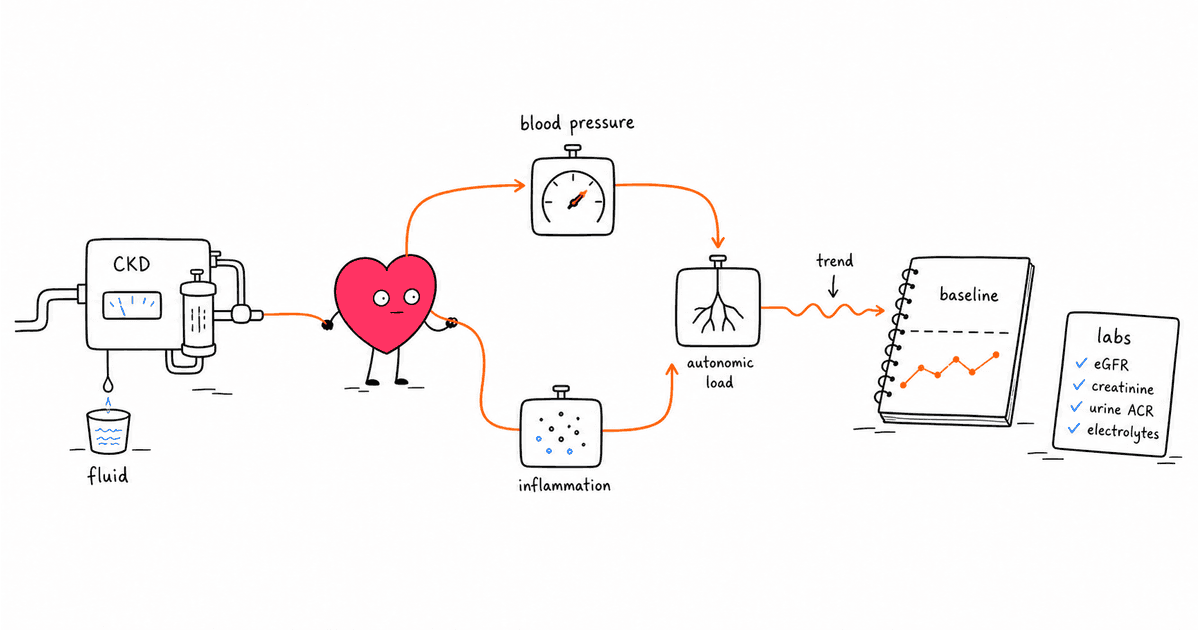
Kidney disease and HRV are connected through the autonomic nervous system, blood pressure regulation, inflammation, and cardiovascular stress. Chronic kidney disease can reduce heart rate variability by shifting the body toward sympathetic overdrive and weaker vagal control, especially as kidney function declines.
This does not mean HRV can diagnose kidney disease. It cannot. Kidney function is measured with lab tests such as estimated glomerular filtration rate (eGFR) and urine albumin-to-creatinine ratio. But HRV can add useful context because the kidneys, heart, blood vessels, and autonomic nervous system are tightly linked.
That connection matters because chronic kidney disease is common and often silent. The CDC's 2026 CKD report estimates that more than 1 in 10 U.S. adults, about 37 million people, have CKD, and about 9 in 10 adults with CKD do not know they have it. CKD also raises the risk of high blood pressure, heart disease, stroke, and early death.
If your HRV is persistently suppressed and you also have kidney risk factors, it is worth treating the pattern as a signal to improve the basics and talk with a clinician, not as a home diagnosis.
Quick Answer: Does Kidney Disease Lower HRV?
Yes, chronic kidney disease is often associated with lower HRV, especially in more advanced stages. Research suggests that CKD can impair autonomic regulation, reduce parasympathetic activity, and increase sympathetic nervous system activity. The effect is strongest in advanced CKD and dialysis populations, but the heart-kidney-autonomic relationship can begin earlier.
The practical takeaway is simple: HRV may reflect the total stress load that kidney disease places on the cardiovascular system. It should be interpreted alongside resting heart rate, blood pressure, symptoms, lab results, medications, sleep, hydration, and training load.
Why the Kidneys Affect Heart Rate Variability
The kidneys do far more than filter waste. They help regulate blood pressure, fluid balance, electrolytes, red blood cell production, acid-base balance, and hormones that influence the cardiovascular system.
When kidney function declines, several systems can become more strained:
- Blood pressure control: CKD can both result from and worsen hypertension
- Fluid balance: Extra fluid can increase cardiovascular workload
- Electrolyte balance: Shifts in potassium, sodium, calcium, and magnesium can affect cardiac rhythm stability
- Inflammation: CKD is often linked with chronic low-grade inflammation
- Anemia: Reduced erythropoietin production can lower oxygen-carrying capacity
- Sympathetic activation: Kidney stress can amplify fight-or-flight signaling
HRV is sensitive to these stressors because it reflects how flexibly your heart responds to autonomic input. When the body is under heavier physiological load, HRV often falls.
What the Research Shows
The research on kidney disease and HRV is strongest in chronic kidney disease and hemodialysis populations. The pattern is consistent enough to matter, but nuanced enough that HRV should not be treated as a standalone risk score.
CKD Is Linked With Autonomic Dysfunction
A comprehensive review in Current Hypertension Reports described cardiovascular autonomic dysfunction as a major complication of CKD. The review noted that CKD is associated with adrenergic overdrive, impaired reflex control of sympathetic and parasympathetic output, altered baroreflex function, activation of the renin-angiotensin-aldosterone system, and cardiovascular remodeling.
In plain English: CKD can push the nervous system toward a more stressed, less flexible state. HRV is one way researchers measure that shift.
Lower HRV May Track CKD Severity
A prospective observational study of 326 non-dialysis CKD patients found that abnormal HRV became more common as CKD severity increased. In stage 5 CKD, abnormal values were common across several HRV measures, including low frequency power, high frequency power, and LF/HF ratio.
The same study found that lower lnLF/HF, hypertension, and severe proteinuria were associated with rapid CKD progression. That does not mean a wearable can predict kidney decline, but it supports the broader idea that autonomic function is part of the CKD risk picture.
Dialysis Research Is Promising but Not Simple
In hemodialysis patients, HRV research often focuses on cardiovascular risk. A 2024 systematic review and meta-analysis in Scientific Reports found that exercise training probably improved SDNN in hemodialysis patients, with smaller and less certain improvements in RMSSD and LF/HF.
A 2023 PLOS One study found that some post-dialysis HRV measures predicted all-cause mortality in chronic hemodialysis patients, while pre-dialysis and during-dialysis measures did not. Timing mattered.
That detail is important. In kidney disease, HRV can be influenced by fluid shifts, dialysis timing, medications, anemia, sleep disruption, and cardiovascular disease. The signal may be useful, but it is not simple.
The Heart-Kidney-Autonomic Loop
Kidney disease, cardiovascular risk, and HRV are connected through a loop rather than a straight line.
| Factor | How it can affect HRV |
|---|---|
| High blood pressure | Increases vascular strain and sympathetic tone |
| Diabetes | Can damage autonomic nerves and kidneys together |
| Fluid overload | Raises cardiac workload and may suppress recovery signals |
| Inflammation | Keeps the nervous system in a higher-alert state |
| Anemia | Makes the heart work harder to deliver oxygen |
| Poor sleep | Reduces overnight parasympathetic recovery |
| Dialysis timing | Can change HRV before, during, and after treatment |
This is why kidney-related HRV changes often overlap with diabetes and HRV, heart disease and HRV, and inflammation and HRV. The same systems keep showing up because the body is not organized by blog categories.
What Low HRV Might Mean if You Have CKD Risk Factors
Low HRV by itself is not kidney-specific. It can come from poor sleep, alcohol, illness, stress, hard training, dehydration, pain, medications, or normal day-to-day variability. The broader HRV and stress pattern is often more useful than trying to assign every dip to one organ system.
But persistent low HRV becomes more interesting when it appears alongside CKD risk factors such as:
- High blood pressure
- Diabetes or prediabetes
- Known cardiovascular disease
- Family history of kidney disease
- Older age
- Smoking history
- Obesity
- Recurrent kidney infections
- Abnormal urine albumin or eGFR results
If several of those apply, a low HRV trend should not be ignored. It is a reason to tighten the fundamentals and make sure kidney screening is up to date.
HRV Is Not a Kidney Function Test
This point deserves its own section because it prevents bad decisions.
HRV cannot tell you your eGFR. It cannot detect protein in your urine. It cannot diagnose CKD, stage kidney disease, or tell you whether a medication is affecting your kidneys.
Kidney health is assessed with medical testing, usually including:
- eGFR: An estimate of how well your kidneys filter blood
- Urine albumin-to-creatinine ratio: A marker of kidney damage and protein leakage
- Blood pressure: A major driver and consequence of CKD
- A1C or glucose testing: Especially if diabetes or prediabetes is present
- Medication review: Some drugs require kidney-aware dosing or monitoring
HRV belongs in a different category. It is a recovery and autonomic stress signal. Useful, yes. Diagnostic, no.
How to Track HRV if Kidney Health Is a Concern
If you are monitoring HRV because you have kidney concerns, consistency matters more than obsessing over a single morning score.
1. Track the Trend, Not the One-Day Drop
Look for patterns over 7, 14, and 30 days. A single low reading is usually noise. A persistent decline, especially when paired with higher resting heart rate or worse sleep, is more meaningful.
If you are new to HRV, start with the basics in the HRV beginner's guide and learn what your normal range looks like before trying to interpret every dip.
2. Watch Resting Heart Rate With HRV
Low HRV plus elevated resting heart rate often points to higher physiological strain. That strain could come from infection, dehydration, poor sleep, overtraining, stress, pain, or cardiovascular load.
For kidney health, the combination is more useful than HRV alone because it gives you a clearer read on whether your system is under pressure.
3. Keep Measurement Timing Consistent
Measure at the same time each day, ideally after waking and before caffeine, exercise, or a heavy meal. If you are on dialysis, measurement timing matters even more. Pre-dialysis, during-dialysis, and post-dialysis readings can differ, so any tracking plan should be discussed with your care team.
4. Add Blood Pressure Context
If kidney health is a concern, blood pressure matters more than almost any wearable metric. High blood pressure can damage kidneys, and CKD can make blood pressure harder to control.
Pairing HRV trends with home blood pressure readings can help you see whether autonomic stress and vascular stress are moving together.
5. Note Fluid, Sodium, and Symptoms
Hydration status and sodium intake can affect both cardiovascular load and how you feel. But if you have CKD, heart failure, or take blood pressure or diuretic medications, do not make aggressive fluid or electrolyte changes based on a wearable.
Track symptoms such as swelling, unusual shortness of breath, dizziness, palpitations, sudden weight changes, or severe fatigue. Those are clinical signals, not just recovery signals.
Lifestyle Levers That Support Both HRV and Kidney Health
The best HRV habits and the best kidney health habits overlap more than most people expect.
Blood Pressure Control
Blood pressure control is one of the highest-value moves for kidney protection. It also supports HRV because chronic hypertension keeps the vascular system and autonomic nervous system under load.
If you have elevated blood pressure, HRV tracking can show how sleep, stress, exercise, alcohol, and recovery habits affect your daily physiology. It should not replace home blood pressure monitoring.
Blood Sugar Stability
Diabetes is one of the leading causes of CKD. It can also reduce HRV by damaging autonomic nerves and increasing inflammation.
The basics are not glamorous, but they work: consistent meals, adequate protein and fiber, regular movement, appropriate medication use when prescribed, and routine lab testing.
Regular, Kidney-Appropriate Exercise
Exercise improves cardiovascular fitness, insulin sensitivity, blood pressure, and autonomic regulation. For many people, walking and moderate aerobic work are the safest starting points.
If you have advanced CKD, are on dialysis, or have significant cardiovascular disease, exercise should be cleared by your clinician. For everyone else, a sustainable mix of walking, light resistance training, and moderate aerobic work usually beats heroic bursts followed by crashes.
Sleep and Recovery
Poor sleep suppresses HRV and worsens blood pressure, glucose control, appetite regulation, and inflammation. For people with CKD, sleep disruption can be common, especially with restless legs, nocturia, pain, or sleep apnea.
If HRV falls mainly after short or fragmented sleep, the kidney angle may be less important than the sleep-recovery angle. Still, sleep is one of the few levers that supports nearly every system at once.
Lower-Salt, Nutrient-Dense Eating
The CDC recommends eating foods lower in salt and more fruits and vegetables as part of kidney disease prevention. For the broader recovery angle, nutrition and HRV are closely connected. That said, people with diagnosed CKD may need individualized guidance around potassium, phosphorus, protein, sodium, and fluid intake.
Do not copy a generic wellness diet if you have kidney disease. A kidney-friendly diet depends on labs, stage, medications, and clinical context.
Smoking Cessation and Alcohol Moderation
Smoking damages blood vessels and raises kidney and cardiovascular risk. Alcohol can raise blood pressure and suppress HRV, especially at higher doses or when it disrupts sleep.
If your HRV is chronically low, alcohol and nicotine are two of the first places to look because the signal can improve quickly when exposure drops.
When to Talk With a Clinician
Talk with a clinician if you have persistently low HRV and any of the following:
- Known CKD or abnormal kidney labs
- High blood pressure that is not well controlled
- Diabetes, prediabetes, or rising A1C
- Swelling in the legs, ankles, face, or around the eyes
- Foamy urine or blood in urine
- Shortness of breath, chest pain, fainting, or palpitations
- Sudden weight changes that may reflect fluid shifts
- Severe fatigue that is new or worsening
Wearables are good at noticing patterns. Clinicians are needed to determine what those patterns mean.
How to Interpret an Improving HRV Trend
If HRV improves after better sleep, consistent walking, lower alcohol intake, better blood pressure control, or improved glucose stability, that is a good sign for autonomic recovery.
But improvement in HRV does not prove kidney function has improved. It means your nervous system is showing better adaptability. That may be part of a healthier overall picture, but lab markers still matter.
Think of HRV as a dashboard light for recovery load. Useful, early, and directional. Not the engine inspection.
Bottom Line
Kidney disease can lower HRV because CKD places stress on the cardiovascular and autonomic nervous systems. Research shows that autonomic dysfunction is common in CKD, HRV abnormalities often become more pronounced as disease severity increases, and dialysis-related HRV patterns may carry prognostic information in clinical settings.
For everyday tracking, the smart move is not to use HRV as a kidney test. Use it as a recovery signal that helps you notice stress load, then pair it with the metrics that actually measure kidney and cardiovascular risk: blood pressure, eGFR, urine albumin, blood sugar, symptoms, and clinical follow-up.
If kidney health is on your radar, do not chase a perfect HRV score. Build the boring foundation: blood pressure control, blood sugar stability, consistent movement, sleep, appropriate nutrition, medication adherence, and regular screening. That is where the signal becomes useful.
Need a quick read on your HRV number first?
Enter your HRV value, age range, device, and recovery context for a plain-English interpretation before you decide what to do next.
Interpret Your HRV NumberBuild the 30-day plan