Endometriosis and HRV: How Chronic Pelvic Pain and Autonomic Stress Affect Heart Rate Variability
Trying to decode today's HRV number? Use the free interpreter first, then build a practical recovery plan. Interpret your HRV
Endometriosis is usually framed as a pain condition, and for good reason. It can cause severe menstrual pain, chronic pelvic pain, painful sex, fatigue, bowel symptoms, and fertility challenges. But there is another layer that does not get talked about enough: the autonomic nervous system.
That is where heart rate variability, or HRV, gets interesting.
HRV does not diagnose endometriosis, and it cannot tell you how advanced the disease is. What it can do is reflect how much overall strain your body is carrying. If you live with endometriosis and your wearable keeps showing low recovery, low readiness, or a lower-than-usual overnight HRV, that may line up with pain, poor sleep, inflammation, or chronic stress load.
That matters because endometriosis is common and often slow to diagnose. The World Health Organization estimates it affects about 10% of reproductive-age women worldwide, or roughly 190 million people, and says the average time to diagnosis is often 4 to 12 years.
This guide breaks down how endometriosis and HRV may be connected, what the research actually shows, and how to use HRV as a useful signal instead of a daily source of dread.
Does Endometriosis Affect HRV?
It can. Endometriosis is often associated with lower or less favorable HRV, especially when chronic pain, poor sleep, perceived stress, or other signs of autonomic strain are part of the picture.
That does not mean everyone with endometriosis will have low HRV all the time. HRV is influenced by many things, including sleep, fitness, illness, alcohol, training load, medications, and where you are in your cycle. But the condition can create exactly the kind of chronic physiological load that tends to push HRV downward.
Think of HRV here as a context marker. It can help show how hard your nervous system is working, even if it cannot tell you why on its own.
What HRV Measures, and What It Does Not
HRV measures the variation in time between heartbeats. In most wearables, higher HRV generally points to better recovery and stronger parasympathetic activity, while lower HRV often shows up when the body is under more strain.
If you want the full primer first, read what HRV is and understanding HRV numbers.
What HRV does not do is diagnose endometriosis, confirm a flare, or tell you whether surgery or hormonal treatment is needed. A low HRV score can reflect a bad night of sleep just as easily as a bad pain week. It is useful, but it is not magic.
Why Endometriosis Can Push HRV Down
Endometriosis is not only about lesions. It can also affect pain processing, sleep quality, inflammation, mood, activity levels, and cardiovascular health. Those are all things that can move HRV.
Chronic Pain Changes the Signal
Pain is one of the clearest links.
A 2021 study in Women & Health looked at 81 women with deep endometriosis and chronic pelvic pain. Women with lower resting vagally mediated HRV had more intense pelvic pain, greater pain unpleasantness, and more severe pain descriptors. In plain English, lower parasympathetic tone was associated with a worse pain experience.
That makes physiological sense. Ongoing pain tends to keep the nervous system on higher alert. When that happens, HRV often drops and resting heart rate often rises.
If chronic pain is a big part of your picture, HRV and chronic pain is worth reading next.
Stress and Mood Load Matter Too
Endometriosis is physically painful, but it can also be mentally exhausting.
Unpredictable pain, long diagnostic delays, fertility concerns, missed work, disrupted exercise, and the general joy of having to explain severe pain to people who think you are being dramatic can all increase stress load. That matters because higher perceived stress and mood symptoms are both associated with lower HRV.
In the same 2021 study, pain unpleasantness and perceived stress were positively correlated, and women with mood disorders had higher perceived stress scores.
If anxiety or low mood are part of the picture, HRV and anxiety and HRV and depression can help put that into context.
Sleep Disruption Hits HRV Fast
Pain and HRV have a rude little feedback loop.
Pain makes it harder to fall asleep or stay asleep. Poor sleep then lowers HRV, increases sympathetic tone, and can make pain feel worse the next day. If your worst HRV nights line up with pain flares, that is not your wearable being dramatic. It is often your body reflecting real strain.
This is one reason to compare HRV with sleep quality, resting heart rate, and symptom notes rather than staring at one readiness score in isolation.
Inflammation and Immune Dysregulation May Play a Role
Endometriosis is widely understood as a chronic inflammatory condition, and the World Health Organization notes that emerging research suggests an association with immune system dysregulation.
That matters because inflammation and autonomic dysfunction often travel together. Lower HRV is common when the body is dealing with inflammatory stress, which is part of why inflammation and HRV is such an important overlap post.
HRV will not tell you exactly how inflamed you are, but it may reflect part of the same stress load.
Cardiovascular Strain Is Part of the Bigger Picture
A 2024 nationwide Danish study followed 60,508 women with endometriosis and 242,032 matched controls. Women with endometriosis had a higher associated long-term risk of a composite cardiovascular outcome, plus higher associated risks of arrhythmias and heart failure.
That does not mean endometriosis causes heart disease in a simple straight line, and the absolute risk differences were modest. It does mean endometriosis should not be treated as a condition that only matters during a period.
HRV is not the same thing as cardiovascular risk, but it lives in the same neighborhood of autonomic and recovery physiology. If you want the broader context, HRV and heart disease and HRV and blood pressure are useful follow-ups.
What the Research Says About Endometriosis and HRV
The short version is that the link looks real, but the evidence base is still smaller than many people assume.
A lot of endometriosis and HRV research uses relatively small samples, specific patient groups, or clinical measurements instead of consumer wearables. That means you should be careful about turning one study into a universal rule.
Still, the themes are consistent enough to matter:
- chronic pelvic pain is associated with lower vagally mediated HRV
- stress and mood burden appear to worsen the pattern
- autonomic dysregulation may be part of the disease picture, not just a side effect of having a rough month
- endometriosis also appears to overlap with broader cardiovascular and inflammatory risk patterns
That is enough to justify using HRV as a supporting trend, but not enough to use it as a diagnostic shortcut.
Can HRV Tell You If Endometriosis Is Getting Worse?
No, not directly.
A lower HRV does not prove lesion growth, deeper infiltration, worsening fertility, or disease progression. It usually tells you something simpler: your body is under more strain right now.
That strain might come from:
- a pain flare
- poor sleep
- more bleeding or fatigue
- harder training than usual
- higher stress
- illness
- travel
- alcohol
- cycle-related changes
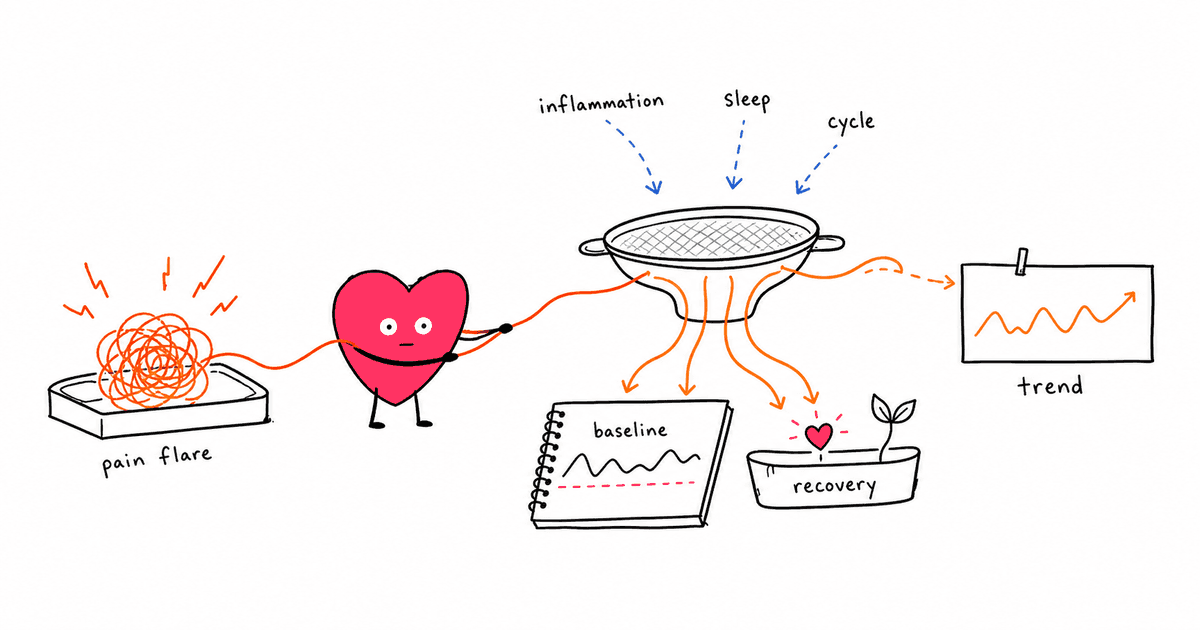
This is why HRV works better as a trendline than as a daily verdict.
How to Use HRV if You Have Endometriosis
The smart way to use HRV with endometriosis is to track patterns over time.
Compare HRV with:
- pain severity
- where you are in your menstrual cycle
- sleep quality and duration
- resting heart rate
- exercise tolerance
- fatigue
- bleeding changes
- bowel symptoms, if those are part of your pattern
That gives you a more useful question than, "Why is my score bad today?"
Better questions are:
- Does HRV drop before or during pain flares?
- Does poor sleep explain most of the worst readings?
- Do symptoms predictably change across your cycle?
- Does easier training help the trend during a rough week?
- Do treatment changes, better sleep, or less stress improve baseline HRV over time?
If cycle effects are part of the puzzle, HRV and the menstrual cycle and hormones and HRV add useful context.
How to Support HRV When You Have Endometriosis
There is no special endometriosis-only HRV hack. The useful work is still the useful work.
1. Get the Pain Plan Right
This is the big one.
If pain is uncontrolled, HRV will often reflect that. Work with a qualified clinician on a plan that may include medication, hormonal treatment, pelvic floor therapy, exercise modification, or surgery when appropriate. The 2022 ESHRE guideline on endometriosis includes 109 recommendations across diagnosis, pain treatment, infertility, recurrence, and special populations. In other words, this is not a condition you should try to self-manage with wearable scores alone.
2. Protect Sleep Aggressively
If pain is disrupting sleep, address that directly.
A regular sleep window, a cooler room, fewer late-night stimulants, and pain-management strategies that make nights more tolerable can all matter. HRV tends to respond pretty quickly when sleep improves.
3. Train Consistently, Not Punishingly
Regular movement is usually helpful for autonomic health, mood, and long-term cardiovascular health. But there is a difference between training and picking fights with your nervous system.
On lower-pain days, aerobic work and sensible strength training can support recovery capacity. On high-pain days, a walk or easier session may be the better call. HRV can help you spot when your system is coping well and when it is not.
4. Reduce Nervous System Load Where You Can
This does not have to become a full-time wellness internship.
What tends to help is boring and repeatable:
- a short daily walk
- slow breathing or relaxation work
- less calendar chaos
- enough food and hydration
- less all-or-nothing training
- mental health support if stress, anxiety, or depression are heavy
You do not need a perfect routine. You need less accumulated strain.
5. Track Treatment Response, Not Just Symptoms
One of the better uses of HRV is seeing whether the overall trend improves when something is actually helping.
If pain is better controlled, sleep improves, exercise feels easier, and HRV stops living in the basement, that is useful feedback. It does not replace symptom tracking or clinical follow-up, but it can add a layer of objective context.
What a Low HRV Does Not Mean in Endometriosis
Low HRV does not automatically mean:
- your endometriosis is rapidly progressing
- you should stop exercising completely
- your fertility is getting worse
- your treatment is failing
- you need a new supplement stack
- your wearable knows more than your specialist
It usually means your body is under more load. That is still worth paying attention to, but it is not the same thing as a diagnosis.
Best Wearables for Tracking HRV With Endometriosis
If you want to track HRV trends alongside pain, sleep, and recovery, these are solid options:
- Oura Ring: Strong overnight HRV tracking with very little effort required.
- WHOOP: Helpful if you want HRV, sleep, strain, and recovery in one place.
- Apple Watch Ultra: A good option if you already use Apple Health and want broad health tracking.
- Garmin: Useful if you want HRV status alongside training metrics and better battery life.
For a full breakdown, see the best HRV monitors for 2026.
Key Takeaways
- Endometriosis can be associated with lower or less favorable HRV, especially when chronic pain, poor sleep, and stress are part of the picture.
- HRV does not diagnose endometriosis or disease progression, but it can reflect how much total strain your body is carrying.
- Research suggests lower vagal tone is linked with worse pain and higher stress in women with endometriosis.
- Endometriosis also overlaps with broader inflammatory and cardiovascular risk patterns, which makes autonomic health worth paying attention to.
- The best way to use HRV is as a trendline, compared with symptoms, cycle timing, sleep, and recovery.
- The most useful interventions are still the basics: better pain control, better sleep, sustainable exercise, and less chronic strain.
If your HRV improves while pain, sleep, energy, and training tolerance improve too, that is the signal worth caring about.
Need a quick read on your HRV number first?
Enter your HRV value, age range, device, and recovery context for a plain-English interpretation before you decide what to do next.
Interpret Your HRV NumberBuild the 30-day plan