Cancer and HRV: What Heart Rate Variability Can and Can't Tell You
Trying to decode today's HRV number? Use the free interpreter first, then build a practical recovery plan. Interpret your HRV
Does Cancer Affect HRV?
Yes, cancer and cancer treatment can affect HRV by increasing physiological stress, inflammation, pain, fatigue, and autonomic nervous system strain. Lower HRV is common during periods of illness or treatment burden, but HRV is not a cancer test, a staging tool, or proof that a treatment is working or failing.
That distinction matters. HRV reflects how your body is adapting to stress, and cancer care can be one of the most stressful situations the body faces. Surgery, chemotherapy, radiation, immunotherapy, sleep disruption, appetite changes, emotional stress, and deconditioning can all push the autonomic nervous system away from recovery mode.
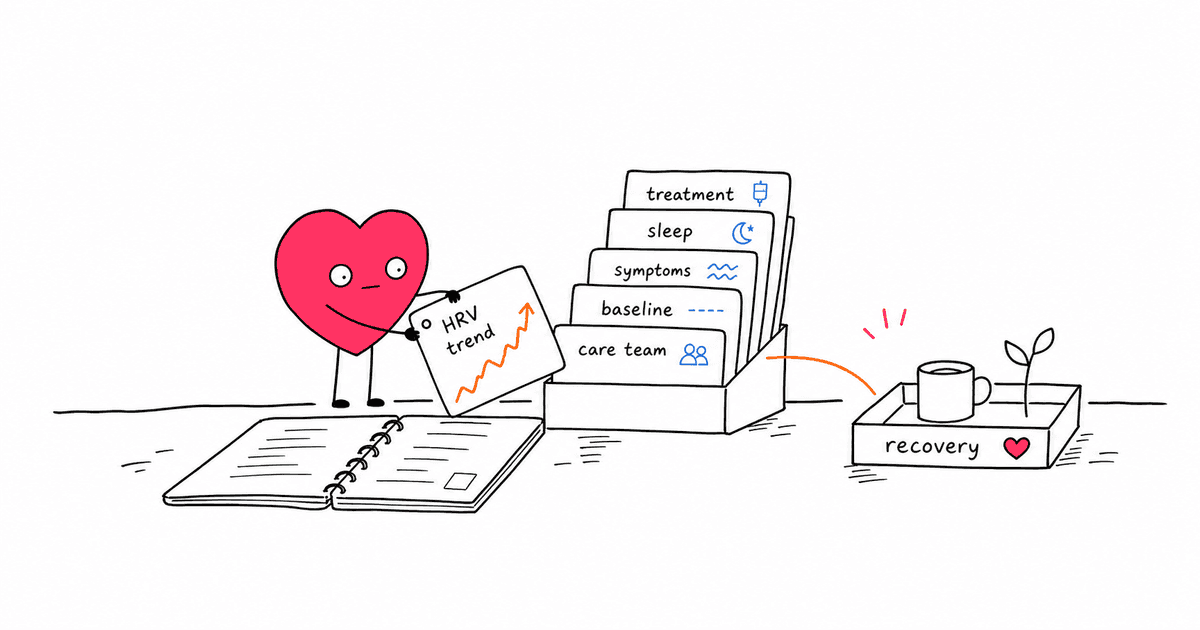
Use HRV as a recovery dashboard, not a medical verdict. Your oncology team should remain the source of truth for diagnosis, treatment response, imaging, labs, side effects, and exercise clearance.
Why Cancer Can Lower HRV
Heart rate variability measures the variation in time between heartbeats. A flexible autonomic nervous system usually produces higher HRV. A stressed, inflamed, sleep-deprived, or overburdened system often produces lower HRV.
Cancer can influence that system through several overlapping pathways.
Inflammation and Immune Activation
Cancer and cancer treatment can increase inflammatory signaling. Inflammation is closely tied to the autonomic nervous system, especially the vagus nerve and the cholinergic anti-inflammatory pathway.
That is why HRV appears in research on immune function and inflammation. Low HRV does not cause cancer, but it may reflect part of the body's broader inflammatory and recovery burden.
Treatment Stress
Cancer treatments are designed to fight disease, but they can also be demanding. Chemotherapy, radiation, surgery, hormone therapy, targeted therapy, and immunotherapy may affect sleep, appetite, pain, cardiovascular load, energy, and nervous system regulation.
A temporary HRV drop during a difficult treatment window is not surprising. The more useful question is whether your HRV returns toward your own baseline as you recover between cycles or after a treatment phase ends.
Pain, Fatigue, and Neuropathy
Cancer-related symptoms can also lower HRV. Pain increases sympathetic activation. Fatigue often reflects a body that is struggling to restore energy. Chemotherapy-induced peripheral neuropathy may involve autonomic dysfunction, not just sensory nerve symptoms.
This overlaps with what is seen in chronic pain and HRV: persistent symptoms can keep the nervous system in a guarded state.
Sleep Disruption and Emotional Load
Cancer care can make sleep fragile. Appointments, scan anxiety, medications, hot flashes, steroids, pain, and nighttime worry can all disrupt normal recovery rhythms.
Because sleep and stress are two of the biggest day-to-day drivers of HRV, a low reading may reflect the total load of treatment plus life, not cancer biology alone.
What the Research Shows
Cancer HRV research is promising, but uneven. Studies vary by cancer type, treatment stage, HRV metric, recording method, device, and symptom profile. The field is useful, but not clean enough for simple consumer-grade conclusions.
HRV and Cancer Prognosis
A 2018 systematic review in Frontiers in Physiology looked at 19 human studies on HRV and cancer prognosis. Overall, higher HRV was associated with better disease progression or survival outcomes in several studies.
That does not prove that raising HRV directly improves cancer outcomes. Lower HRV may reflect worse overall health, higher inflammation, greater symptom burden, lower fitness, advanced disease, or treatment stress.
The practical takeaway is modest: HRV may be one marker of physiological resilience in cancer patients, not a standalone predictor.
HRV, Fatigue, Pain, and Neuropathy
A 2025 systematic review in Supportive Care in Cancer examined HRV in relation to cancer-related fatigue, pain, and neuropathic symptoms. The review included 23 studies published from 2009 to 2025.
Fatigue was the strongest area of evidence. Eleven of 15 fatigue studies found a positive connection between improved HRV and reduced fatigue, especially in time-domain measures like SDNN and RMSSD.
Pain evidence was weaker. Neuropathy evidence was especially limited, with only one included study directly addressing neuropathic symptoms. The review also found major variation in HRV methods, including ECG versus PPG, five-minute versus 24-hour recordings, and inconsistent control for sleep, caffeine, age, medication, activity, and breathing rate.
So the signal is real enough to pay attention to, but not precise enough to treat as a medical verdict.
HRV Biofeedback in Cancer Care
HRV biofeedback has also been studied in cancer patients and survivors. The goal is not to treat cancer directly. The goal is to train autonomic regulation through paced breathing, real-time feedback, and improved vagal activation.
Early research suggests HRV biofeedback may help with stress, sleep, anxiety, pain, fatigue, and quality of life in some cancer populations. It is best viewed as supportive care, not a replacement for medical treatment. Our full guide to HRV biofeedback training explains the technique.
What HRV Can Tell You During Cancer Care
HRV is most useful when you compare current readings to your own baseline. During cancer care, that can help you spot patterns that would be hard to see from memory alone.
Your Recovery Baseline
Before treatment starts, a few weeks of HRV data can establish a personal baseline. If you are already in treatment, you can still create a treatment-phase baseline by tracking consistently over the next few weeks.
This baseline may not represent your long-term normal, but it can still help you understand what is normal for this phase.
How You Recover Between Treatment Cycles
For people receiving chemotherapy or other cyclical treatments, HRV may drop around treatment days and gradually rebound during recovery windows.
That pattern can help you identify when your body typically needs more rest, lighter activity, or extra sleep. It may also help you plan low-demand days after treatment when possible.
When Fatigue Is More Than Tiredness
Cancer-related fatigue can feel disproportionate, persistent, and not fully relieved by rest.
If fatigue worsens while HRV trends down and resting heart rate trends up, that may suggest your system is carrying a higher recovery load. It does not identify the cause, but it can support a more concrete conversation with your care team.
Whether Supportive Habits Are Helping
HRV can help you evaluate supportive habits such as walking, breathwork, sleep regularity, gentle strength training, or stress management.
The goal is not to chase a perfect number. The goal is to notice whether your trend becomes more stable as your routine becomes more supportive.
What HRV Cannot Tell You
HRV is sensitive, but it is not specific. Many different things can lower it, and that is where people can get into trouble.
HRV Cannot Diagnose Cancer
A low HRV reading does not mean you have cancer. It can reflect poor sleep, alcohol, stress, illness, pain, dehydration, overtraining, medication effects, menstrual cycle changes, or a hard workout.
If you have concerning symptoms, use medical evaluation, not HRV, as the next step.
HRV Cannot Measure Tumor Response
HRV cannot tell you whether a tumor is growing, shrinking, spreading, or responding to treatment. That requires the appropriate medical tools, such as imaging, pathology, tumor markers, and clinical assessment.
If your HRV improves, that may mean your recovery state is better. It does not prove that cancer is improving. If your HRV drops, that may mean your recovery state is worse. It does not prove that cancer is progressing.
HRV Cannot Replace Symptom Reporting
Do not let a good HRV score talk you out of reporting symptoms. Chest pain, shortness of breath, fainting, fever, uncontrolled vomiting, new neurological symptoms, severe dehydration, or sudden swelling should be treated as medical issues regardless of what your wearable says.
Your trend matters more than someone else's number, and your symptoms matter more than the trend.
How to Track HRV Safely During Treatment
If you want to use HRV during cancer care, keep the system boring, consistent, and low-pressure.
1. Ask Your Care Team First
This is especially important if you have heart disease, arrhythmias, severe anemia, dizziness, fainting, neuropathy, recent surgery, infection risk, or exercise restrictions.
HRV tracking itself is usually low risk, but the decisions people make from HRV data can be risky if they ignore medical context.
2. Use the Same Device and Timing
Measure HRV at the same time each day, ideally during sleep or immediately after waking. Switching devices or measurement windows makes trends harder to interpret.
Wearables such as the Oura Ring 4 or Whoop 5 can make passive tracking easier, especially when energy is limited. A chest strap may be more precise for short readings, but daily consistency matters more than perfection for trend tracking.
3. Watch Trends, Not Single Readings
A single low HRV reading is not a crisis. Look for repeated changes over several days, especially when they appear alongside symptoms, higher resting heart rate, poor sleep, or unusual fatigue.
A simple rule: one bad day is noise, three to five bad days is a pattern worth noticing.
4. Log Treatment and Symptoms
HRV becomes more useful when paired with context. Track treatment dates, medication changes, sleep quality, fatigue, pain, appetite, hydration, walking, fever, infection, and stressful events.
The log does not need to be elaborate. A few daily notes can make the HRV trend much easier to interpret later.
5. Do Not Chase HRV
Cancer care is not the time to turn HRV into another performance metric. Some days your HRV will be low because treatment is hard. That does not mean you failed.
Use HRV to reduce pressure, not add it. If the number is low, ask what would support recovery today.
Practical Ways to Support HRV During and After Cancer Care
The best HRV-supportive habits are not exotic. They are the same fundamentals that help the body recover, adjusted for your diagnosis, treatment phase, and medical restrictions.
Start With Gentle Movement
The American Cancer Society and major exercise-oncology groups generally encourage cancer survivors to avoid inactivity and build activity gradually when medically cleared.
That often means starting with short walks, light mobility, or a few minutes of movement broken into small doses. If walking is appropriate for you, our guide to walking and HRV explains why low-intensity movement can support recovery without adding too much strain.
Rebuild Strength Slowly
Cancer treatment can reduce muscle mass, balance, and confidence. Gentle resistance training may help rebuild function, improve glucose regulation, and support long-term cardiovascular health.
Start well below your old capacity. A post-treatment body may need a different ramp than a pre-treatment body. For the basics, see strength training and HRV.
Prioritize Sleep Regularity
You may not be able to force perfect sleep during treatment, but regular sleep and wake times can still help stabilize your circadian rhythm.
Morning light, consistent meal timing, and a calmer pre-bed routine can all support HRV. If treatment has disrupted your rhythm, our guide to circadian rhythm and HRV is a useful next read.
Use Breathing to Downshift
Slow breathing is one of the simplest ways to increase parasympathetic activity. Try five minutes of relaxed nasal breathing at roughly five to six breaths per minute, only if it feels comfortable.
If breathwork creates dizziness, air hunger, panic, or discomfort, stop and ask your clinician for guidance. For a structured approach, see breathing exercises for HRV.
Support Hydration and Food Tolerance
Cancer treatment can make hydration and eating harder. Nausea, mouth sores, taste changes, diarrhea, constipation, and appetite shifts can all affect recovery.
Do not use HRV to dictate diet. Use your care team's nutrition guidance. From an HRV perspective, the basics still matter: enough fluids, enough protein, enough calories, and enough electrolytes when clinically appropriate. Our guides to hydration and HRV and nutrition and HRV cover the general physiology.
When to Contact Your Clinician
Do not contact your care team just because your HRV is low for one day. Do contact them if HRV changes are paired with concerning symptoms or a clear deterioration in how you feel.
Get medical guidance for fever, signs of infection, shortness of breath, chest pain, fainting, severe dizziness, new palpitations, uncontrolled vomiting, severe dehydration, sudden swelling, confusion, neurological symptoms, rapidly worsening fatigue, or pain that is new or severe.
Wearable data should support symptom awareness, not replace it.
FAQ
Is low HRV common during chemotherapy?
Yes, low HRV can happen during chemotherapy because treatment can increase physiological stress, disturb sleep, reduce activity, affect appetite, and worsen fatigue or pain. The pattern over time is more useful than a single reading.
Can improving HRV improve cancer outcomes?
There is not enough evidence to say that raising HRV directly improves cancer outcomes. Higher HRV has been associated with better prognosis in some observational studies, but that does not prove causation. HRV-supportive habits may still improve quality of life, recovery, sleep, stress, and fitness.
Should cancer patients use HRV to decide whether to exercise?
HRV can help with pacing, but it should not override medical clearance. If your clinician has approved activity, HRV may help you choose lighter or harder days. If you have restrictions, symptoms, infection risk, anemia, or recent surgery, follow medical guidance first.
What HRV metric matters most for cancer recovery?
For daily tracking, RMSSD is commonly used because it reflects parasympathetic activity and is available in many wearables. In clinical research, SDNN is often important, especially in longer recordings. For consumers, consistency and trend interpretation matter more than obsessing over one metric.
Can HRV biofeedback help during cancer treatment?
It may help some people manage stress, anxiety, sleep disruption, pain, or fatigue, but it should be treated as supportive care. It is not a cancer treatment. Ask your care team if you have breathing limitations, dizziness, panic symptoms, heart rhythm issues, or complex medical concerns.
Bottom Line
Cancer and cancer treatment can lower HRV because they increase the body's total recovery load. HRV may help you see patterns in fatigue, pain, sleep, stress, and treatment recovery, especially when tracked consistently against your own baseline.
The key is restraint. HRV can tell you when your system is strained. It cannot diagnose cancer, measure tumor response, or replace your oncology team.
Use it as a supportive signal: one more way to listen to your body, pace recovery, and have better-informed conversations during a difficult season.
Need a quick read on your HRV number first?
Enter your HRV value, age range, device, and recovery context for a plain-English interpretation before you decide what to do next.
Interpret Your HRV NumberBuild the 30-day plan