Acupuncture and HRV: Can Needles Improve Your Heart Rate Variability?
Acupuncture has been used for thousands of years in traditional Chinese medicine to treat everything from chronic pain to digestive disorders. But in recent decades, researchers have started measuring its effects on the autonomic nervous system using a familiar metric: heart rate variability.
The results are promising. Multiple systematic reviews and meta-analyses suggest that acupuncture can shift autonomic balance toward parasympathetic dominance, the branch of the nervous system associated with rest, recovery, and higher HRV.
How Acupuncture Affects the Autonomic Nervous System
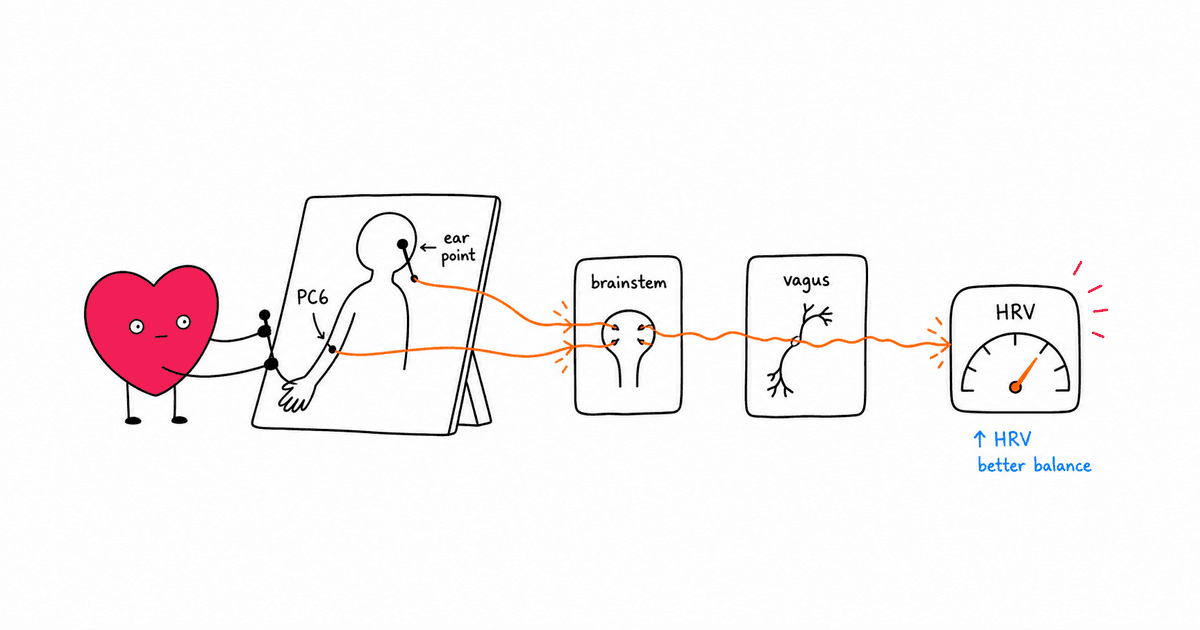
Acupuncture influences HRV by stimulating the vagus nerve and shifting the autonomic nervous system toward parasympathetic dominance. This reduces sympathetic (fight-or-flight) activity and promotes the relaxation response, which is reflected in measurable changes to HRV metrics like SDNN, RMSSD, and high-frequency power.
When a needle is inserted into an acupuncture point, it activates sensory nerve fibers beneath the skin. These signals travel through peripheral nerves to the brainstem, where they influence key autonomic control centers like the nucleus tractus solitarius (NTS). The NTS acts as a relay station that modulates vagal outflow to the heart, directly affecting heart rate and HRV.
This is not purely theoretical. A 2022 systematic review and meta-analysis published in Complementary Therapies in Medicine found that real acupuncture had a statistically superior effect over placebo (sham) acupuncture in increasing parasympathetic tone. The researchers concluded that acupuncture's ability to modulate HRV appears to be a genuine physiological effect rather than a placebo response.
What the Research Shows
The body of evidence connecting acupuncture and HRV has grown substantially. Here are the key findings from major studies:
Systematic Reviews and Meta-Analyses
A landmark 2014 systematic review in Evidence-Based Complementary and Alternative Medicine analyzed 14 randomized controlled trials. The study found that acupuncture decreased the LF/HF ratio (a marker of sympathetic-to-parasympathetic balance) in non-healthy subjects, indicating a shift toward parasympathetic dominance. In healthy subjects, acupuncture reduced normalized low-frequency (LF norm) power.
A more recent 2025 meta-analysis published in Frontiers in Neuroscience examined randomized controlled trials specifically looking at acupuncture's effect on autonomic nervous function. The analysis found that acupuncture modestly improved global HRV as reflected by SDNN, with a favorable safety profile. The study also noted significant increases in high-frequency (HF) power, the component of HRV most closely linked to vagal (parasympathetic) activity.
Auricular Acupuncture Studies
One of the most direct connections between acupuncture and the vagus nerve involves auricular (ear) acupuncture. The auricular branch of the vagus nerve (ABVN) runs through the outer ear, making it accessible to needle stimulation.
A study published in Autonomic Neuroscience found that acupuncture at the ABVN led to a significant reduction in heart rate (approximately 4% to 6%) and an increase in overall HRV as measured by SDNN (approximately 19%) compared to placebo acupuncture. RMSSD and HF power also showed statistical trends favoring improved vagal tone.
Acupuncture for Anxiety and HRV
A 2024 case-series study published in Medical Acupuncture examined acupuncture treatment for generalized anxiety disorder. The researchers found that acupuncture sessions activated the vagus nerve, improved HRV, and enhanced heart-rhythm coherence. Participants reported reduced anxiety symptoms alongside measurable improvements in autonomic balance.
Key Acupuncture Points That Influence HRV
Not all acupuncture points affect the autonomic nervous system equally. Research has identified several points with particularly strong connections to vagal activity and HRV modulation:
PC6 (Neiguan)
Located on the inner forearm about two inches above the wrist crease, PC6 is one of the most extensively studied acupuncture points for cardiovascular effects. Research consistently shows that stimulation of PC6 increases parasympathetic activity and improves HRV metrics. This point is commonly used for nausea, anxiety, and heart-related conditions.
ST36 (Zusanli)
Found just below the knee on the front of the lower leg, ST36 is considered one of the most versatile acupuncture points. Multiple studies have demonstrated that ST36 stimulation modulates autonomic function, with effects on both the sympathetic and parasympathetic branches. Its influence on vagal tone makes it relevant for HRV improvement.
Auricular Points
The outer ear contains several points that directly access the vagus nerve. The cymba conchae, tragus, and cavum conchae are particularly well-studied. Stimulation of these areas activates the ABVN, producing measurable changes in heart rate and HRV within minutes of needle insertion.
HT7 (Shenmen)
Located at the wrist crease on the ulnar side, HT7 is traditionally used for calming the mind and treating insomnia. Research suggests it modulates sympathovagal balance, shifting the nervous system toward parasympathetic dominance.
Electroacupuncture vs. Manual Acupuncture
Modern acupuncture practice includes both manual (traditional needle) and electroacupuncture, where mild electrical currents are passed through the needles. Both approaches affect HRV, but they may work through slightly different mechanisms.
Manual Acupuncture
Traditional manual acupuncture involves inserting thin needles and manually stimulating them through gentle rotation or lifting. The HRV effects tend to be moderate and are influenced by needle depth, stimulation technique, and the specific points selected. Research shows manual acupuncture primarily increases HF power and RMSSD, indicating enhanced vagal tone.
Electroacupuncture
Electroacupuncture delivers a consistent, measurable stimulus that can be precisely controlled for frequency and intensity. Low-frequency electroacupuncture (2 Hz) tends to enhance parasympathetic activity, while higher frequencies may have different effects on autonomic balance. Some studies suggest electroacupuncture produces more consistent HRV changes compared to manual techniques, likely because the stimulus is standardized.
A 2025 study in Frontiers in Human Neuroscience examined acupuncture's regulation of the autonomic nervous system during physical stress and found that the intervention was accompanied by significant increases in HF power and heart rhythm coherence, suggesting enhanced parasympathetic activation.
How Long Do the HRV Benefits Last?
One of the practical questions for anyone considering acupuncture for HRV improvement is how long the effects persist after a session.
Acute Effects
Most studies report immediate HRV changes during and shortly after acupuncture treatment. Heart rate typically decreases within minutes of needle insertion, and HRV metrics like SDNN and RMSSD show improvements that can last for several hours after the session ends.
Cumulative Effects
Regular acupuncture sessions appear to produce cumulative benefits. Clinical studies using weekly treatment protocols over 4 to 12 weeks have demonstrated progressive improvements in resting HRV. This suggests that acupuncture may help "retrain" the autonomic nervous system over time, similar to how regular exercise gradually improves cardiovascular fitness.
Maintenance
Like most interventions that improve HRV, the benefits of acupuncture tend to diminish if treatment is discontinued. Many practitioners recommend a maintenance schedule (often monthly sessions) after an initial treatment course to sustain autonomic improvements.
Tracking Your HRV Response to Acupuncture
If you are considering acupuncture and want to measure its impact on your autonomic nervous system, an HRV-capable wearable can provide objective data. Here are some tracking tips:
Establish a Baseline
Record your resting HRV for at least two weeks before starting acupuncture. Morning measurements taken immediately upon waking provide the most consistent readings. Note your average RMSSD, SDNN, and any trends.
Track Pre and Post Sessions
Measure your HRV the morning before and the morning after each acupuncture session. Over multiple sessions, look for patterns in how your HRV responds. Some people notice an immediate improvement, while others see gradual changes over weeks.
Monitor Trends Over Time
Individual day-to-day HRV readings are noisy. Focus on the 7-day rolling average to spot meaningful trends. A consistent upward trend in your HRV baseline over the course of your acupuncture treatment is a positive sign that autonomic function is improving.
Control for Variables
Sleep quality, alcohol consumption, exercise intensity, and stress all affect HRV. Try to keep these factors consistent around your acupuncture sessions so you can isolate the treatment's effect. Recording these variables in a journal or app alongside your HRV data makes the analysis more reliable.
Acupuncture vs. Other Vagal Stimulation Methods
Acupuncture is not the only way to stimulate the vagus nerve and improve HRV. Here is how it compares to other popular approaches:
| Method | HRV Impact | Accessibility | Cost | Evidence Level |
|---|---|---|---|---|
| Acupuncture | Moderate to strong | Requires practitioner | $75-150/session | Strong (multiple meta-analyses) |
| Slow breathing exercises | Moderate | Free, anywhere | Free | Strong |
| Cold exposure | Moderate | Home practice | Low | Moderate |
| Meditation | Moderate | Free, anywhere | Free | Strong |
| Transcutaneous VNS devices | Moderate | Consumer device | $300-600 | Growing |
| Red light therapy | Mild to moderate | Home device | $100-500 | Emerging |
The key advantage of acupuncture is the strength of evidence from placebo-controlled trials. The 2022 meta-analysis found it outperformed sham acupuncture, which is a higher bar than many alternative therapies have cleared. The main drawbacks are cost and the need for a trained practitioner.
Who Might Benefit Most
Research suggests that acupuncture's HRV effects may be most pronounced in certain populations:
People With Low Baseline HRV
Studies consistently show that individuals with lower baseline HRV (often those dealing with chronic stress, illness, or autonomic dysfunction) tend to see the most significant improvements from acupuncture. If your resting HRV is already high, the effect may be less dramatic.
Those With Chronic Stress or Anxiety
The 2024 case-series study on generalized anxiety disorder demonstrated that acupuncture improved both subjective anxiety symptoms and objective HRV measures simultaneously. For people whose low HRV is driven primarily by chronic stress, acupuncture may address the root cause while improving autonomic balance.
Individuals With Chronic Pain
Chronic pain is associated with elevated sympathetic nervous system activity and reduced HRV. Acupuncture has strong evidence for pain management, and the HRV improvements may be partly responsible for the broader health benefits reported by chronic pain patients who undergo regular treatment.
Post-Surgical and Recovery Patients
Some research has examined acupuncture's role in improving autonomic function during recovery from surgery or illness. The parasympathetic shift induced by acupuncture may support the body's healing and recovery processes.
Practical Considerations
Finding a Qualified Practitioner
Look for a licensed acupuncturist (L.Ac.) or a doctor of acupuncture and Chinese medicine (DACM). In most countries, acupuncturists must complete extensive training and pass licensing exams. Ask about their experience with autonomic or cardiovascular conditions if HRV improvement is your primary goal.
What to Expect in a Session
A typical acupuncture session lasts 45 to 60 minutes. After an initial consultation, the practitioner will insert thin sterile needles at selected points. You will rest with the needles in place for 20 to 30 minutes. Most people describe the sensation as a mild ache or tingling rather than sharp pain.
Treatment Frequency
For HRV improvement, research protocols typically use one to two sessions per week over 6 to 12 weeks. Your practitioner may adjust this based on your individual response and goals.
Safety Profile
Acupuncture has a well-established safety record when performed by trained practitioners. The 2025 Frontiers in Neuroscience meta-analysis specifically noted a favorable safety profile. Common side effects are minor and include temporary soreness at needle sites, mild bruising, and occasional lightheadedness.
Combining Acupuncture With Other HRV Strategies
Acupuncture does not have to be a standalone intervention. It may work synergistically with other evidence-based approaches to improve your HRV:
- Breathing exercises: Practice slow, diaphragmatic breathing between acupuncture sessions to maintain parasympathetic activation.
- Regular exercise: Zone 2 training improves cardiovascular fitness and baseline HRV. Acupuncture may enhance recovery between training sessions.
- Sleep optimization: Acupuncture has been shown to improve sleep quality, which in turn supports higher HRV.
- Stress management: Combining acupuncture with meditation or mindfulness practices targets the autonomic nervous system from multiple angles.
The Bottom Line
The scientific evidence supporting acupuncture's effect on HRV is stronger than many people expect. Multiple meta-analyses confirm that acupuncture increases parasympathetic tone, reduces sympathetic dominance, and improves key HRV metrics like SDNN and RMSSD. These effects appear to be genuine rather than placebo-driven, as real acupuncture consistently outperforms sham treatments in controlled studies.
For anyone looking to improve their HRV through complementary approaches, acupuncture is one of the more evidence-backed options available. Pairing it with an HRV wearable allows you to track your individual response and optimize your treatment plan with objective data. While it requires a financial commitment and access to a qualified practitioner, the combination of direct vagal stimulation and systemic autonomic rebalancing makes acupuncture a compelling tool for long-term HRV improvement.
Need a quick read on your HRV number first?
Enter your HRV value, age range, device, and recovery context for a plain-English interpretation before you decide what to do next.
Interpret Your HRV NumberBuild the 30-day plan