Does Weed Affect HRV? What the Research Says About Cannabis and Heart Rate Variability
Trying to decode today's HRV number? Use the free interpreter first, then build a practical recovery plan. Interpret your HRV
Cannabis use has become common enough that plenty of people now notice its effect in their wearable data. They use a gummy, a vape, or a joint at night, wake up the next morning, and see a lower readiness score, a higher resting heart rate, or a noticeable drop in HRV.
That leads to an obvious question: does weed actually lower HRV, or are those bad recovery nights just noise?
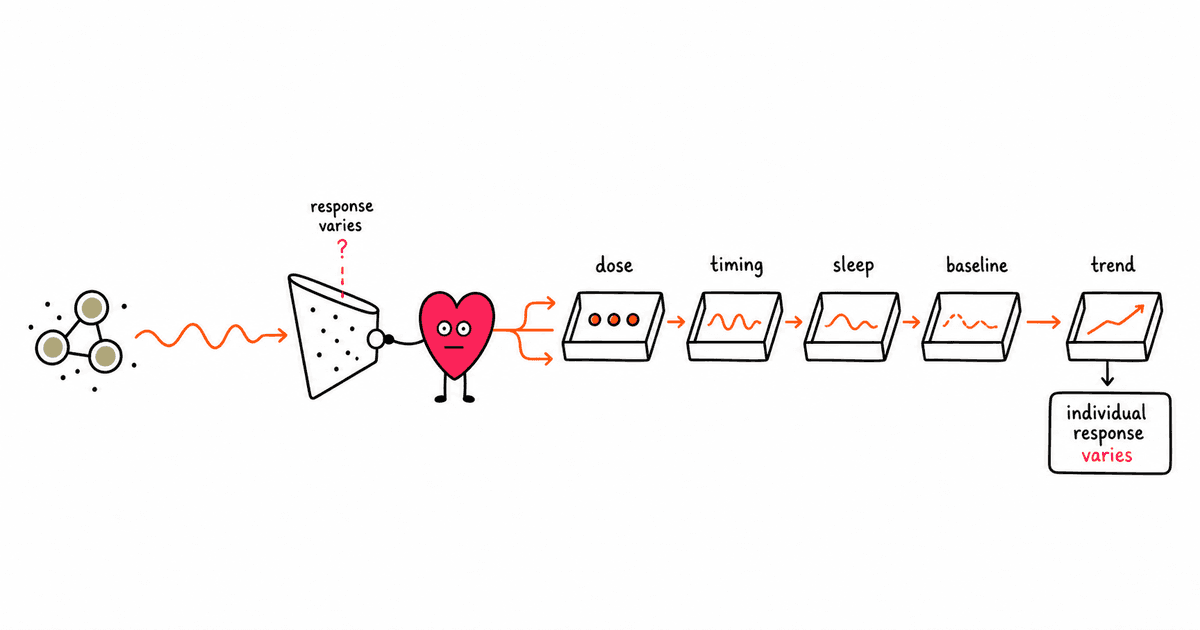
The short version is that acute THC usually raises heart rate and often lowers the parasympathetic side of HRV, but the long-term research is mixed and harder to interpret. Dose, timing, delivery method, product type, tolerance, sleep quality, and other habits all matter.
Here is what current research does and does not tell us.
How Cannabis Affects Your Autonomic Nervous System
Heart rate variability reflects how flexibly your autonomic nervous system shifts between sympathetic drive and parasympathetic recovery. Higher HRV usually suggests better vagal tone and more adaptable recovery. Lower HRV often points to stress, illness, poor sleep, heavy training load, or another recovery burden.
Cannabis complicates that picture because it does not act like a single, clean input.
THC, the main psychoactive cannabinoid in cannabis, can increase heart rate and alter autonomic balance soon after use. In practice, that often means more sympathetic activation, less parasympathetic influence, and lower high-frequency HRV. Even when cannabis feels calming subjectively, that does not automatically mean your nervous system is shifting toward better recovery.
That mismatch matters. Feeling relaxed is not the same thing as having a higher HRV.
CBD is different pharmacologically, but most real-world cannabis products are not pure CBD. They vary widely in THC dose, CBD content, terpene profile, potency, and labeling accuracy. That makes blanket claims about "cannabis and HRV" less useful than they sound.
What the Research Says About Cannabis and HRV
The evidence is not perfectly consistent, but a few patterns show up repeatedly.
Acute THC Tends to Raise Heart Rate and Lower Parasympathetic HRV
One of the clearest direct HRV studies comes from a 2022 paper in Psychophysiology. Researchers gave occasional female cannabis users oral THC at doses of 7.5 mg and 15 mg. THC increased heart rate in a dose-dependent way and decreased high-frequency HRV, a common marker of parasympathetic cardiac control. Higher doses also increased subjective intoxication and anxiety.
That is the cleanest takeaway from the current literature: when THC is active in your system, especially at higher doses, your heart tends to beat faster and your vagal recovery signal often drops.
Observational Studies on Habitual Users Are More Mixed
A 2010 study in Pharmacopsychiatry looked at 72 young men who tested positive for THC and compared them with matched controls. Surprisingly, the cannabis group had higher resting RMSSD, a commonly used HRV metric, even though psychological well-being was lower.
At first glance, that looks like cannabis might improve HRV. The problem is that observational cannabis research is messy. Studies like this often cannot fully control for:
- time since last use
- dose and potency
- tolerance
- other substance use
- sleep quality
- fitness level
- diet and recovery habits
So while this study is worth acknowledging, it does not outweigh the stronger mechanistic evidence showing acute THC can suppress parasympathetic HRV.
Other Data Suggest Sympathetic Dominance With Regular Use
A 2020 study published in Biomedical Signal Processing and Control found reduced heart rate variability, higher sympathetic dominance, and lower parasympathetic activity in a cannabis-consuming group. That lines up more closely with what many wearable users report in real life: higher overnight heart rate, lower recovery scores, and worse next-day readiness after cannabis use.
Cardiovascular Risk Data Makes the Story More Concerning
HRV is only one lens. The broader cardiovascular data matters too.
A 2024 analysis published in the Journal of the American Heart Association reviewed survey data from more than 430,000 U.S. adults and found cannabis use was associated with higher odds of coronary heart disease, heart attack, and stroke, even after adjusting for tobacco use and other cardiovascular risk factors. Daily users had 25% higher odds of heart attack and 42% higher odds of stroke than non-users.
That study does not prove HRV is the mechanism. But it is a good reminder that cannabis is not cardiovascularly neutral, especially when used frequently and especially when smoked.
Why the Evidence Is So Mixed
If you feel like the research sounds inconsistent, that is because it is.
Cannabis is a hard thing to study well. "Cannabis use" can mean a tiny low-dose edible once a week, a nightly high-THC vape, a CBD-heavy tincture, or a strong concentrate. Those are not physiologically equivalent.
Here are the biggest reasons the HRV literature gets noisy:
1. Dose matters
A small dose and a large dose can produce very different autonomic responses. Higher-THC products are more likely to push heart rate up and recovery signals down.
2. Timing matters
If you use cannabis one hour before bed, your overnight HRV may look different than if you used it earlier in the day. Late-night edibles can linger into the sleep window and affect the next morning's data more than expected, especially if they also push your circadian rhythm later.
3. Delivery method matters
Smoking and vaping hit faster. Edibles last longer. Concentrates can deliver much larger THC doses than users realize. Those differences change how cannabis shows up in your heart rate and HRV data.
4. Tolerance matters
A regular user and an occasional user may have very different responses to the same product. Withdrawal and rebound effects can also confuse the picture in frequent users.
5. Other recovery inputs matter
Cannabis is often used alongside things that already affect HRV, including alcohol, nicotine, poor sleep, late eating, and high stress. That makes cause and effect harder to isolate.
How Different Cannabis Forms May Show Up in Your HRV Data
You cannot assume every form of cannabis affects HRV the same way.
| Product type | Likely HRV pattern | Main reason to be cautious |
|---|---|---|
| Smoked or vaped THC | Faster drop in recovery metrics, higher overnight heart rate, lower parasympathetic HRV more likely | Rapid onset, high THC exposure, and possible airway or smoke-related stress |
| Edibles | Delayed effect, possible next-morning suppression if taken late or at a high dose | Longer duration can spill into the sleep and recovery window |
| High-THC concentrates | Most likely to create a strong recovery hit | Very potent dose, easier to overshoot |
| CBD-dominant products | Less direct HRV data, effect may be milder or harder to predict | Product quality varies, and many "CBD" products still contain meaningful THC |
The important point is simple: if your wearable data looks worse after cannabis, believe the pattern before you believe the marketing.
Cannabis, Sleep, and Recovery Scores
A lot of people use cannabis because it helps them unwind at night. Subjectively, that can feel useful. But your wearable does not care whether you felt calm. It cares what your physiology did.
If cannabis raises your heart rate, shifts autonomic balance, or changes sleep architecture, your device may score the night as a weaker recovery night even if you fell asleep faster.
That matters if you use HRV to guide training or recovery decisions. A lower HRV morning after cannabis may reflect:
- acute THC effects still influencing autonomic balance
- higher overnight heart rate
- disrupted sleep quality beneath the surface
- a confounding signal that makes training readiness harder to interpret
This is similar to what happens with other recovery disruptors. Sleep deprivation, anxiety, and nicotine can all blur the recovery picture. Cannabis can do the same, even when it feels relaxing in the moment.
Is Smoking Cannabis Worse for HRV Than Edibles?
From an HRV and cardiovascular perspective, smoking is probably the riskiest form.
Smoking delivers THC quickly, which can make the heart rate spike feel sharper. It also adds combustion byproducts and particulate exposure, which is not great for vascular or respiratory health. That does not mean edibles are harmless. It means smoked cannabis carries the cannabis effect plus the smoke effect.
If you compare two otherwise similar THC doses, smoked cannabis is more likely to create a fast autonomic swing, while edibles are more likely to create a long-lasting recovery drag that carries into the next morning.
Either way, high-dose THC is usually bad news if your goal is cleaner recovery data.
What About CBD?
This is where people often overreach.
Most HRV-specific cannabis research focuses on THC or mixed cannabis exposure, not purified CBD. That means there is not enough direct evidence to say CBD reliably improves HRV.
Some people may feel calmer with CBD than with THC. That may help them indirectly if it reduces anxiety, pain, or sleep disruption. But that is not the same as proving a direct HRV benefit.
If you want to understand how a CBD product affects you, treat it like an experiment, not a wellness slogan.
How to Track Cannabis and HRV in Your Own Data
If you use cannabis and want an honest answer, your own trend data is often more useful than chasing one headline or one study.
Use a consistent device
Wearables such as Oura Ring 4, Whoop, and Garmin Forerunner 265 can help you compare overnight HRV, resting heart rate, sleep timing, and recovery trends over time.
Log the details that actually matter
Track:
- product type
- estimated THC and CBD dose
- delivery method
- time of use
- whether you also used alcohol or nicotine
- bedtime and wake time
- next-morning HRV and resting heart rate
Compare like with like
The best comparison is not "cannabis night versus random sober night." It is:
- similar training load
- similar sleep schedule
- similar food and alcohol intake
- similar stress level
- same device and measurement window
Focus on trends, not a single bad night
One low HRV reading is just noise. Five or ten cannabis nights that all show lower HRV and higher resting heart rate than your baseline is a real signal.
Watch your resting heart rate too
Sometimes the clearest cannabis effect is not HRV alone. It is a combination of lower HRV and higher resting heart rate. When both move in the wrong direction, the recovery picture gets easier to read.
Practical Takeaways
If you want the blunt version, here it is:
- Acute THC often lowers the recovery side of HRV, especially at higher doses
- Cannabis can feel relaxing while still producing worse recovery metrics
- Smoking cannabis is likely worse than edibles from a cardiovascular standpoint because it adds smoke exposure on top of THC's autonomic effects
- The chronic-use literature is mixed, so do not cherry-pick one favorable study and call the question settled
- If HRV matters to you, frequent high-THC use is probably not helping
- The best answer for your body is still your own trend data, collected carefully over time
If you already know cannabis consistently lowers your HRV, the most useful next step is not to obsess over one score. It is to adjust dose, timing, frequency, or product type and see whether the pattern changes.
And if you have a history of heart disease, high blood pressure, panic symptoms, or arrhythmia concerns, it is smart to discuss cannabis use with a clinician instead of assuming it is harmless.
For more practical ways to support recovery, see our guides on how to improve HRV and HRV for athletes.
Frequently Asked Questions
Does weed lower HRV?
Often, yes, especially in the short term. Acute THC commonly raises heart rate and lowers parasympathetic HRV. But the long-term research is less consistent because cannabis studies vary so much in dose, timing, product type, and participant habits.
Can cannabis ever improve HRV if it helps me relax?
It might help you feel calmer, but that does not mean it improves HRV. Subjective relaxation and autonomic recovery are not the same thing. If a product helps you unwind but your overnight HRV keeps dropping and your resting heart rate keeps rising, your physiology is giving you the clearer answer.
Is CBD better for HRV than THC?
Possibly, but the evidence is thin. THC is the cannabinoid most clearly linked to acute heart rate increases and parasympathetic HRV suppression. There is much less direct HRV research on purified CBD, so it is better to stay cautious than to assume benefit.
How long can cannabis affect my recovery score?
That depends on dose, route, and timing. Smoked or vaped THC may create a sharper same-night effect. Edibles can last longer and may still be affecting your overnight physiology into the next morning.
Should I ignore one low HRV reading after using cannabis?
Yes. Do not overreact to one night. Look for repeated patterns across multiple similar nights. If cannabis use keeps lining up with lower HRV, higher resting heart rate, and worse recovery scores, that is much more meaningful than a single dip.
Need a quick read on your HRV number first?
Enter your HRV value, age range, device, and recovery context for a plain-English interpretation before you decide what to do next.
Interpret Your HRV NumberBuild the 30-day plan