Golf and HRV: How to Use Heart Rate Variability to Play Better and Recover Smarter
Trying to decode today's HRV number? Use the free interpreter first, then build a practical recovery plan. Interpret your HRV
Does Golf Affect HRV?
Yes. Golf can support healthier HRV over time when it gives you regular walking, outdoor movement, social connection, and manageable competitive stress. But a long round, poor sleep, travel, heat, alcohol, or tournament pressure can also lower HRV temporarily while your body recovers.
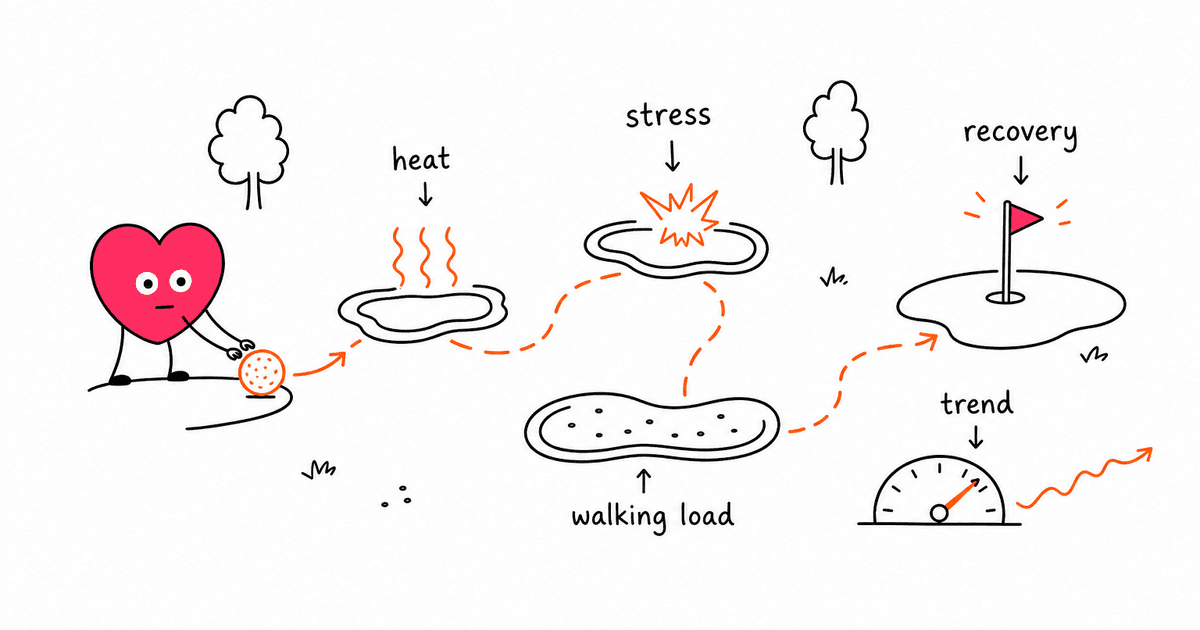
That makes golf more interesting than it looks on a scorecard. It is not usually a maximal workout like HIIT, but it can combine several HRV-relevant inputs in one afternoon: moderate cardiovascular work, time outdoors, concentration, emotional control, rotation stress, sun exposure, hydration demands, and social pressure.
For casual golfers, HRV can help answer a simple question: did yesterday's round leave you recovered, stimulated, or drained?
For competitive golfers, it adds another layer. Your swing may feel fine on the range, but if HRV is suppressed, resting heart rate is up, and sleep was poor, your nervous system may not be in its best state for patience, rhythm, and decision-making.
Why Golf Is a Useful HRV Sport
Golf is easy to underestimate because the effort is spread out.
A walking round can last four hours or more. You may cover several miles, carry or push equipment, climb hills, make repeated rotational swings, and manage focus after every mistake. Even riding in a cart includes more standing, walking, and movement than a sedentary afternoon.
That slow-burn workload matters because HRV responds to total stress, not just sweat.
Golf stress can come from:
- walking distance and terrain
- carrying clubs or using a push cart
- warm or humid weather
- caffeine before early tee times
- skipped meals during long rounds
- competitive anxiety over key shots
- alcohol after the round
- poor sleep before tournaments
- travel for golf trips
A wearable will not fix your swing. It can, however, show whether your recovery habits are helping you show up with a calmer nervous system.
What the Research Says About Golf and Health
Golf has a stronger health case than many people assume.
A 2017 scoping review in British Journal of Sports Medicine looked at more than 300 studies and concluded that golf can provide moderate-intensity physical activity and may be associated with improved cardiovascular, respiratory, metabolic, and wellness outcomes. The review also noted that walking the course tends to maximize the health benefit.
The American Heart Association has also highlighted research from the Cardiovascular Health Study suggesting that adults 65 and older who golfed regularly had lower death rates during long-term follow-up than non-golfers. That finding does not prove golf alone caused longer life, but it fits the larger pattern: regular enjoyable movement is good for heart health.
Golf-specific HRV research is smaller. Case studies of HRV biofeedback in golfers suggest that paced breathing and autonomic training may help competitive anxiety and recovery after pressure shots. That is not enough to promise better scores from HRV training, but it does support a practical idea: golfers benefit when they can downshift their nervous system on demand.
How Golf Can Improve HRV Over Time
Golf can support HRV through several pathways, especially if you walk the course and recover well.
1. It Adds Moderate Cardio Without Feeling Like Cardio
Walking 9 or 18 holes can be a meaningful cardiovascular stimulus. For people who dislike gyms or structured endurance training, golf may be the activity they actually repeat.
Consistency matters more than perfection. Regular moderate movement can support aerobic fitness, blood pressure, metabolic health, and autonomic balance. If golf is your main cardio, walking whenever possible makes it more useful for long-term HRV than riding every hole.
2. It Builds a Bigger Movement Base
HRV tends to improve when your overall lifestyle becomes less sedentary. Golf gives you long blocks of low to moderate movement, which can complement shorter workouts, strength training, or walking on non-golf days.
This is especially valuable for people who spend most of the week at a desk. A weekend round will not erase five sedentary days, but it can become part of a better movement pattern.
3. It Trains Emotional Regulation
Golf punishes emotional spirals. One bad shot can become three bad holes if your nervous system stays wound up.
That makes golf a real-world lab for HRV and stress. The same skills that help your score, slower breathing, better pre-shot routines, calmer attention, and less rumination, are also skills that support autonomic flexibility.
4. It Adds Social Connection
Many rounds include conversation, shared challenge, and time with friends. Social connection is not just a nice bonus. It is one of the lifestyle factors that can influence stress physiology and recovery.
If golf gets you outside with people you like, that may support HRV in ways a lonely treadmill session does not.
5. It Supports Healthy Aging
Golf challenges balance, coordination, rotation, walking capacity, visual attention, and decision-making. For older adults, those qualities matter.
The goal is not to turn every round into a workout test. The goal is to keep moving, stay engaged, and build a lifestyle that supports heart health for years.
Why Your HRV Might Drop After Golf
A lower HRV the morning after golf is not automatically a problem. It often means the round carried more total stress than you realized.
Common causes include:
- walking 18 holes after a low-activity week
- carrying a heavy bag without conditioning
- playing in heat or humidity
- dehydration or low sodium intake
- underfueling during a long round
- tournament nerves or betting pressure
- poor sleep before an early tee time
- travel, hotel sleep, or time zone changes
- post-round alcohol
- back, hip, wrist, or shoulder soreness
The key is context. If HRV dips for one day and rebounds, your body probably handled the load well. If HRV stays low for several days, especially with elevated resting heart rate, poor sleep, or unusual irritability, you may need more recovery.
Walking vs Riding: What HRV Trackers May Show
Walking and riding can create very different recovery signatures.
Walking the Course
Walking usually creates a larger cardiovascular benefit and a larger total workload. Your wearable may show more steps, more time in moderate heart rate zones, higher calorie expenditure, and sometimes a small next-day HRV dip if the round was long or hot.
That short-term dip can be productive if it rebounds. It means the round gave your body a stimulus to adapt to.
Riding in a Cart
Riding reduces walking volume and may be easier to recover from, especially for golfers managing injury, fatigue, heat risk, or medical limitations.
A cart is not failure. It is a tool. If riding helps you keep playing safely and consistently, that may be the better choice on low-HRV days.
Carrying vs Push Cart
Carrying clubs increases load on the back, shoulders, hips, and grip. Some golfers tolerate it well. Others see more soreness and slower recovery.
A push cart can be a smart middle ground: you still walk the course, but you reduce musculoskeletal strain. If your HRV is fine but your back is cooked after every round, the issue may be load management rather than cardiovascular fitness.
How to Use HRV Before a Round
HRV is most useful when you compare it with your own baseline, not someone else's number.
Before a casual round, use this simple readiness check:
| Morning Signal | What It Suggests | Golf Adjustment |
|---|---|---|
| HRV near baseline, resting heart rate normal | Good readiness | Play as planned |
| HRV slightly low, sleep decent | Manageable stress | Warm up longer and avoid extra practice volume |
| HRV low, resting heart rate high | Recovery strain | Consider riding, shortening practice, or lowering expectations |
| HRV low plus poor sleep or soreness | High strain | Treat the round as easy movement or reschedule if possible |
| HRV trending down for several days | Accumulated load | Reduce training, alcohol, and late nights around golf |
Do not let HRV turn into another source of anxiety. It is a steering signal, not a verdict.
How to Use HRV After a Round
After golf, look for patterns.
Useful questions include:
- Does walking 18 holes lower HRV more than walking 9?
- Do hot afternoon rounds hit harder than morning rounds?
- Does carrying clubs create more next-day soreness than using a push cart?
- Do tournament rounds affect sleep more than casual rounds?
- Does post-round alcohol reliably suppress HRV?
- Does better hydration improve your next-morning recovery?
One round does not tell you much. Five to ten similar rounds start to show your personal recovery profile.
The Best Wearables for Golf Recovery
The best HRV tracker for golf is the one you will wear consistently overnight. Daytime heart rate during golf is useful, but overnight HRV, resting heart rate, sleep, and recovery trends matter more for readiness.
Good options include the Oura Ring 4, Whoop 5, Apple Watch Ultra, and Garmin wearables. If you want help choosing, start with our best HRV monitors guide or the Apple Watch HRV guide.
For golf specifically, prioritize:
- reliable overnight HRV
- resting heart rate trends
- sleep tracking
- workout tagging for golf rounds
- battery life for long days outdoors
- comfort during sleep
- easy notes for heat, alcohol, travel, or soreness
The notes matter. If your wearable lets you tag a round as "walked 18," "carried bag," "hot day," or "tournament," your HRV data becomes much easier to interpret.
Recovery Habits That Matter Most for Golfers
Golf recovery is not complicated. The basics do most of the work.
Sleep
Early tee times are brutal if they cut your sleep short. Since overnight HRV is strongly influenced by sleep quality, protect the night before important rounds. If golf trips include late dinners, alcohol, and early alarms, expect your readiness metrics to notice.
Hydration
Golf is sneaky because sweat can evaporate while you are standing around between shots. Heat, sun, caffeine, and alcohol can make the problem worse. If you play outdoors, review the basics in hydration and HRV and pay attention to how fluid intake changes your next-day recovery.
Heat Management
Hot rounds can suppress HRV because the cardiovascular system has to help regulate temperature. Shade, fluids, electrolytes, lighter clothing, and pacing all matter. For more detail, see heat and humidity and HRV.
Fueling
A four-hour round is a long time to run on coffee and a granola bar. Underfueling can raise perceived effort, worsen concentration, and make late-round fatigue feel sharper. A simple mix of carbohydrates, protein, and fluids before and during the round is usually enough.
Mobility and Strength
Golf swings load the spine, hips, shoulders, wrists, and elbows. If soreness lingers after every round, HRV may not tell the whole story. Add simple strength work, hip mobility, thoracic rotation, and warm-up swings before full-speed shots.
Alcohol Awareness
Post-round drinks are part of golf culture for many players, but alcohol is one of the most reliable ways to lower overnight HRV. If your recovery tanks after weekend rounds, the round itself may not be the only culprit.
Breathing Skills for Better Golf Recovery
Golf rewards the ability to reset quickly.
A simple breathing routine can help before tee shots, after bad holes, and before sleep:
- Inhale through the nose for 4 seconds.
- Exhale slowly for 6 seconds.
- Repeat for 2 to 5 minutes.
- Keep the shoulders relaxed.
- Stop if you feel dizzy or uncomfortable.
This kind of slow breathing is not magic, but it can help shift the body toward parasympathetic activity. If you want a deeper protocol, see breathing exercises for HRV and HRV biofeedback training.
When Golf Is Too Much Stress
Golf is healthy for many people, but more is not always better.
Be cautious if you notice:
- HRV staying below baseline for several days
- resting heart rate staying elevated
- poor sleep after rounds
- nagging back, elbow, wrist, or shoulder pain
- irritability or unusual fatigue
- worse swing mechanics late in rounds
- frequent illness after high-volume weeks
If you have heart disease, dizziness, chest pain, heat intolerance, or new exercise symptoms, talk with a qualified clinician before increasing golf volume. HRV is useful, but it is not a medical clearance tool.
Bottom Line
Golf can be good for HRV when it helps you move more, walk regularly, manage stress, spend time outside, and stay socially connected. It can hurt short-term recovery when you stack long rounds, heat, poor sleep, travel, alcohol, and competitive pressure without enough recovery.
Use HRV as a quiet feedback loop. Walk when you can, ride when recovery demands it, hydrate before you feel behind, protect sleep before important rounds, and pay attention to how your body responds across several rounds, not just one morning score.
Need a quick read on your HRV number first?
Enter your HRV value, age range, device, and recovery context for a plain-English interpretation before you decide what to do next.
Interpret Your HRV NumberBuild the 30-day plan