COPD and HRV: How Chronic Lung Disease Affects Heart Rate Variability
Trying to decode today's HRV number? Use the free interpreter first, then build a practical recovery plan. Interpret your HRV
COPD is usually framed as a lung disease, but its effects do not stop at the lungs. Chronic obstructive pulmonary disease can change oxygen levels, breathing mechanics, inflammation, sleep quality, exercise tolerance, and cardiovascular strain. All of those pathways feed into heart rate variability.
That makes HRV potentially useful for people with COPD, but only if it is used carefully. HRV cannot diagnose COPD, grade severity, or replace spirometry. What it can do is help show when your autonomic nervous system is under more strain than usual, especially when you track it alongside symptoms, respiratory rate, oxygen saturation, and resting heart rate.
Does COPD Affect HRV?
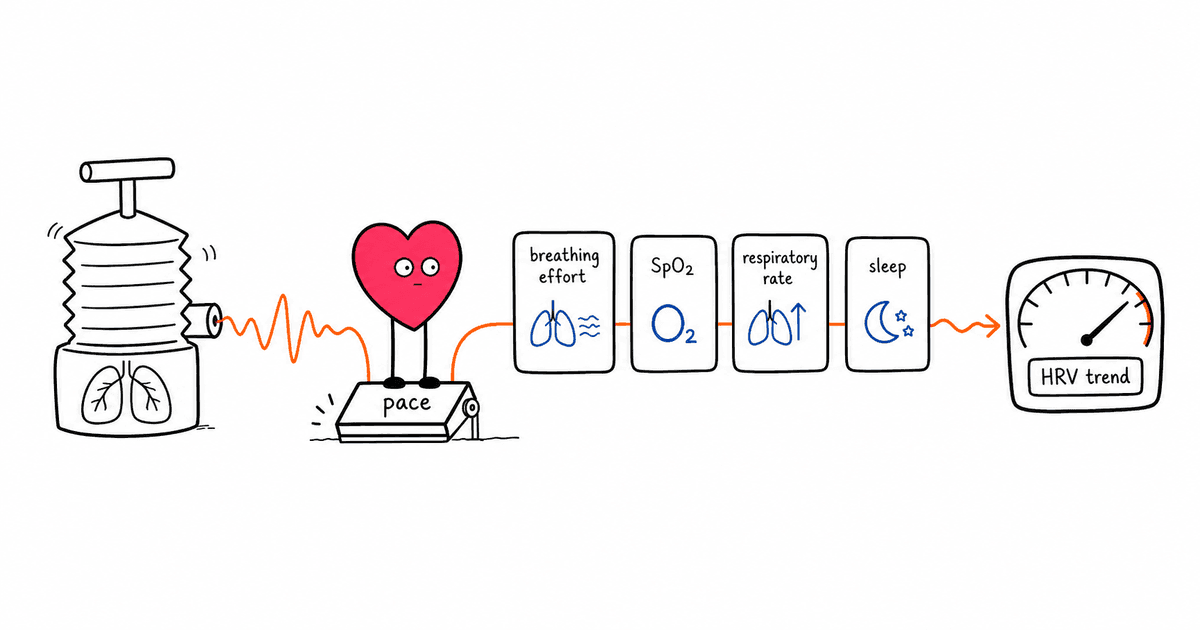
Yes, COPD is consistently associated with lower HRV, reflecting disrupted autonomic control of heart rhythm. Research suggests both parasympathetic and sympathetic modulation can be impaired in COPD, with a tendency toward sympathetic dominance, higher cardiovascular strain, and reduced recovery flexibility.
The short version: COPD makes the body work harder to breathe, recover, and maintain oxygen balance. HRV often drops when that workload rises.
Why COPD Changes the Autonomic Nervous System
Your autonomic nervous system controls heart rhythm, airway tone, blood vessel constriction, inflammation, and parts of the breathing response. COPD can disturb that system through several overlapping mechanisms.
1. Breathing Requires More Effort
In COPD, airflow limitation makes it harder to fully empty the lungs. That increases the mechanical work of breathing, especially during exertion or flare-ups.
When breathing effort rises, the body often responds by increasing sympathetic activity. Heart rate climbs, recovery slows, and HRV can fall.
2. Oxygen Levels May Fluctuate
Lower or unstable oxygen saturation can add stress to the cardiovascular system. This is one reason HRV is more useful when viewed with blood oxygen SpO2, not in isolation.
A single low HRV reading does not tell you whether oxygen changed. A pattern of low HRV, elevated resting heart rate, faster breathing, worse sleep, and lower SpO2 is more meaningful.
3. Respiratory Rate Directly Shapes HRV
HRV is partly driven by respiratory sinus arrhythmia, the natural rise and fall in heart rate as you breathe. Faster, shallower breathing can reduce high-frequency HRV and make wearable readings harder to interpret.
That matters in COPD because respiratory rate often increases when breathing becomes more difficult. If your device tracks both HRV and respiratory rate, watch the pattern between them.
4. Inflammation Adds Systemic Load
COPD is associated with chronic airway inflammation, and many people with COPD also have systemic inflammation. Inflammation tends to suppress vagal activity and can lower HRV through the same pathways discussed in inflammation and HRV.
This is one reason HRV may worsen during respiratory infections, environmental exposure, or exacerbations.
5. Sleep Disruption Compounds the Problem
COPD can fragment sleep through coughing, breathlessness, nighttime oxygen changes, and medication timing. Some people also have overlap syndrome, where COPD and sleep apnea occur together.
Poor sleep is one of the fastest ways to lower overnight HRV. If your HRV is lowest after nights with frequent awakenings or breathing disruptions, the sleep signal may be driving the recovery signal.
What the Research Shows
A 2023 systematic review and meta-analysis in Frontiers in Cardiovascular Medicine looked at 27 studies including 839 people with COPD. The review found that time-domain and frequency-domain HRV measures were significantly reduced in people with COPD compared with controls.
The authors concluded that COPD is associated with autonomic nervous dysfunction as measured by HRV. Importantly, they also noted a practical limitation: HRV methods varied widely across studies, which makes clinical use more complicated.
That is the right level of caution. The research signal is real, but HRV is not yet a standard COPD clinic tool.
HRV, Respiratory Rate, and Remote Monitoring
A 2024 prospective study in JMIR mHealth and uHealth monitored nighttime HRV, heart rate, and respiration in 146 people using noncontact bed sensors. The study included people with COPD and healthy controls, with recordings lasting at least 30 days.
The researchers found that longer monitoring windows improved the ability of nighttime vital signs to reflect health status. Respiratory features were most important, followed by HRV and heart rate.
For readers using an Oura Ring, WHOOP, Garmin, or Apple Watch, the takeaway is not "your wearable can diagnose COPD." It cannot. The useful point is that multi-week trends are more informative than one-off numbers.
Pulmonary Rehabilitation May Improve HRV
The best evidence-backed intervention here is not a breathing hack. It is pulmonary rehabilitation.
A 2014 study in Heart & Lung followed 64 people with COPD through a 12-week hospital-based pulmonary rehabilitation program. After rehabilitation, participants showed improvements in HRV measures, exercise capacity, dyspnea scores, respiratory muscle strength, and health-related quality of life.
That does not mean HRV should become the goal of COPD treatment. It means better respiratory function and conditioning may reduce autonomic strain, and HRV can sometimes reflect that improvement.
Which Metrics Matter Most?
If you have COPD and track HRV, do not obsess over one metric. The pattern is what matters.
| Metric | What it may show | Why it matters in COPD |
|---|---|---|
| HRV or RMSSD | Recovery and parasympathetic activity | Often lower when autonomic strain rises |
| Resting heart rate | Cardiovascular workload | May rise during poor sleep, illness, hypoxia, or flare-ups |
| Respiratory rate | Breathing load | Faster breathing can signal strain before you feel fully sick |
| SpO2 | Oxygen saturation | Helps contextualize low HRV or high heart rate |
| Sleep duration and awakenings | Overnight recovery quality | Poor sleep can drive HRV down quickly |
| Symptoms | Breathlessness, cough, sputum, fatigue | The clinical context matters more than the wearable score |
HRV becomes more useful when it confirms a pattern you can see elsewhere. It becomes less useful when you treat it as a standalone verdict.
What a COPD Flare May Look Like in HRV Data
Not every exacerbation will show the same pattern, but many people see a cluster of changes before or during a flare.
Common signs may include:
- HRV below your personal baseline for several days
- Resting heart rate higher than normal
- Respiratory rate trending upward
- Lower overnight SpO2 or more oxygen instability
- Worse sleep continuity
- More fatigue with ordinary activity
- Increased breathlessness, cough, wheeze, or sputum changes
The key is your baseline. A low HRV number that is normal for you is less concerning than a sudden 30 percent drop from your usual range combined with worsening symptoms.
How to Track HRV Safely With COPD
HRV can be useful, but COPD is not the place for macho recovery-score behavior. If your body is clearly strained, do not try to "beat" the score.
Use a 7-Day Baseline
Track your normal HRV, resting heart rate, respiratory rate, SpO2, and symptoms for at least one to two weeks during a stable period. This gives you a personal reference point.
Population averages are not very useful here. COPD severity, medications, age, fitness, sleep, oxygen therapy, and comorbid heart disease can all shift your baseline.
Watch Trend Clusters, Not Single Readings
One rough night can lower HRV. A bad sensor fit can distort HRV. Alcohol, late meals, stress, heat, and sleep disruption can all move the number.
The signal gets stronger when multiple variables change together for more than one day.
Pair HRV With Symptoms
A simple daily note can make your wearable data far more useful:
- Breathlessness: better, same, worse
- Cough: better, same, worse
- Sputum: none, usual, increased, changed color
- Energy: normal, low, very low
- Activity tolerance: normal, reduced, sharply reduced
If HRV drops and symptoms worsen, that is more meaningful than HRV alone.
Do Not Change Medication Based on HRV
Do not adjust inhalers, oxygen, steroids, antibiotics, or other COPD treatment based on a wearable score. HRV is a recovery trend, not a medication guide.
Use it as a prompt to pay attention, rest appropriately, and contact your clinician when symptoms cross the line.
How to Support Better HRV With COPD
The goal is not to force HRV upward. The goal is to reduce avoidable strain on the lungs, heart, and nervous system.
Follow Pulmonary Rehabilitation Guidance
Pulmonary rehab is one of the most effective tools for COPD function, exercise tolerance, and quality of life. It usually combines supervised exercise, breathing strategies, education, pacing, and symptom management.
If HRV improves during pulmonary rehab, treat that as a side benefit of better conditioning, not the main target.
Avoid Smoke and Airborne Triggers
Smoking and nicotine exposure can lower HRV and increase cardiovascular load. If tobacco is part of the picture, smoking and HRV is directly relevant.
Outdoor pollution, wildfire smoke, indoor particles, mold, and chemical irritants can also worsen respiratory load. For many people with COPD, air quality is not a wellness detail. It is a recovery variable.
Keep Movement Gentle and Consistent
With COPD, more is not always better. The useful target is tolerable, repeatable movement that improves function without triggering excessive breathlessness.
For many people, this starts with short bouts of walking, seated exercise, or clinician-approved low-intensity training. HRV can help you see whether your current dose is sustainable.
Prioritize Sleep Breathing
If overnight HRV is low and respiratory rate is high, sleep deserves attention. COPD symptoms, sleep apnea, nighttime oxygen changes, and insomnia can all suppress recovery.
Ask your clinician about sleep evaluation if you snore heavily, wake gasping, have morning headaches, or see repeated nighttime oxygen drops.
Use Breathing Techniques Carefully
Some breathing exercises can support relaxation and reduce anxiety-driven overbreathing. But COPD is different from general stress breathing.
Avoid aggressive breath holds or forceful techniques unless a respiratory therapist has cleared them. Pursed-lip breathing and paced breathing are often more appropriate than trendy breathwork protocols.
When to Contact a Clinician
HRV should never delay care. Contact a clinician promptly if you notice:
- Breathlessness that is clearly worse than usual
- Chest pain, fainting, confusion, or blue lips
- Fever or signs of respiratory infection
- A major increase or color change in sputum
- Oxygen saturation below the threshold your clinician gave you
- Resting heart rate unusually high for you and not improving
- HRV sharply lower for several days with worsening symptoms
If symptoms feel urgent, treat them as urgent. A wearable trend is supporting information, not a gatekeeper.
FAQ
Is low HRV a sign of COPD?
No. Low HRV is not specific enough to diagnose COPD. COPD diagnosis requires clinical evaluation and spirometry. Low HRV can reflect many things, including poor sleep, stress, illness, heart disease, medications, overtraining, or alcohol.
Can COPD medication affect HRV?
Possibly. Bronchodilators, steroids, oxygen therapy, and other medications can affect heart rate, sleep, breathing, and autonomic tone. Do not interpret HRV changes without considering medication timing and recent treatment changes.
Should people with COPD track HRV every day?
Daily tracking can be useful if it reduces uncertainty and helps you pace activity. It is not useful if it creates anxiety or leads you to ignore symptoms. For COPD, HRV works best as one trend among several.
Is respiratory rate more important than HRV for COPD?
Often, yes. Respiratory rate is more directly tied to breathing load. HRV adds context about autonomic strain, but COPD tracking should include respiratory rate, SpO2, symptoms, and activity tolerance whenever possible.
Can improving HRV improve COPD?
Not directly. HRV is mostly a marker, not a treatment. The better goal is to improve COPD management, sleep, activity tolerance, air quality, and cardiovascular health. HRV may improve as those systems become less strained.
Bottom Line
COPD often lowers HRV because chronic lung disease places extra demand on breathing, oxygen regulation, inflammation control, sleep, and cardiovascular function. The most useful approach is not to chase a higher HRV score. It is to track your personal baseline, watch multi-day patterns, pair HRV with respiratory rate and SpO2, and use the data to support safer pacing and earlier conversations with your care team.
Need a quick read on your HRV number first?
Enter your HRV value, age range, device, and recovery context for a plain-English interpretation before you decide what to do next.
Interpret Your HRV NumberBuild the 30-day plan