Tinnitus and HRV: What Ringing in Your Ears Reveals About Your Nervous System
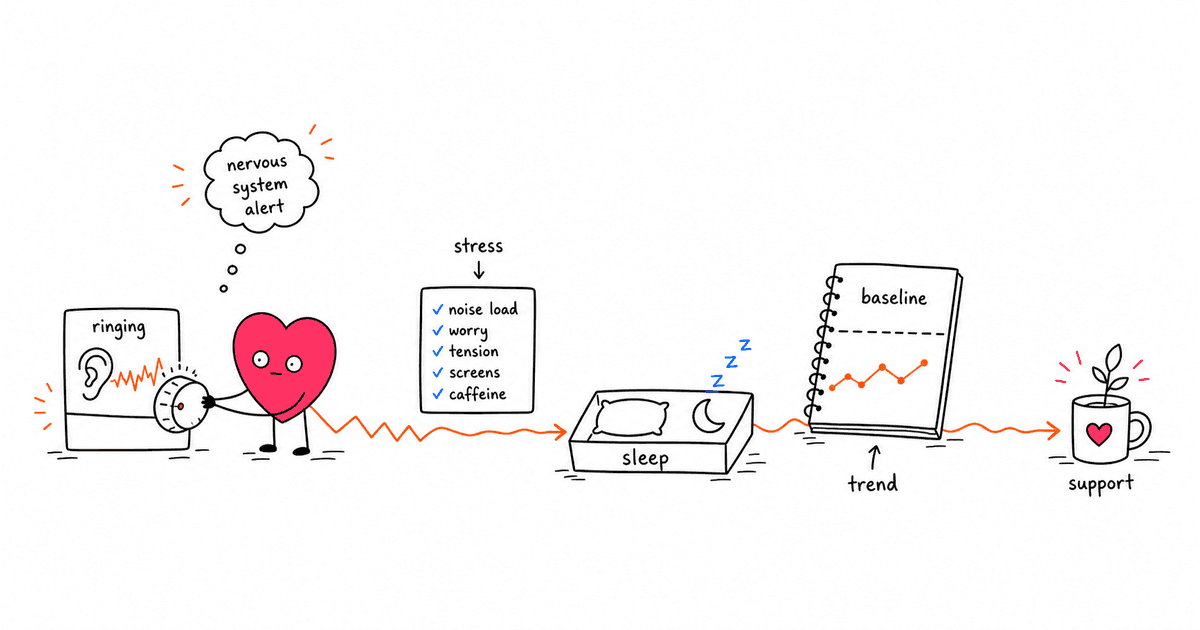
Trying to decode today's HRV number? Use the free interpreter first, then build a practical recovery plan. Interpret your HRV
Tinnitus is usually described as ringing, buzzing, hissing, or roaring in the ears when no external sound is present. That makes it sound like an ear problem, and often it starts there. But the part that wears people down is usually nervous-system load: vigilance, sleep disruption, frustration, and the feeling that your brain will not let the sound fade into the background.
That is where heart rate variability becomes useful. HRV does not diagnose tinnitus, grade hearing damage, or tell you whether the sound is dangerous. It can show whether tinnitus is acting like a stressor your body has not fully adapted to.
Does tinnitus affect HRV?
Yes, tinnitus can lower HRV when it becomes stressful, intrusive, or sleep-disrupting. The sound itself is not always the problem. The bigger HRV hit usually comes from sympathetic arousal, poor sleep, anxiety, attention loops, and the effort of constantly monitoring the noise.
If your tinnitus is mild and emotionally neutral, your HRV may barely move. If it is new, loud, unpredictable, or linked with poor sleep, your wearable may show lower overnight HRV, higher resting heart rate, or worse recovery scores.
Quick takeaways
| Question | Short answer |
|---|---|
| Can tinnitus lower HRV? | Yes, especially when it increases stress, sleep loss, or hypervigilance. |
| Does low HRV mean tinnitus is getting worse? | Not by itself. HRV reflects total load, not tinnitus loudness alone. |
| Can HRV tracking help? | Yes, if you use trends to spot triggers and recovery patterns. |
| Can improving HRV cure tinnitus? | No. It may reduce distress and improve coping, but it is not a tinnitus cure. |
| When should tinnitus be checked quickly? | Sudden hearing loss, pulsatile tinnitus, vertigo, neurological symptoms, ear drainage, or suicidal thoughts need prompt care. |
What tinnitus actually is
Tinnitus is the perception of sound without an external sound source, often experienced as ringing, buzzing, hissing, clicking, or roaring. It can be temporary after loud noise exposure, chronic after hearing changes, or tied to issues such as ear injury, jaw tension, medication effects, or neurological conditions.
Tinnitus is common. The National Institute on Deafness and Other Communication Disorders reports that roughly 10% of U.S. adults, about 25 million people, experience tinnitus lasting at least five minutes in a given year. Globally, tinnitus affects an estimated 14.4% of adults, with about 2% experiencing severe tinnitus.
Most tinnitus is not dangerous, but it can become deeply disruptive when the brain tags it as a threat.
Why tinnitus can push HRV lower
HRV is shaped by the balance between your sympathetic nervous system, which mobilizes you, and your parasympathetic nervous system, which helps you recover. Tinnitus can disturb that balance through several pathways.
1. The sound becomes a threat signal
Your brain is built to notice unexpected sound. If tinnitus feels alarming, your attention keeps returning to it. You notice the sound, ask whether it is dangerous, feel stress rise, and then notice the sound even more.
That alert state is exactly the kind of sympathetic activation that tends to lower HRV. It is similar to the pattern described in HRV and stress, except the trigger is internal sound rather than a work deadline or conflict.
2. Sleep gets lighter and more fragmented
Tinnitus often feels worse at night because the room gets quiet and there are fewer distractions. If you lie in bed scanning for the sound, sleep onset can take longer. If the sound wakes you, deep sleep and REM continuity can suffer.
Poor sleep is one of the fastest ways to lower HRV. A bad tinnitus night may show up the next morning as lower HRV, higher resting heart rate, or reduced readiness. For the broader sleep connection, see HRV and sleep quality and sleep deprivation and HRV.
3. Attention loops keep the nervous system activated
The more you check tinnitus, the more salient it becomes. This is not weakness or imagination. It is attention biology. When the brain repeatedly flags a sensation as important, it becomes easier to detect and harder to ignore.
That can create a loop where tinnitus increases arousal, arousal lowers HRV, low HRV makes you feel less resilient, and the sound feels even more intrusive.
4. Anxiety and frustration add a second stressor
Tinnitus often triggers uncertainty: Will this go away? Did I damage my hearing? Why is it louder today? Will I sleep tonight?
Those questions can become the real HRV burden. The body may react less to the sound itself and more to uncertainty, fear, anger, and sleep anticipation.
5. Hearing strain can increase fatigue
Tinnitus commonly overlaps with hearing loss. When your brain works harder to separate speech from background noise, the day becomes more effortful. That extra cognitive load can contribute to fatigue, irritability, and lower recovery after restaurants, meetings, travel, or concerts.
What the research says
The tinnitus and HRV research base is smaller than the research on sleep, exercise, or cardiovascular disease, so the claims should stay measured. Still, the pattern is useful: bothersome tinnitus is often linked with autonomic imbalance, especially higher sympathetic activity and lower parasympathetic recovery.
Tinnitus distress appears sympathetically mediated
A 2013 study in PLOS One examined 21 tinnitus patients using EEG and ECG-based HRV. The authors found that tinnitus-related distress was connected with brain regions involved in autonomic control, including the anterior cingulate cortex and insula. Their conclusion was careful but important: perceived tinnitus distress appeared to be sympathetically mediated.
That does not mean tinnitus always lowers HRV. It means the distress component of tinnitus may be closely tied to the same autonomic circuits HRV is trying to measure.
Some HRV studies find suppressed variability
A 1999 study measured HRV in 23 tinnitus patients and reported suppressed HRV with sympathetic predominance in many participants. The sample was small and older, but it fits the broader idea that tinnitus can reflect more than ear-level sound perception.
Vagus nerve stimulation is interesting, but not settled
A 2020 retrospective study in Frontiers in Psychology looked at transcutaneous auricular vagus nerve stimulation in patients with tinnitus-related mental stress. More than three quarters of patients had increased sympathetic activity at baseline, and test stimulation shifted HRV markers toward greater parasympathetic activity in many patients.
That is promising, but it is not a reason to treat consumer vagus nerve devices as proven tinnitus cures. The better takeaway is simpler: tinnitus distress and parasympathetic recovery are connected enough that calming the nervous system may be part of tinnitus management. For a broader view, see vagus nerve stimulation and HRV.
What your HRV might show with tinnitus
Tinnitus does not produce one unique HRV signature. The pattern depends on your sleep, stress, hearing status, fitness, illness, alcohol, caffeine, training load, and how threatening the sound feels.
| HRV pattern | Possible interpretation |
|---|---|
| Lower overnight HRV after a loud tinnitus day | Your body may be carrying more stress or sleeping less deeply. |
| Higher resting heart rate with lower HRV | Sympathetic arousal, poor sleep, illness, alcohol, or anxiety may be involved. |
| Normal HRV despite loud tinnitus | The sound may be intrusive but not creating major physiological stress that night. |
| HRV improves when sleep improves | Sleep disruption may be the main recovery bottleneck. |
| HRV drops only after noise exposure | Loud environments, travel, concerts, or work noise may be worth tracking. |
The key is not one reading. The key is whether tinnitus-heavy days cluster with lower recovery over several days.
How to track tinnitus and HRV without spiraling
HRV tracking can help, but it can also make tinnitus anxiety worse if you use it like a danger meter. Treat the data as a pattern tool, not a verdict.
Use a simple daily log
For two to four weeks, track only the variables that matter: tinnitus loudness, tinnitus distress, sleep quality, HRV, resting heart rate, noise exposure, alcohol, caffeine, illness, and intense training.
Keep it boring. The goal is to find patterns, not to audit your entire life.
Separate loudness from distress
This is the most useful distinction. Tinnitus can be loud but not distressing, or moderate but emotionally exhausting. HRV is more likely to track the distress and sleep-disruption side than the exact perceived volume.
If tinnitus loudness is stable but HRV falls, look for other contributors: poor sleep, work stress, alcohol, illness, overtraining, or anxiety. If distress rises but loudness does not, nervous-system support may be the better target.
Watch trends, not single-day drops
One low HRV reading does not mean tinnitus damaged your nervous system. It means your body had a lower-recovery night. Look for repeated patterns such as HRV dropping after loud restaurants, poor tinnitus sleep, late caffeine, or stressful days.
That is the level of interpretation HRV can support.
Stop tracking if it increases fear
If checking HRV makes tinnitus feel more threatening, reduce the data. Look at weekly trends only, hide readiness scores, or take a break. More information is not always better when the nervous system is already scanning for danger.
This is the same trap covered in HRV tracking anxiety and orthosomnia: the tool should lower friction, not become another stressor.
What helps your nervous system recover
There is no universal tinnitus fix. But several evidence-based and low-risk strategies can reduce the stress load that often keeps HRV suppressed.
1. Get a proper hearing evaluation
If tinnitus is persistent, new, one-sided, or paired with hearing difficulty, an audiology evaluation is worth it. Hearing loss can make tinnitus more noticeable, and treating hearing loss may reduce listening strain.
The 2024 VA/DoD tinnitus guideline suggests hearing aids for adults who have tinnitus plus hearing loss. That does not mean every tinnitus case needs hearing aids, but hearing should not be ignored.
2. Use sound enrichment at night
A quiet room can make tinnitus feel louder. Low-level background sound can reduce contrast and make the ringing less dominant. A fan, white noise, pink noise, nature sounds, or low-volume instrumental music can give your brain something neutral to rest on.
The goal is not to drown out tinnitus. It is to reduce the brain's need to keep checking it.
3. Treat sleep as the main recovery lever
If tinnitus is lowering HRV, sleep is often the first place to intervene. Keep wake time consistent, dim lights at night, avoid late alcohol, and use sound enrichment before you are already frustrated.
Do not wait until you are angry and wide awake to start your tinnitus plan. Build the routine before bedtime.
4. Try CBT or acceptance-based therapy
The VA/DoD guideline suggests cognitive behavioral therapy from a trained provider for bothersome tinnitus. CBT does not tell you the sound is fake. It helps reduce threat response, catastrophic thinking, avoidance, and sleep anxiety around the sound.
That matters for HRV because the autonomic burden often comes from the stress response surrounding tinnitus, not just from the sound signal.
5. Use breathing or HRV biofeedback carefully
Slow breathing can increase parasympathetic activity and improve short-term HRV, especially when practiced consistently. Start with five minutes, not a heroic protocol.
Helpful options include slow nasal breathing around 5 to 6 breaths per minute, longer exhales than inhales, gentle box breathing, and HRV biofeedback with a chest strap or app. See breathing exercises for HRV and HRV biofeedback training for practical protocols.
6. Protect your ears without overprotecting
Hearing protection matters around concerts, power tools, firearms, motorcycles, and loud work environments. Chronic overprotection in normal environments can backfire by making everyday sound feel more threatening.
Use ear protection when sound is actually loud. Do not wear earplugs all day in normal settings unless a clinician specifically recommends it. For environmental sound stress, see noise pollution and HRV.
7. Match training to recovery
If tinnitus is flaring and HRV is suppressed, it may not be the day for a max-effort workout. Walk, do easy zone 2 cardio, lift lighter, stretch, or skip late intense training.
Exercise is still helpful. The trick is matching intensity to recovery rather than treating low HRV as a reason to do nothing.
Best HRV tracking tools if tinnitus affects sleep or stress
A wearable will not measure tinnitus. It can help you see whether tinnitus-heavy days are also low-recovery days.
| Tool | Best use case | Why it helps |
|---|---|---|
| Oura Ring | Overnight HRV and sleep tracking | Strong for sleep timing, resting heart rate, and recovery trends. See the Oura Ring 4 review. |
| WHOOP | Recovery coaching and strain context | Useful if tinnitus interacts with training, stress, and sleep debt. See the WHOOP 5 review. |
| Apple Watch Series 11 | General health tracking | Good if you want HRV alongside heart rate, sleep, activity, and notifications. Start with the Apple Watch HRV guide. |
| Polar H10 | Controlled morning readings | Best for deliberate HRV spot checks and biofeedback practice. See the Polar H10 review. |
If tinnitus makes you data-anxious, choose the least intrusive option. A once-daily morning reading may be better than a device that keeps pushing readiness scores into your face.
When to get medical help quickly
Most tinnitus is not an emergency, but some patterns deserve prompt care.
Seek medical help quickly if tinnitus comes with:
- Sudden hearing loss
- One-sided tinnitus that is new or worsening
- Pulsatile tinnitus that beats with your pulse
- Severe dizziness or vertigo
- Facial weakness, numbness, confusion, or other neurological symptoms
- Ear pain, drainage, or injury
- Recent head, neck, blast, or acoustic trauma
- Suicidal thoughts or feeling unable to cope
For suicidal thoughts in the U.S., call or text 988. For sudden hearing loss, do not wait weeks to see whether HRV improves. Get evaluated.
FAQ
Can tinnitus cause low HRV?
Tinnitus can contribute to low HRV when it increases stress, sleep loss, anxiety, or sympathetic arousal. It is rarely the only factor. Alcohol, illness, hard training, poor sleep, caffeine timing, and work stress can all lower HRV too.
Does low HRV mean tinnitus is damaging my heart?
No. Low HRV does not mean tinnitus is damaging your heart. It usually means your body is under higher load or recovering poorly. If you have chest pain, fainting, severe palpitations, or other concerning symptoms, treat those as medical issues rather than wearable issues.
Can improving HRV make tinnitus go away?
Improving HRV will not necessarily make tinnitus disappear. It may help reduce the distress, sleep disruption, and hypervigilance that make tinnitus feel louder and more intrusive. Think better coping and recovery, not a guaranteed cure.
Is tinnitus a vagus nerve problem?
Not exactly. Tinnitus usually involves auditory pathways, hearing changes, and brain attention networks. The vagus nerve may matter because parasympathetic recovery helps regulate stress, arousal, and emotional response. That is different from saying tinnitus is caused by a weak vagus nerve.
Should I use earplugs all day?
Usually no. Earplugs are smart for loud environments, but wearing them all day in normal sound can make your auditory system more sensitive. If ordinary sound feels painful or intolerable, ask an audiologist or ENT about sound sensitivity rather than guessing.
Bottom line
Tinnitus is not just an ear symptom. When it becomes intrusive, it can behave like a chronic stress signal, keeping your nervous system alert and your HRV lower than usual.
The smart move is not to chase every HRV dip. Track patterns, protect your sleep, get hearing checked when appropriate, use sound and behavioral tools, and treat tinnitus distress as a nervous-system problem worth managing calmly.
HRV cannot tell you why your ears are ringing. It can tell you whether your body is recovering from the stress of it.
Need a quick read on your HRV number first?
Enter your HRV value, age range, device, and recovery context for a plain-English interpretation before you decide what to do next.
Interpret Your HRV NumberBuild the 30-day plan