Atrial Fibrillation and HRV: Why Irregular Rhythm Changes the Signal
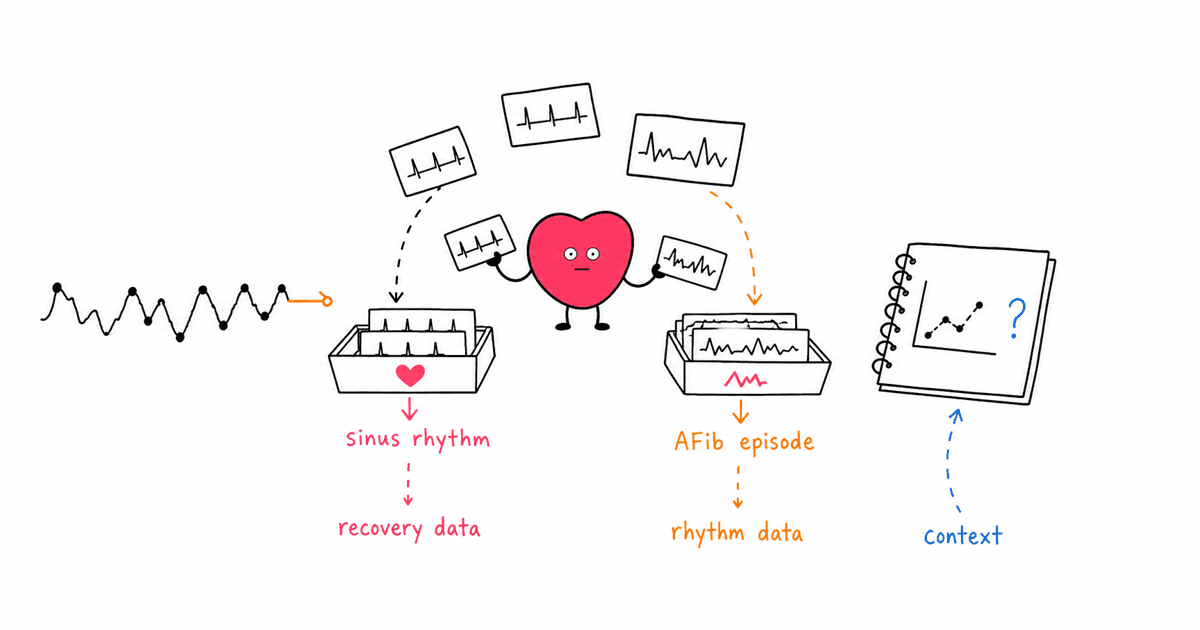
Atrial fibrillation creates one of the trickiest situations in HRV tracking.
If you use a wearable, you may see sudden HRV spikes, missing scores, strange recovery readings, or numbers that look "better" on days when your heart clearly feels more chaotic. That is not your body becoming magically resilient overnight. It is usually a signal interpretation problem.
HRV works best when the heart is in normal sinus rhythm. Atrial fibrillation, or AFib, changes the rhythm itself. Once the rhythm becomes irregular, the beat-to-beat variation your tracker measures may reflect the arrhythmia as much as your autonomic nervous system.
That distinction matters. AFib is common, and recent NHLBI coverage of new prevalence estimates suggested that at least 10.55 million U.S. adults may have atrial fibrillation, far higher than older estimates. As more people use wearables to track heart rate, HRV, and rhythm alerts, understanding the difference between "recovery data" and "rhythm data" is becoming more important.
Can You Track HRV If You Have Atrial Fibrillation?
You can track HRV if you have atrial fibrillation, but HRV readings taken during AFib should not be interpreted like normal recovery scores. AFib creates irregular beat intervals, so a high or low HRV number may reflect rhythm disturbance rather than stress, fitness, sleep quality, or parasympathetic tone.
In simple terms:
- In normal sinus rhythm: HRV mostly reflects autonomic nervous system regulation.
- During AFib: HRV may reflect the irregular rhythm itself.
- With paroxysmal AFib: HRV is most useful when you separate sinus-rhythm days from AFib episodes.
- With persistent or permanent AFib: standard consumer HRV scores are often less useful for recovery tracking.
That does not make HRV useless. It means the context becomes non-negotiable.
For a deeper primer on what HRV normally measures, start with our beginner's guide to HRV.
Why AFib Distorts HRV
Most HRV metrics are based on the timing between normal heartbeats. Classic HRV standards refer to normal-to-normal intervals, meaning intervals between normal beats after abnormal beats and artifacts have been removed. The major Task Force standards for HRV measurement were built around this assumption of analyzable rhythm data, not uncontrolled arrhythmia noise.
AFib breaks that assumption.
During AFib, the atria do not contract in a clean, coordinated rhythm. Electrical activity becomes disorganized, and the ventricles respond irregularly. The result is an uneven sequence of beat intervals.
That unevenness can inflate certain HRV metrics, especially time-domain measures like SDNN or RMSSD. But the extra variability is not necessarily a sign of better vagal tone, deeper recovery, or lower stress. It may simply be the irregular ventricular response caused by AFib.
This is why a wearable can show an unusually high HRV score during an episode while your resting heart rate is elevated, sleep feels poor, or symptoms are obvious. The number is real in a mathematical sense, but the meaning has changed.
The Research Is Nuanced
The relationship between HRV and AFib is not as simple as "low HRV equals bad" or "high HRV equals good."
A 1997 Circulation study found that HRV in patients with atrial fibrillation was related to vagal tone, even during AFib. That matters because it shows the rhythm is not pure randomness. Autonomic input still influences ventricular response.
But that study used controlled ECG-based analysis in a small clinical sample. It does not mean a wrist-based readiness score during AFib can be interpreted the same way as a normal morning HRV reading.
A larger Rotterdam Study analysis followed 12,334 participants free of AFib at baseline. Over a median 9.4 years, 1,302 developed AFib. Interestingly, higher uncorrected SDNN and RMSSD were associated with new-onset AFib, especially among women.
That finding sounds strange if you have learned that higher HRV is always better. The better lesson is this: HRV is not one universal signal. Depending on rhythm status, age, sex, heart rate correction, and underlying biology, the same metric can mean different things.
For general cardiovascular risk, lower HRV is often associated with worse outcomes. We cover that broader pattern in HRV and heart disease. AFib is different because the rhythm abnormality can directly create variability.
How AFib May Show Up in Wearable HRV Data
Consumer devices do not all handle irregular rhythm the same way. Some discard noisy segments. Some fail to produce a score. Some may calculate HRV from data that includes irregular intervals. Others use separate rhythm detection features, such as ECG recordings or irregular pulse notifications.
You may notice patterns like:
- A sudden HRV spike that does not match how you feel
- HRV scores missing on nights with suspected rhythm disturbance
- Higher resting heart rate paired with unusually high HRV
- Large swings in HRV from one night to the next
- Poor sleep or low recovery despite a "good" HRV number
- Irregular rhythm alerts from a watch or ECG app
The key is not to panic over one reading. The key is to stop interpreting HRV in isolation.
If you use Apple Watch, our Apple Watch HRV guide explains why HRV snapshots, ECG features, and rhythm notifications are separate data streams. They can complement each other, but they are not interchangeable.
What to Track Instead During AFib Episodes
During a known or suspected AFib episode, the most useful data points are usually not your standard HRV score.
Better signals include:
- Rhythm status: sinus rhythm, possible AFib, confirmed AFib, or unknown
- AFib burden: how often and how long episodes occur, if measured by your device or clinician
- Resting heart rate: especially if it is unusually high for you
- Symptoms: palpitations, fatigue, dizziness, chest discomfort, shortness of breath, exercise intolerance
- Blood pressure: particularly if you already monitor blood pressure alongside HRV
- Triggers: alcohol, poor sleep, dehydration, illness, heavy training, high stress, or large late meals
- Medication changes: especially rate-control medications such as beta-blockers, which can affect both heart rate and HRV
For many people, the useful question is not "What was my HRV during AFib?" It is "What happened before the episode, how long did it last, and what changed afterward?"
That turns your wearable from a scorekeeper into a pattern detector.
A Practical Framework for Interpreting HRV With AFib
Use this approach if AFib is part of your health picture.
If You Do Not Have Diagnosed AFib
Do not use HRV alone to self-diagnose. HRV can look strange for many reasons, including poor signal quality, alcohol, fever, overtraining, stress, sleep disruption, or normal measurement noise.
But if your device repeatedly flags irregular rhythm, or if you have symptoms such as palpitations, faintness, chest discomfort, or unexplained shortness of breath, treat that as a reason to talk with a clinician. AFib is diagnosed from rhythm evidence, not from HRV score alone.
If the main issue is occasional skipped beats rather than diagnosed AFib, our guide to heart palpitations and HRV explains why PVCs, PACs, and ectopic beats can confuse wearable recovery data.
If You Have Paroxysmal AFib
Paroxysmal AFib comes and goes, which makes HRV tracking more useful if you label your data.
Try separating days into:
- Normal sinus rhythm days
- Suspected AFib days
- Confirmed AFib days
- Post-episode recovery days
Then compare HRV only within the same category. A sinus-rhythm morning HRV trend may still tell you something about recovery, sleep, stress load, or training readiness. An AFib-night HRV score should be treated as contaminated by rhythm status.
If You Have Persistent or Permanent AFib
If AFib is present most or all of the time, consumer HRV becomes a weaker recovery metric. The beat-to-beat intervals are continuously influenced by the arrhythmia, so a typical readiness score may not map cleanly to autonomic recovery.
In that situation, it may be more useful to track:
- Resting heart rate trends
- Symptoms
- Exercise tolerance
- Sleep consistency
- Blood pressure
- Medication timing
- Clinician-measured rhythm metrics
HRV may still have research value in AFib, but the standard consumer interpretation is much less reliable.
After Cardioversion, Ablation, or Medication Changes
HRV can also change after AFib treatment. Cardioversion, ablation, medication changes, and recovery from a procedure can all affect heart rate, autonomic tone, inflammation, sleep, and stress.
A short-term HRV drop after a major rhythm intervention does not automatically mean the treatment failed. It may reflect procedure stress, disrupted sleep, medication changes, or normal recovery. Likewise, a sudden HRV improvement does not prove long-term rhythm stability.
If you are tracking HRV after treatment, focus on trends over weeks, not isolated nights. Keep notes on rhythm status, symptoms, medications, alcohol, sleep, and training load. That context makes the data far more useful when you discuss it with your care team.
Common AFib Triggers That Also Affect HRV
Many AFib triggers are also HRV disruptors, which can make the data messy but useful.
Common overlaps include:
- Alcohol: even moderate drinking can lower recovery quality and trigger rhythm issues in susceptible people. See alcohol and HRV.
- Sleep apnea: repeated oxygen drops and sympathetic surges can strain the heart and suppress HRV. See sleep apnea and HRV.
- High stress: sympathetic activation can raise heart rate and reduce vagal flexibility. See HRV and stress.
- Heavy training: too much intensity without enough recovery can lower HRV and increase cardiac strain. See HRV and overtraining.
- Illness or inflammation: infections and inflammatory flares often raise resting heart rate and reduce HRV.
- Blood sugar swings: metabolic stress can affect both autonomic tone and cardiovascular load. See blood sugar and HRV.
This is where HRV can still help. Not as a diagnosis, but as a context marker. If your HRV drops for several days after poor sleep and alcohol, then an AFib episode follows, that pattern is worth noting.
When HRV Should Not Be the Main Metric
There are situations where HRV should take a back seat.
Prioritize rhythm and medical evaluation if you experience:
- New or worsening irregular heartbeat
- Chest pain or pressure
- Fainting or near-fainting
- Severe shortness of breath
- Stroke-like symptoms such as facial drooping, arm weakness, or speech trouble
- Very high resting heart rate that does not settle
- Repeated irregular rhythm alerts from a wearable
HRV is a wellness and physiology metric. AFib is a heart rhythm condition with real stroke and cardiovascular implications. The two can overlap, but they should not be treated as the same category of data.
Bottom Line
AFib changes the meaning of HRV.
In normal sinus rhythm, HRV can be a useful window into recovery, stress, sleep, and autonomic balance. During atrial fibrillation, the irregular rhythm itself can dominate the signal, making standard consumer HRV scores misleading.
The smart approach is not to throw the data away. It is to label it properly. Separate sinus-rhythm readings from AFib episodes, track symptoms and triggers, and use ECG-based rhythm data when rhythm status matters.
If your HRV looks strange and your heart rhythm also feels strange, believe the rhythm context first. The HRV number can wait.
Need a quick read on your HRV number first?
Enter your HRV value, age range, device, and recovery context for a plain-English interpretation before you decide what to do next.
Interpret Your HRV NumberBuild the 30-day plan