Lyme Disease and HRV: What Tick-Borne Illness Can Do to Autonomic Recovery
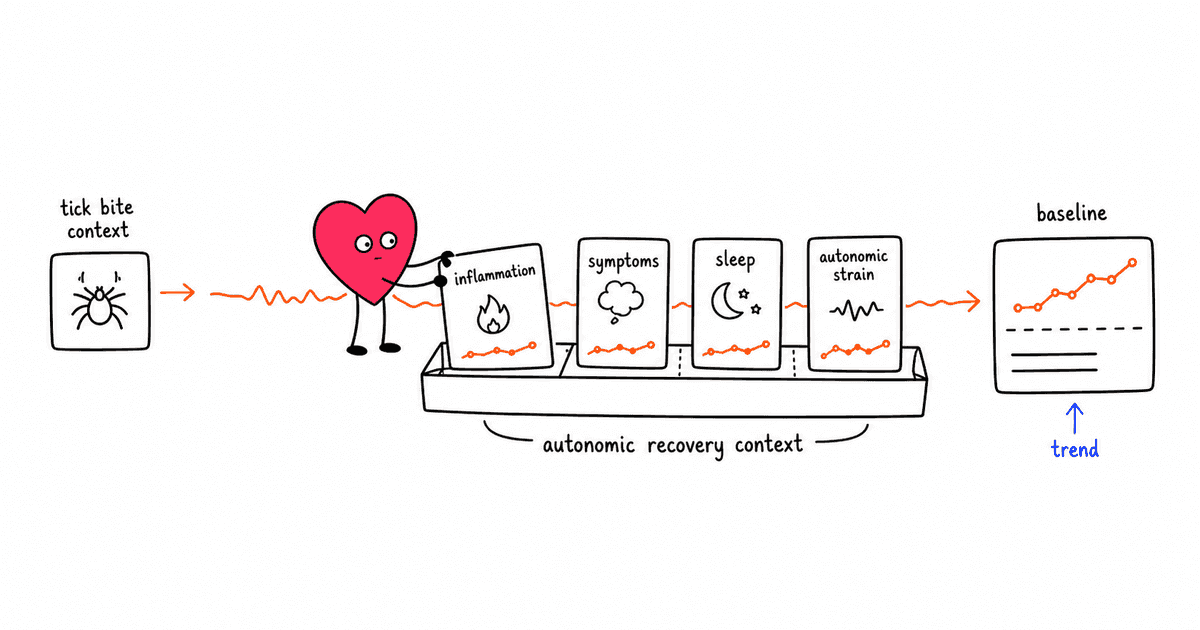
Lyme disease is not just a rash-and-antibiotics story for everyone. In some people, the infection and the recovery period can involve fatigue, palpitations, dizziness, sleep disruption, pain, and exercise intolerance. Those are also the kinds of changes that can show up in heart rate variability data.
That does not mean HRV can diagnose Lyme disease. It cannot. But if you already have a confirmed tick-borne illness, or you are recovering from one under medical care, HRV can be a useful recovery signal when it is interpreted carefully.
Does Lyme Disease Affect HRV?
Yes, Lyme disease may affect HRV in some people, mainly through inflammation, autonomic nervous system strain, vagal tone changes, pain, poor sleep, and post-infectious dysautonomia. The evidence is still limited, but research suggests Lyme disease can alter cardiac autonomic control, especially in people with lingering symptoms after treatment.
The practical takeaway is simple: HRV is a trend metric. A sudden drop can reflect acute illness stress. A slow rebound can suggest recovery. A persistently suppressed pattern, especially with dizziness, palpitations, or exercise intolerance, is a reason to talk with a clinician, not a reason to self-diagnose.
Why Lyme Disease Can Disrupt Autonomic Recovery
Lyme disease is caused by Borrelia bacteria transmitted through infected blacklegged tick bites. According to CDC surveillance data, more than 89,000 cases were reported in the United States in 2023, while estimates based on other data sources suggest about 476,000 people may be diagnosed and treated each year.
From an HRV perspective, Lyme matters because the infection can stress several systems that influence beat-to-beat heart rhythm.
1. Immune Activation Can Push HRV Down
When your immune system is fighting an infection, HRV often drops. That is not unique to Lyme disease. Viral infections, bacterial infections, fever, poor sleep, dehydration, and systemic inflammation can all shift the body toward a more sympathetic, fight-or-flight state.
This is one reason a low HRV reading after a tick bite is not specific. It may mean your body is under stress. It does not tell you what kind of stress.
For a deeper explanation of this immune-autonomic connection, see our guide to HRV and inflammation.
2. Vagal Tone May Be Impaired in Some Lyme Patients
A small 2014 study published in World Journal of Cardiology tested respiratory modulation of cardiac vagal tone in 18 people with serologically positive Lyme disease and 18 matched controls. During deep breathing, the Lyme group had lower maximum cardiac vagal tone than controls, and the authors concluded that respiratory modulation of cardiac vagal tone was impaired.
That matters because vagal activity is one of the major drivers of higher short-term HRV, especially metrics such as RMSSD. When vagal modulation is blunted, HRV may look flatter, less responsive, or slower to rebound after stress.
This was a small study, so it should not be treated as proof that every person with Lyme disease will have low HRV. It does support the idea that Lyme can interact with the autonomic nervous system in measurable ways.
3. Post-Treatment Symptoms Can Overlap With Dysautonomia
Some people have persistent symptoms after appropriate treatment, often described as post-treatment Lyme disease syndrome, or PTLD. Symptoms can include fatigue, pain, brain fog, sleep disruption, dizziness, and palpitations.
A Johns Hopkins research summary published in 2025 described autonomic symptoms in PTLD patients. In one cohort, 37 PTLD patients completed an autonomic symptom questionnaire. In a larger group of 210 PTLD patients, researchers used a 10-minute active stand test and found that a subset showed orthostatic tachycardia, a POTS-like heart rate increase when standing.
That does not mean PTLD and POTS are the same thing. It means autonomic screening can be relevant when someone has lingering symptoms after Lyme disease.
4. Sleep, Pain, and Deconditioning Can Cloud the Signal
Lyme-related symptoms can affect HRV indirectly too. Poor sleep tends to lower HRV. Chronic pain can increase sympathetic arousal. Reduced activity during illness can lower fitness and change heart rate responses. Anxiety about symptoms can add another layer of autonomic load.
This is why HRV should be read alongside context. A low number by itself is not the story. The pattern around symptoms, sleep, resting heart rate, temperature, activity, and recovery is the story.
What the Research Actually Shows
Here is the clean version, without overstating it.
| Finding | What it means | What it does not mean |
|---|---|---|
| Lyme disease may impair cardiac vagal modulation in a small study | Some Lyme patients may show measurable autonomic changes | HRV cannot diagnose Lyme disease |
| PTLD symptoms can overlap with dysautonomia | Dizziness, palpitations, fatigue, and brain fog deserve autonomic context | Everyone with PTLD has POTS |
| Infection and inflammation often reduce HRV | A short-term HRV drop during illness is plausible | A low HRV reading identifies the infection |
| HRV trends can support recovery tracking | A baseline can help you see whether your system is rebounding | HRV replaces medical evaluation or testing |
The evidence is strongest for a cautious conclusion: Lyme disease can be associated with autonomic disruption in some people, but HRV is a monitoring tool, not a diagnostic test.
What HRV Patterns Might Look Like With Lyme Disease
There is no single Lyme-specific HRV signature. Still, several patterns are worth watching.
Acute Illness Pattern
During the early illness period, HRV may drop while resting heart rate rises. This can happen with fever, poor sleep, inflammation, dehydration, or pain. If you normally track HRV, a sudden multi-day drop can be one clue that your body is dealing with something.
It is not enough to identify Lyme disease. If you have a rash, fever, flu-like symptoms, or a known tick exposure, follow medical guidance rather than waiting for your wearable to confirm anything.
Recovery Pattern
As symptoms improve, HRV may gradually return toward your personal baseline. Resting heart rate may normalize. Sleep may become more stable. Morning readings may stop looking chaotic.
A rebound does not prove the infection is gone, but it can indicate that your autonomic system is carrying less load.
Post-Infectious Pattern
If HRV stays unusually low for weeks, or swings dramatically with small amounts of activity, it may suggest incomplete recovery, deconditioning, poor sleep, ongoing inflammation, or dysautonomia-like physiology.
This pattern is not unique to Lyme disease. It can also happen after viral illnesses, including long COVID, and after periods of severe stress or reduced activity.
Orthostatic Pattern
If standing causes a racing heart, dizziness, shakiness, breathlessness, or brain fog, morning HRV alone may miss part of the picture. Orthostatic symptoms involve how your heart rate and blood pressure respond to posture.
In that case, your most useful data may include resting heart rate, standing heart rate, symptoms, hydration, salt intake if medically appropriate, and clinician-guided autonomic testing.
What HRV Cannot Tell You
HRV is useful, but it is easy to misuse when symptoms are scary.
HRV cannot tell you:
- Whether a tick carried Lyme disease
- Whether you were infected after a bite
- Whether a rash is erythema migrans
- Whether antibiotics are needed
- Whether treatment worked
- Whether persistent symptoms are caused by Lyme rather than another condition
A wearable can show that your body is under strain. It cannot name the cause.
When to Seek Medical Care After a Tick Bite
Use medical symptoms first, HRV second.
The CDC advises seeking medical attention if you develop symptoms after a recent tick bite, live in an area where Lyme disease occurs, or traveled to one. Early signs can include fever, chills, headache, fatigue, muscle and joint aches, swollen lymph nodes, and an expanding rash. The erythema migrans rash occurs in roughly 70 to 80 percent of infected people, but it does not always look like a classic bull's-eye.
Later symptoms can include severe headache and neck stiffness, facial palsy, arthritis with joint swelling, heart palpitations, irregular heartbeat, dizziness, shortness of breath, nerve pain, numbness, or tingling.
Seek prompt medical care if you notice:
- An expanding rash after a tick bite
- Fever, chills, or flu-like symptoms after tick exposure
- New facial drooping or weakness
- Chest discomfort, palpitations, or irregular heartbeat
- Dizziness, fainting, or shortness of breath
- Severe headache, neck stiffness, or neurological symptoms
Do not wait for HRV confirmation. Lyme disease is a clinical issue first.
How to Track HRV During Lyme Recovery
If you are already under medical care and want to use HRV responsibly, keep the tracking boring and consistent.
1. Use Your Personal Baseline
Compare your readings to your own normal range, not population averages. A person with a baseline RMSSD of 35 ms and a person with a baseline RMSSD of 85 ms can both be healthy. The meaningful signal is the change from your normal.
If you are new to HRV, read HRV numbers by age before overreacting to a single score.
2. Watch the 7-Day Trend
A single low day is noise. A 7-day downward trend is more meaningful, especially if resting heart rate rises at the same time.
This pairing matters because resting heart rate and HRV often move in opposite directions during illness, fatigue, dehydration, or stress.
3. Log Symptoms Alongside the Number
HRV is more useful when paired with a quick symptom log.
Track:
- Sleep quality
- Fatigue level
- Pain level
- Dizziness or palpitations
- Temperature or fever
- Tick bite timing
- Rash appearance
- Exercise tolerance
- Medication changes
This makes your data more useful for pattern recognition and for conversations with a clinician.
4. Do Not Use HRV to Push Through Symptoms
A common mistake is treating HRV like a green light to train hard. During infection recovery, that can backfire.
If symptoms are still active, prioritize medical guidance, sleep, hydration, gentle movement, and pacing. A normal-looking HRV score does not mean your joints, immune system, or cardiovascular system are ready for intense exercise.
5. Add Orthostatic Context if Symptoms Fit
If you feel worse when standing, morning HRV may not be enough. Consider tracking heart rate lying down, then after standing for a few minutes, if your clinician says this is appropriate.
A large heart rate jump, dizziness, or near-fainting is worth discussing with a medical professional. For more detail, see our guide to dysautonomia and HRV.
Supporting Autonomic Recovery After Lyme Disease
The foundation is proper diagnosis and treatment. Lifestyle work can support recovery, but it should not replace antibiotics when they are indicated or delay medical care.
Once you are being treated appropriately, the habits most likely to support HRV are the unglamorous ones.
Sleep Consistency
Inconsistent sleep can keep HRV suppressed even after the acute infection improves. Aim for a regular sleep window, a cool room, morning light exposure, and a low-stimulation wind-down routine. See HRV and sleep for the full breakdown.
Hydration and Electrolytes
Fever, sweating, poor appetite, and reduced intake can all strain heart rate regulation. Hydration matters, especially if dizziness is part of the symptom picture. If you have blood pressure, kidney, or heart conditions, ask a clinician before increasing salt.
Gentle Movement
When symptoms allow, short walks or light mobility can help reduce deconditioning. The goal is not fitness gains at first. The goal is to keep circulation, joints, and the nervous system gently engaged without provoking a crash.
If activity causes a delayed symptom flare, scale back and discuss pacing with a clinician familiar with post-infectious recovery.
Stress Downshifting
No breathing drill cures Lyme disease. Still, calming practices can help lower sympathetic load while the body recovers. Slow breathing, brief meditation, quiet walks, and relaxing music can all support autonomic balance. For a cautious starting point, use gentle breathing exercises for HRV rather than aggressive breath holds.
If breathwork helps, keep it easy. This is recovery support, not a performance test.
The Bottom Line
Lyme disease can affect HRV, but not in a way that is specific enough for diagnosis. The most useful role for HRV is recovery tracking: watching whether your autonomic system is returning toward baseline after infection, treatment, rest, and symptom improvement.
If HRV stays unusually low, resting heart rate remains elevated, or you develop dizziness, palpitations, chest symptoms, facial weakness, or neurological symptoms, treat that as a medical signal. HRV is useful data. It is not the doctor.
FAQ
Can low HRV mean I have Lyme disease?
No. Low HRV can reflect infection, poor sleep, dehydration, stress, alcohol, overtraining, pain, or dozens of other factors. Lyme disease requires clinical evaluation, exposure history, symptoms, and appropriate testing.
Can Lyme disease cause dysautonomia?
It may contribute to autonomic symptoms in some people, especially those with persistent post-treatment symptoms. Research from Johns Hopkins has found autonomic symptom patterns and a small subgroup with orthostatic tachycardia among PTLD patients, but more research is needed.
Should I exercise if my HRV improves during Lyme recovery?
Be careful. HRV improvement is encouraging, but it should not override symptoms or medical guidance. Start with gentle activity, increase slowly, and back off if you get delayed fatigue, dizziness, palpitations, or symptom flares.
Which HRV metric matters most?
For most consumer tracking, RMSSD or the app's recovery score is the easiest to follow. The exact metric matters less than consistency: same device, same timing, same measurement conditions, and trend-based interpretation.
When should I worry about heart symptoms with Lyme disease?
Seek medical care quickly for chest discomfort, fainting, shortness of breath, new palpitations, an irregular heartbeat, dizziness, or symptoms that worsen after a tick bite. Lyme carditis is uncommon, but heart rhythm symptoms after possible Lyme exposure deserve prompt evaluation.
Need a quick read on your HRV number first?
Enter your HRV value, age range, device, and recovery context for a plain-English interpretation before you decide what to do next.
Interpret Your HRV NumberBuild the 30-day plan