Grief and HRV: How Bereavement Affects Heart Rate Variability
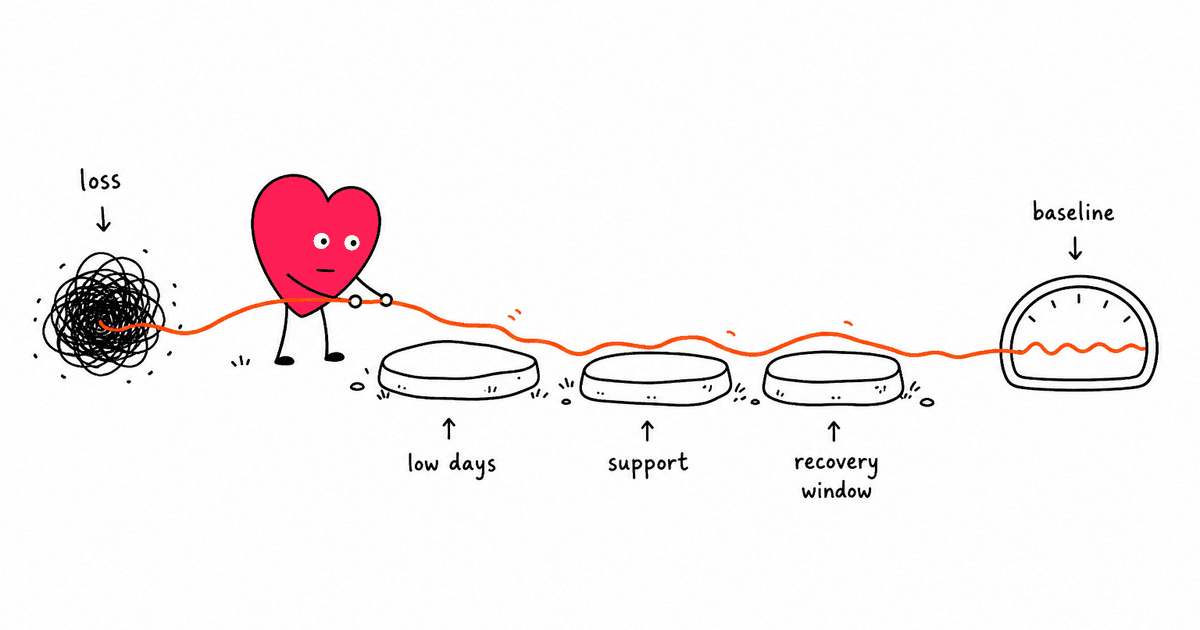
Trying to decode today's HRV number? Use the free interpreter first, then build a practical recovery plan. Interpret your HRV
Grief is not only emotional. After a major loss, your body often behaves as if it is under sustained threat: sleep gets lighter, appetite changes, heart rate rises, and recovery can feel unusually fragile.
That is where heart rate variability can be useful. HRV will not measure love, pain, or the meaning of a loss. But it can show how much strain your nervous system is carrying while you move through bereavement.
Does Grief Affect HRV?
Yes, grief can lower HRV, especially in the early weeks after a major loss. Bereavement can increase sympathetic nervous system activity, raise resting heart rate, disrupt sleep, and reduce parasympathetic recovery. In practical terms, your HRV may drop, fluctuate more than usual, or recover more slowly after ordinary stressors.
This does not mean grief is "bad for you" in a simplistic way. Grief is a normal human response. The point is that deep emotional pain has a physical load, and HRV can help you respect that load instead of trying to push through it.
Why Grief Shows Up in HRV
HRV reflects the balance and flexibility of your autonomic nervous system. When your body has room to recover, HRV often trends higher. When your system is under threat, pain, illness, poor sleep, or emotional strain, HRV often trends lower.
Grief can affect HRV through several overlapping pathways.
Acute Stress Activation
A loss can trigger the same biology seen with other forms of intense stress: more adrenaline, more vigilance, higher heart rate, and less parasympathetic braking.
That shift is useful during immediate danger. It is less useful when the stressor is emotional, ongoing, and impossible to solve quickly.
Sleep Disruption
Bereavement often changes sleep. Some people wake early. Some sleep longer but feel unrested. Some cycle through vivid dreams, nighttime rumination, or fragmented sleep.
Because nighttime HRV is heavily influenced by sleep quality, grief-related sleep disruption can make your HRV look worse even when you are doing everything "right." If the pattern becomes sustained sleep loss, the sleep deprivation and HRV guide explains why recovery can keep lagging. For broader context, see the guide to HRV and sleep.
Changes in Routine
After a death, routines often collapse. Meals get skipped, alcohol or caffeine may increase, workouts may stop or become too intense, and social rhythms change.
Those inputs matter. HRV is sensitive to hydration, nutrition, training load, and daily timing. Grief may be the root cause, but the measurable HRV drop can come from the whole pile-on.
Emotional Load and Rumination
Grief is not constant. It comes in waves. A memory, song, date, room, message, or administrative task can suddenly raise emotional arousal.
That is why HRV during grief may be volatile rather than simply low. You may see normal readings, followed by sharp dips around anniversaries, services, family conversations, or difficult practical tasks.
What the Research Says
The research base is not huge, but the signal is consistent enough to take seriously: bereavement can measurably affect the cardiovascular and autonomic systems.
A 2012 study in The American Journal of Cardiology followed 78 bereaved spouses and parents using 24-hour Holter monitoring within two weeks of loss and again at six months. In the acute bereavement period, participants had higher 24-hour heart rate and lower HRV compared with a non-bereaved reference group. By six months, several HRV measures had improved from the early bereavement period.
A separate 2012 Circulation study found that the risk of acute myocardial infarction was highest in the first 24 hours after the death of a significant person and declined over the following days. The absolute risk was still low for most people, but the finding matters because it shows that intense grief can act as a real cardiovascular trigger, especially for people with existing heart risk.
A 2023 study in Psychology and Aging looked at spousal bereavement over time and found that higher vagally mediated HRV was associated with faster recovery from grief symptoms among people with more severe childhood maltreatment histories. That does not mean high HRV makes grief easy. It suggests HRV may reflect part of the body's resilience system during major emotional stress.
The clean takeaway: grief can lower HRV, higher HRV may support resilience, and the most important period for caution is often the early phase after loss.
What HRV May Look Like After a Loss
There is no single grief HRV pattern. People differ by age, health status, relationship, sleep, support, medications, and baseline HRV.
Still, several patterns are common.
A Sudden Drop From Baseline
Your HRV may fall sharply in the days after the loss. This can happen even if you feel numb rather than outwardly distressed.
Numbness is not the same as calm. The nervous system may still be working hard.
Higher Resting Heart Rate
A lower HRV reading paired with a higher resting heart rate often points to elevated load. During grief, that load may come from stress hormones, poor sleep, dehydration, skipped meals, or emotional arousal.
If you also track resting heart rate versus HRV, look at both together instead of obsessing over one number.
More Day-to-Day Volatility
One morning may look normal. The next may crash. This is especially common around emotionally charged events.
Volatility does not mean you are failing. It often means your nervous system is responding to unpredictable emotional demands.
Slower Recovery After Exercise or Alcohol
During grief, your usual habits may hit harder. A workout that normally feels fine may suppress HRV longer. A drink that used to have a modest effect may lead to a bigger drop the next morning.
This is a good time to treat your baseline as temporarily more fragile.
How to Track HRV During Grief Without Making It Worse
HRV can be helpful during grief, but it can also become one more thing to worry about. The goal is not to optimize your way out of loss. The goal is to notice when your body needs more care.
Watch Trends, Not Single Readings
Use a 7-day or 14-day trend. One low reading after a hard night means very little. A sustained drop tells you more.
If you are new to tracking, read understanding HRV numbers before trying to interpret every daily change.
Pair HRV With Simple Notes
You do not need a detailed grief journal if that feels heavy. A few short notes can help:
- Slept poorly
- Memorial planning
- Hard conversation
- Walked outside
- Ate normally
- Felt emotionally flat
- Cried before bed
Over time, these notes make the number more humane. You are not looking at a mysterious score. You are seeing a body responding to a real life event.
Use Passive Tracking If Checking Feels Stressful
If manual morning measurements make you anxious, passive overnight tracking may be easier. Devices like the Oura Ring, Whoop, and many Garmin watches can show overnight HRV trends without turning the process into a daily test.
If you want cleaner spot measurements, a chest strap like the Polar H10 can be useful, especially when paired with a dedicated HRV app. The tradeoff is that it requires more deliberate checking, which may not be ideal during acute grief.
Do Not Let HRV Police Your Emotions
A low HRV day does not mean you grieved wrong. A high HRV day does not mean you are "over it." HRV measures autonomic patterns, not moral progress.
Use the data to adjust load, not to judge your feelings. If checking the number starts to fuel worry, read HRV tracking anxiety and orthosomnia before adding more data to the pile.
How to Support HRV While Grieving
Nothing here is a cure for grief. These are ways to reduce avoidable physiological strain while you move through something hard.
Protect Sleep Before Perfecting It
Do not aim for perfect sleep. Aim for sleep protection.
That can mean a consistent wake time, dimmer light at night, fewer late-night administrative tasks, and a simple wind-down routine. If you wake during the night, slow breathing or quiet reading is often better than checking your phone and restarting the stress loop.
Keep Movement Gentle and Regular
Gentle movement is one of the safest ways to support HRV during grief. Walking, easy cycling, stretching, or light strength work can help regulate stress without adding too much recovery debt.
If your HRV is suppressed and your resting heart rate is elevated, scale intensity down. This is not the season for proving toughness. See walking and HRV for a low-friction place to start.
Eat and Hydrate Like It Counts
Grief can flatten appetite or push you toward convenience food. No judgment. Still, your nervous system needs basic inputs.
Try to keep a few simple anchors: protein at meals, water nearby, electrolytes if you are not eating much, and some fiber-rich food most days. This is not about dieting. It is about giving your body enough material to recover.
Use Slow Breathing as a Downshift
Slow breathing can raise HRV in the moment by increasing parasympathetic activity. Five minutes is enough to start.
Try this:
- Inhale for 4 seconds
- Exhale for 6 seconds
- Repeat for 5 minutes
- Stop if it makes you dizzy or uncomfortable
For more options, use the guide to breathing exercises for HRV.
Stay Connected, Even Lightly
Social support matters for grief and for autonomic regulation. You do not need to explain everything. Sometimes a quiet walk, a meal, or a brief check-in is enough.
Isolation can amplify stress physiology. If connection feels hard, start small. One safe person is better than trying to be broadly available.
The broader relationship between connection and recovery is covered in social connection and HRV.
Be Careful With Alcohol and Stimulants
Alcohol may temporarily numb grief, but alcohol often lowers HRV, worsens sleep, and raises next-day anxiety. Extra caffeine can do something similar if you are already wired and underslept.
You do not need perfection. You do need honesty about whether a coping tool is making the next day harder.
Consider Professional Support
If grief feels unmanageable, prolonged, traumatic, or mixed with anxiety, depression, trauma symptoms, or guilt, professional support can help. Therapy, grief groups, clergy, community support, and medical care all have a place.
HRV data should never replace human support.
When Low HRV During Grief Deserves Medical Attention
A lower HRV trend after loss is not automatically dangerous. But grief can increase cardiovascular strain, and it deserves more caution if you already have heart disease, high blood pressure, arrhythmia history, diabetes, or major risk factors.
Seek urgent medical help if grief-related stress comes with:
- Chest pain, pressure, or tightness
- Severe shortness of breath
- Fainting or near-fainting
- A new or worsening irregular heartbeat
- Pain radiating to the jaw, arm, back, or shoulder
- Sudden weakness, confusion, or trouble speaking
- Thoughts of self-harm or feeling unable to stay safe
Those symptoms are not HRV problems. They are medical problems.
The Bottom Line
Grief can lower HRV because bereavement places real strain on the autonomic nervous system. The effect is often strongest early after loss, when heart rate may rise, sleep may fragment, and recovery capacity may narrow.
Use HRV gently. Let it remind you to reduce load, protect sleep, move softly, eat enough, and accept support. Do not let it turn grief into a performance metric.
FAQ
Can grief lower HRV?
Yes. Grief can lower HRV by increasing stress physiology, disrupting sleep, raising heart rate, and changing routines that normally support recovery.
How long does HRV stay low after bereavement?
There is no universal timeline. In one 2012 Holter study, several HRV measures improved by six months compared with the acute bereavement period. Individual recovery varies widely.
Is low HRV after a death dangerous?
Usually, a temporary drop reflects stress load rather than immediate danger. It deserves more caution if you have cardiovascular disease or if low HRV comes with symptoms like chest pain, fainting, severe shortness of breath, or a new irregular heartbeat.
Should I keep training if my HRV drops while grieving?
Usually, reduce intensity first. Gentle movement can help, but hard training can add stress when your nervous system is already loaded. Watch your HRV trend, resting heart rate, sleep, and how you feel.
Can HRV tell me if I am coping well?
No. HRV can show physiological strain and recovery, but it cannot judge emotional progress. Grief is not linear, and a low HRV day does not mean you are coping badly.
Need a quick read on your HRV number first?
Enter your HRV value, age range, device, and recovery context for a plain-English interpretation before you decide what to do next.
Interpret Your HRV NumberBuild the 30-day plan