Stroke Recovery and HRV: What Heart Rate Variability Reveals After Stroke
Trying to decode today's HRV number? Use the free interpreter first, then build a practical recovery plan. Interpret your HRV
May is American Stroke Month, which makes this a good time to talk about a recovery signal that rarely gets explained outside research papers: heart rate variability. According to the American Heart Association, about 800,000 people in the United States have a stroke each year, and stroke is the fourth-leading cause of death in the country. The same 2026 awareness campaign notes that nearly 1 in 4 strokes occur in people who have already had one.
That does not mean HRV can detect a stroke at home. It cannot. Stroke symptoms are an emergency, and B.E. F.A.S.T. signs like sudden balance problems, vision changes, face drooping, arm weakness, or speech difficulty mean it is time to call emergency services.
But after a stroke, HRV may help explain something survivors and caregivers often feel before they can name it: the nervous system is still recovering, even when the visible symptoms are only part of the story.
Does Stroke Affect HRV?
Yes. Stroke can lower HRV by disrupting the autonomic nervous system, the control network that regulates heart rhythm, blood pressure, breathing, and stress response. Lower HRV after stroke has been linked with poorer functional outcomes, higher complication risk, and slower recovery in several studies, but it should be interpreted as a trend, not a diagnosis.
For a quick refresher, heart rate variability measures the tiny changes in time between heartbeats. Higher HRV usually reflects more flexible parasympathetic activity, while lower HRV often reflects physiological strain, sympathetic dominance, inflammation, poor sleep, illness, pain, medication effects, or cardiovascular stress.
After stroke, several of those stressors can happen at the same time.
Why Stroke Can Change Heart Rate Variability
A stroke is a brain injury caused by interrupted blood flow or bleeding in the brain. Because the brain helps regulate autonomic control, damage in certain regions can affect how the heart and blood vessels respond to stress.
The Brain-Heart Connection Gets Disrupted
Your autonomic nervous system is coordinated by brain regions that communicate with the heart through sympathetic and parasympathetic pathways. The vagus nerve helps slow the heart and support beat-to-beat flexibility. Sympathetic pathways raise heart rate, increase alertness, and prepare the body for threat.
A stroke can disturb that balance. Depending on the location, size, and severity of the injury, the body may shift toward higher sympathetic drive and lower parasympathetic modulation. In HRV terms, that often means lower time-domain metrics like RMSSD and SDNN.
Recovery Adds a Heavy Physiological Load
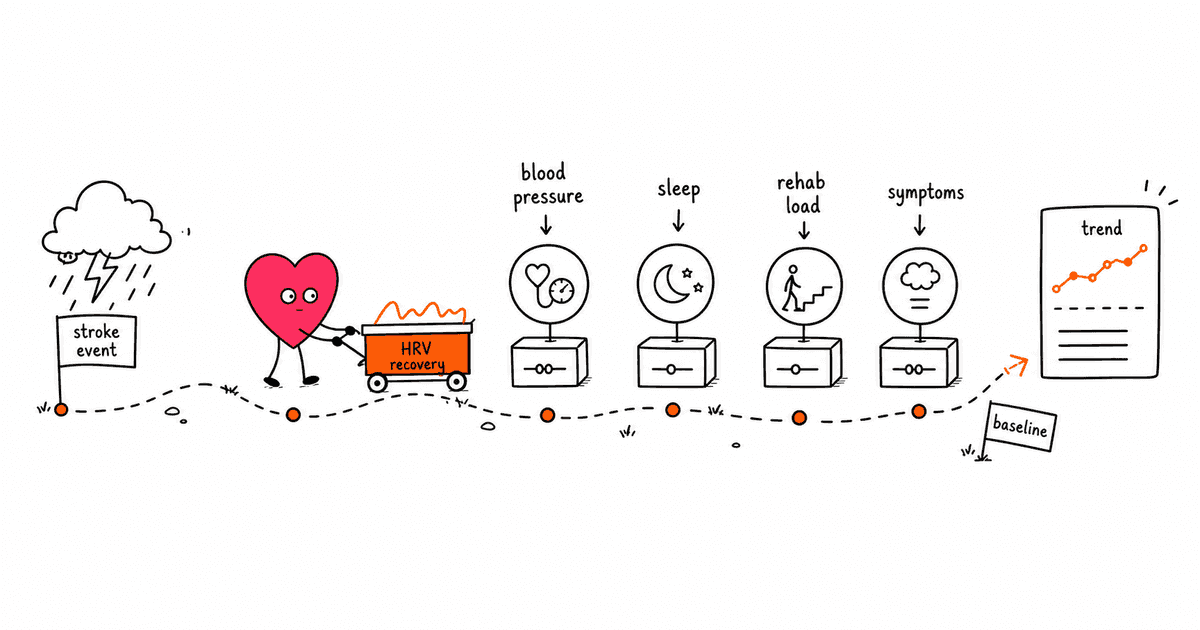
Stroke recovery is not just neurological rehab. It can involve pain, sleep disruption, reduced mobility, medications, anxiety, depression, inflammation, blood pressure changes, and cardiovascular monitoring. Any of those can lower HRV on their own, which is why post-stroke trends should be interpreted alongside broader recovery signals like stress, sleep, symptoms, and medication changes.
Together, they can make HRV noisy. That is why single readings are not very useful after stroke. The value is usually in the direction of the trend and whether that trend matches symptoms, rehab load, sleep, and medical status.
Cardiovascular Complications Can Affect the Signal
Stroke and heart rhythm problems often overlap. Atrial fibrillation, for example, is both a major stroke risk factor and a condition that can make HRV harder to interpret. If someone has an irregular rhythm, a consumer wearable may report HRV values that reflect rhythm irregularity rather than autonomic recovery.
That is one reason stroke survivors should treat HRV as a conversation tool with a care team, not as a private scoring system. If atrial fibrillation is part of the picture, read the separate guide to atrial fibrillation and HRV.
What the Research Shows
The research is still evolving, but the direction is clear enough to be useful: HRV is a promising non-invasive marker of autonomic dysfunction after stroke.
HRV May Help Predict Stroke Course and Outcomes
A 2023 systematic review in Frontiers in Physiology analyzed 36 studies on HRV measured in the acute phase of stroke. The review found that HRV analysis may help predict stroke course, medical complications, functional outcomes, and mortality. The authors also stressed an important limitation: methods are not standardized enough yet for HRV to be used as a standalone clinical decision tool.
That nuance matters. HRV is promising, but it is not magic. It is a signal that becomes more useful when combined with clinical assessment, neurological exams, blood pressure data, heart rhythm monitoring, and rehab progress.
Time-Domain HRV Metrics Get the Most Attention
A 2026 narrative review in Frontiers in Neurology described HRV as a cornerstone biomarker for autonomic nervous system assessment after stroke. It highlighted time-domain metrics such as SDNN and RMSSD as consistently associated with functional outcomes and cardiovascular complications.
In plain English, these metrics help quantify how much flexibility remains in the heart's beat-to-beat regulation. Lower flexibility can suggest the nervous system is under strain.
HRV Is Stronger When Combined With Other Signals
The same review noted that blood pressure variability, especially in the first 24 hours after ischemic stroke, may outperform HRV alone for short-term prognosis. That is not a knock on HRV. It means the post-stroke body is complex, and no single metric captures everything.
For stroke recovery, a practical dashboard may include:
| Signal | Why it matters after stroke |
|---|---|
| HRV trend | Autonomic strain and recovery flexibility |
| Resting heart rate | Cardiovascular load and recovery stress |
| Blood pressure | Major stroke risk factor and recurrence target |
| Sleep duration and quality | Brain recovery, mood, and autonomic regulation |
| Symptoms and fatigue | Real-world tolerance of rehab and daily activity |
| Medication changes | Can shift heart rate, blood pressure, and HRV |
If blood pressure is part of your recovery plan, the guide to HRV and blood pressure explains the overlap in more detail.
HRV Biofeedback Looks Promising, But Still Early
HRV biofeedback is a technique that uses slow breathing and live feedback to improve autonomic regulation. A small randomized controlled trial published in 2020 in Biological Research for Nursing studied 35 people with acute ischemic stroke. The group receiving HRV biofeedback showed improvements in HRV, cognitive scores, and anxiety and depression measures over time compared with usual care.
That is encouraging, especially because post-stroke recovery often includes emotional and cognitive strain. But it was a small study. HRV biofeedback should be viewed as a promising adjunct, not a replacement for standard rehabilitation, medication management, or medical follow-up.
What a Low HRV Trend Can Mean After Stroke
A lower HRV trend after stroke does not point to one single cause. It is more like a check-engine light for physiological load.
1. The Nervous System Is Still Under Stress
Stroke can create a prolonged stress response. Even when visible function improves, the autonomic nervous system may remain less flexible. A low HRV trend can reflect that ongoing load.
2. Rehab Intensity May Be Too High for the Current Baseline
Rehabilitation is essential, but more is not always better on a given day. If HRV drops sharply while resting heart rate rises and fatigue increases, it may suggest the body is struggling to absorb the current load.
That does not mean stopping rehab. It means the care team may need to adjust intensity, timing, hydration, sleep support, or recovery days.
3. Sleep, Pain, and Mood Are Pulling Recovery Down
Poor sleep, pain, anxiety, depression, and social isolation can all reduce HRV. These are common after stroke, and they are not side issues. They directly affect recovery capacity. The separate guides to HRV and anxiety and HRV and depression explain that autonomic overlap in more detail.
A falling HRV trend paired with worse sleep or mood is worth discussing with clinicians, especially if it persists.
4. Illness or Complications May Be Emerging
Infection, dehydration, medication side effects, arrhythmia, uncontrolled blood pressure, and other complications can all affect HRV. HRV cannot identify the cause, but a major unexplained shift may be useful context.
If symptoms are concerning, do not wait for the next HRV reading. Treat symptoms first.
How to Track HRV Safely After Stroke
HRV tracking after stroke should be boring, consistent, and conservative. The goal is not to chase a high score. The goal is to notice patterns that support safer recovery conversations.
1. Ask Whether HRV Tracking Fits Your Situation
Before using HRV in stroke recovery, ask the medical team whether it is appropriate. This is especially important if there is atrial fibrillation, a pacemaker, frequent ectopic beats, heart failure, major medication changes, or unstable blood pressure.
Consumer HRV tools are not medical monitors. They can be useful for trends, but they do not replace ECG monitoring, blood pressure management, or neurological follow-up.
2. Measure at the Same Time Each Day
Overnight HRV or a morning resting measurement is usually more useful than random daytime checks. Daytime readings are heavily affected by meals, caffeine, movement, stress, pain, and rehab sessions.
Use the same device, same timing, and same posture whenever possible.
3. Watch the 7-Day Trend
Daily HRV can bounce around. After stroke, that noise may be even larger. A 7-day or 14-day trend is more helpful than a single number.
Look for patterns like:
- HRV trending down for several days
- Resting heart rate trending up at the same time
- Fatigue, dizziness, sleep disruption, or mood symptoms worsening
- A sudden HRV change after a medication change
- HRV improving as sleep and rehab tolerance improve
4. Keep Notes Beside the Data
Numbers without context are easy to misread. Track simple notes such as sleep, rehab sessions, pain level, blood pressure readings, medication changes, illness symptoms, and stressful events.
5. Share Trends, Not Screenshots of Panic
If you bring HRV data to a clinician, summarize it. A useful note might be: "Over the last 10 days, overnight HRV fell about 25%, resting heart rate rose 8 bpm, and fatigue has been worse since the medication change."
That is much more useful than a single red recovery score.
6. Do Not Use HRV to Rule Out Emergencies
This is the most important rule. Normal HRV does not rule out stroke, TIA, arrhythmia, infection, or another urgent problem. Abnormal HRV does not diagnose one either.
If stroke warning signs appear, use B.E. F.A.S.T. and call emergency services. Time matters more than any wearable metric.
Can Improving HRV Support Stroke Recovery?
The safest answer is: sometimes, indirectly. HRV may improve as the body recovers, sleep stabilizes, blood pressure is controlled, inflammation decreases, activity tolerance improves, and emotional stress becomes more manageable.
The goal is not to hack HRV. The goal is to build the conditions that make recovery more resilient.
Prioritize Blood Pressure Control
High blood pressure is the leading modifiable risk factor for stroke. If HRV tracking makes someone more aware of stress, sleep, activity, and recovery, that can support the broader goal. But blood pressure management should follow medical guidance, not wearable interpretation.
Build Activity Gradually
Movement matters after stroke, but progression should match the rehabilitation plan. HRV can sometimes help flag days when the body seems unusually strained, but it should not override physical therapists, neurologists, or cardiology guidance. For people cleared to rebuild low-intensity activity, the guide to walking and HRV gives a safer baseline than jumping straight into hard training.
Protect Sleep Like It Is Treatment
Sleep supports brain recovery, emotional regulation, blood pressure control, glucose regulation, and autonomic balance. If HRV is consistently low and sleep is poor, sleep deserves attention.
If sleep issues are part of the picture, start with HRV and sleep and discuss persistent insomnia, snoring, or suspected sleep apnea with a clinician.
Use Breathing Carefully
Slow breathing and HRV biofeedback may support parasympathetic activity, but stroke survivors may have dizziness, respiratory limitations, anxiety, or neurological symptoms that make some techniques uncomfortable.
Keep breathing practices gentle. Stop if symptoms worsen. If possible, learn them through a rehabilitation professional, therapist, or clinician familiar with the recovery plan. The general guide to breathing exercises for HRV can help frame the concept, but stroke-specific limits still come first.
Address Mood and Social Support
Depression and anxiety are common after stroke, and both can lower HRV. Social connection, counseling, support groups, and caregiver support are not soft extras. They can change the stress load on the nervous system.
Choosing an HRV Tracker After Stroke
If a clinician agrees that home HRV tracking is appropriate, prioritize comfort, consistency, and clean overnight trends. Do not buy a device expecting it to diagnose complications.
Good consumer options for trend tracking include:
- Oura Ring 4: Strong for overnight HRV, resting heart rate, sleep timing, and low-friction daily trends.
- Whoop 5: Useful for recovery trends, strain tracking, and tagging habits or symptoms in a journal.
- Apple Watch Series 11: Convenient if you already use Apple Health and want HRV alongside heart rate and activity data.
- Garmin Forerunner 265: Helpful for people returning to structured walking, cycling, or supervised exercise after clearance.
For a broader comparison, see the guide to the best HRV monitors in 2026.
Common Mistakes to Avoid
Mistake 1: Treating HRV Like a Stroke Alarm
HRV is not an emergency detection tool. It can show stress, but it cannot tell you whether a stroke is happening.
Mistake 2: Comparing Against Healthy-Athlete Benchmarks
Stroke recovery changes the baseline. Comparing a survivor's HRV with a young endurance athlete's HRV is not useful. Compare against the person's own trend.
Mistake 3: Ignoring Medications
Beta-blockers, antidepressants such as SSRIs, blood pressure medications, sleep medications, and other treatments can affect HRV. A change in HRV after a medication adjustment is worth noting, but never change medication based on HRV without medical guidance.
Mistake 4: Chasing HRV Instead of Recovery
A higher HRV score is not the goal. Better function, safer mobility, fewer complications, stable blood pressure, better sleep, and improved quality of life matter more.
FAQ
Can HRV Predict a Stroke Before It Happens?
Not reliably for an individual person. Low HRV is associated with cardiovascular risk in population research, but it cannot predict exactly when a stroke will happen. Known risk factors like blood pressure, atrial fibrillation, diabetes, cholesterol, smoking, and prior stroke history matter far more for prevention decisions.
Can HRV Detect a TIA or Mini-Stroke?
No. A transient ischemic attack is a medical emergency even if symptoms go away. Do not use HRV to decide whether symptoms are serious.
Is Low HRV After Stroke Permanent?
Not necessarily. HRV may improve as recovery progresses, sleep improves, activity tolerance increases, and autonomic balance stabilizes. But the pattern varies by stroke severity, location, age, cardiovascular health, medications, and complications.
Which HRV Metric Matters Most After Stroke?
Research often focuses on SDNN and RMSSD, but there is no single consumer metric that should guide decisions alone. Trends are more useful than isolated numbers, especially when paired with resting heart rate, blood pressure, symptoms, and rehab notes.
Should Stroke Survivors Try HRV Biofeedback?
Maybe, but only as an adjunct and preferably with professional guidance. Early research is promising, but HRV biofeedback is not a replacement for standard stroke rehabilitation or medical care.
Bottom Line
Stroke can disrupt the autonomic nervous system, and HRV gives a window into that disruption. Lower HRV after stroke may reflect recovery strain, complication risk, poor sleep, pain, mood stress, cardiovascular instability, or rehab load.
Used carefully, HRV can help stroke survivors and clinicians spot patterns. Used poorly, it can create false reassurance or unnecessary panic.
The right framing is simple: HRV is a recovery context signal, not a diagnosis. In stroke recovery, the trend matters, the symptoms matter more, and emergency warning signs always outrank the data.
Need a quick read on your HRV number first?
Enter your HRV value, age range, device, and recovery context for a plain-English interpretation before you decide what to do next.
Interpret Your HRV NumberBuild the 30-day plan