Pets and HRV: How Dog and Cat Ownership Benefits Heart Rate Variability
Can Pets Improve Your Heart Rate Variability?
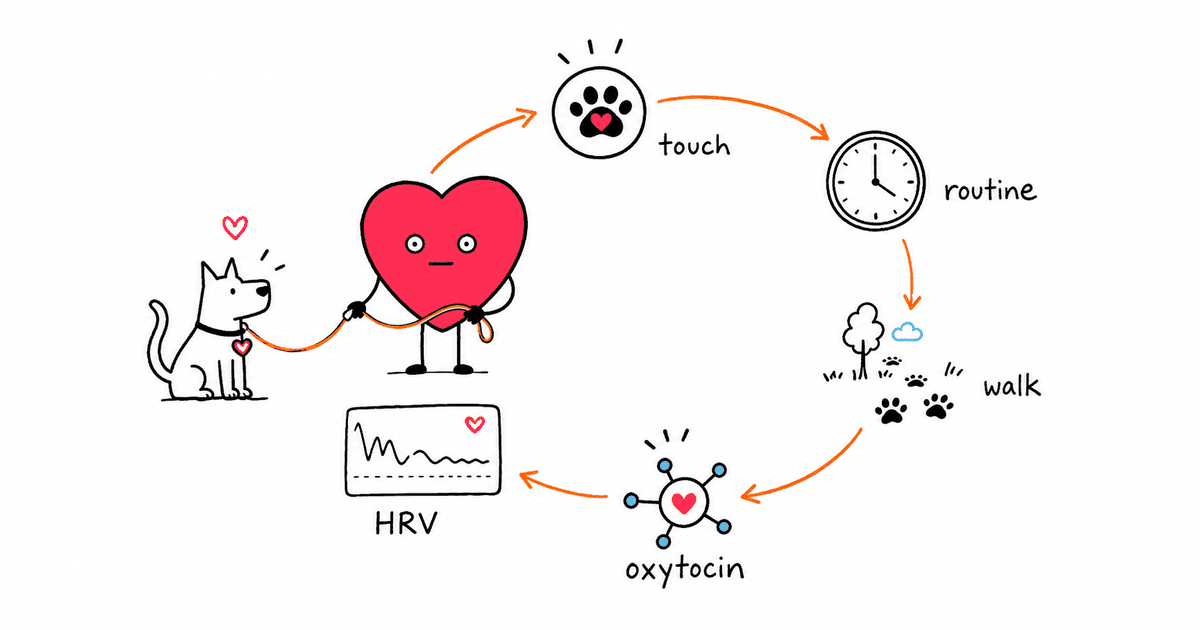
Yes, research suggests that pet ownership, particularly dogs and cats, is associated with higher heart rate variability and improved cardiovascular health. The mechanisms include stress reduction through physical touch, increased physical activity (especially with dogs), and the release of oxytocin during human-animal bonding. These effects combine to shift the autonomic nervous system toward parasympathetic dominance, which is directly reflected in higher HRV.
This is not just a feel-good claim. The American Heart Association published a scientific statement in Circulation reviewing the evidence on pet ownership and cardiovascular risk, finding that pet ownership, particularly dog ownership, is "probably associated" with decreased cardiovascular disease risk.
The Research: Pets, HRV, and Heart Health
Pet Owners Have Higher HRV
A study of 102 post-myocardial infarction (heart attack) patients found that owners of dogs or cats had significantly higher heart rate variability than non-owners. Higher HRV after a cardiac event is associated with better prognosis and lower risk of subsequent events.
A separate study measuring autonomic nervous system activity found that pet owners (primarily dog and cat owners) showed greater parasympathetic activity and diminished sympathetic nervous system activity compared to non-owners. In practical terms, their nervous systems were in a calmer, more recovered state.
Petting a Dog Reduces Stress in Minutes
Research from Johns Hopkins Medicine confirms that simply petting a dog lowers cortisol (the primary stress hormone) while simultaneously increasing oxytocin, the bonding hormone that promotes feelings of calm and connection. Studies have shown that just 15 minutes of interacting with a friendly dog can measurably reduce heart rate and cortisol levels.
A 2024 study published in Psychophysiology used portable EEG and HRV monitoring to measure brain and heart activity during interactions with pet dogs. The results showed measurable changes in both brain activity patterns and autonomic function during human-dog interaction, providing physiological evidence for the stress-reducing effects pet owners have long reported.
Dog Owners Live Longer
A 2019 systematic review and meta-analysis published in Circulation: Cardiovascular Quality and Outcomes analyzed data from nearly 4 million people across multiple studies. The findings were striking:
- Dog ownership was associated with a 24% reduction in all-cause mortality, relevant given the strong link between HRV and longevity
- Among people with prior cardiovascular events, dog ownership was associated with a 31% reduction in cardiovascular mortality. Learn more about HRV and heart disease
- The benefits were particularly strong for people living alone, suggesting that the companionship and activity that dogs provide may counteract the cardiovascular risks of social isolation. This may be especially relevant for seniors, who face higher risks from both low HRV and social isolation
How Pets Improve HRV: The Mechanisms
1. Stress Reduction and Cortisol Lowering
Chronic stress drives sympathetic nervous system overactivation, which directly suppresses HRV. Pets provide a consistent source of stress relief through physical touch, companionship, and the calming routine of caring for another living being.
The cortisol-lowering effect of petting an animal is one of the most well-documented findings in human-animal interaction research. Lower cortisol means less sympathetic activation, which means higher HRV. For more on this connection, see our guide on HRV and stress.
2. Increased Physical Activity
Dog owners walk significantly more than non-owners. Research shows dog owners walk about an hour more per week than dog owners who do not walk their dogs and about 30 minutes more per week than non-dog owners. Approximately 60% of people who walk their dogs meet recommended physical activity guidelines, compared to roughly 45% of non-dog owners.
Regular moderate exercise like walking is one of the most effective ways to improve HRV over time. Learn more in our article on walking and HRV.
3. Oxytocin Release and Social Bonding
The mutual gaze between a dog and its owner triggers oxytocin release in both species, a phenomenon sometimes called the "oxytocin loop." Oxytocin has direct cardiovascular effects, including vasodilation and blood pressure reduction, and it promotes parasympathetic nervous system activity.
This bonding effect may also explain why pet owners tend to have lower rates of loneliness and depression, both of which are associated with reduced HRV.
4. Routine and Purpose
Caring for a pet creates daily structure: feeding schedules, walks, playtime. This routine provides a sense of purpose and predictability that can be particularly beneficial for mental health. Consistent daily routines are associated with better sleep quality and lower anxiety, both of which support healthy HRV.
5. Social Connection
Dog owners are more likely to interact with neighbors and community members during walks. This increased social connection has its own cardiovascular benefits. Our article on social connection and HRV explores how relationships influence autonomic function.
Dogs vs. Cats: Does It Matter?
Both dogs and cats have been associated with cardiovascular benefits in research, but the evidence is stronger for dogs. This is likely because dog ownership involves more physical activity (walking) and more frequent tactile interaction.
That said, cat owners also show cardiovascular benefits:
- A large study found that cat ownership was associated with a 30% reduction in risk of death from heart attack
- Cats provide stress relief through purring, physical contact, and companionship
- The lower maintenance requirements of cats may reduce ownership-related stress that could offset benefits
The best pet for your heart health is the one that fits your lifestyle and brings you genuine joy and companionship.
Maximizing the Heart Health Benefits of Pet Ownership
If you already have a pet or are considering getting one, here are evidence-based ways to maximize the HRV and cardiovascular benefits:
For Dog Owners
- Walk your dog daily for at least 30 minutes. This is where the biggest physical health benefits come from, and outdoor walks offer the added benefit of nature exposure. Aim for a pace that is brisk enough to elevate your heart rate slightly.
- Spend 10 to 15 minutes of dedicated petting or grooming time each day. This is when the cortisol-lowering and oxytocin-boosting effects are strongest.
- Let your dog set a routine. Dogs thrive on schedule, and so does your autonomic nervous system. Consistent wake times, feeding times, and walk times support circadian rhythm alignment, which benefits HRV.
For Cat Owners
- Engage in daily play sessions. Even 10 to 15 minutes of interactive play provides light physical activity and bonding.
- Allow your cat to sit with you during relaxation time. The rhythmic purring of a cat has been shown to have calming physiological effects.
For All Pet Owners
- Be present during interactions. Put your phone away and focus on your pet. Mindful interaction amplifies the stress-reducing benefits, similar to how meditation boosts HRV. Combine pet time with breathing exercises for even greater parasympathetic activation.
- Track your HRV to see the effects. Use a wearable like the Oura Ring 4 or Apple Watch to monitor your HRV trends and see how pet interaction correlates with your readings.
Tracking Pet-Related HRV Changes
If you want to see how pet ownership or interaction affects your HRV, here is a practical approach:
- Establish a baseline. Track your resting HRV for at least two weeks before making any changes.
- Log your pet interactions. Note the duration and type of interaction (walking, petting, playing) alongside your HRV data.
- Look for patterns over weeks, not days. Day-to-day HRV fluctuations are normal. Focus on weekly and monthly trends.
- Compare walk days vs. rest days. If you have a dog, compare your HRV on days you take longer walks vs. shorter ones.
Recommended trackers for this type of analysis:
- Oura Ring 4 provides detailed overnight HRV trends and readiness scores
- Garmin Forerunner 265 offers HRV status tracking that shows your 7-day trend
- Whoop 5 delivers daily recovery scores based on HRV and other metrics
For a comprehensive comparison, see our best HRV monitors guide.
Frequently Asked Questions
Does pet ownership directly cause better HRV?
The research shows a strong association, but causation is harder to prove. It is possible that healthier, more active people are more likely to own pets, creating a selection bias. However, controlled studies measuring physiological responses during human-animal interaction do show direct, measurable effects on autonomic function, cortisol, and oxytocin.
How quickly can pet interaction improve HRV?
Acute effects (reduced heart rate, lower cortisol) can be measured within 15 minutes of petting a dog. Longer-term HRV improvements from the lifestyle changes associated with pet ownership (more walking, less stress, better routine) develop over weeks to months. See our guide on how to improve HRV for more strategies.
Are there any cardiovascular risks of pet ownership?
Pet ownership can occasionally increase stress through financial burden, allergies, or grief after a pet's death. Some studies have found that the cardiovascular benefits are reduced or absent when pet ownership is a significant source of stress. The key is ensuring that the relationship is a net positive for your wellbeing.
Do other animals provide similar benefits?
Most research has focused on dogs and cats, but preliminary studies suggest that interacting with horses (equine therapy), rabbits, and even fish (watching aquariums) can produce calming physiological effects. The stress-reducing benefits appear to be related to the quality of the bond and the type of interaction rather than the specific species.
Is it worth getting a pet specifically for heart health?
Getting a pet is a major life commitment that should not be made solely for health reasons. However, if you are already considering pet ownership and are in a position to provide good care, the cardiovascular and HRV benefits are a meaningful bonus on top of the companionship and joy that pets bring.
Need a quick read on your HRV number first?
Enter your HRV value, age range, device, and recovery context for a plain-English interpretation before you decide what to do next.
Interpret Your HRV NumberBuild the 30-day plan